Part 1: The First Warning
The first time I caught my stepmother trying to reset the password on my bank account, I did not scream, cry, or let her see even one second of panic. I simply sat at my father’s kitchen table, folded my hands the way military discipline had taught me, and waited. Because I already knew something they did not.
The Army did not deposit money into my account because I was lucky, spoiled, or convenient to the family. It paid me for reasons my father had not truly asked about in fifteen years, and before my leave ended, he would understand exactly what his wife had tried to touch.
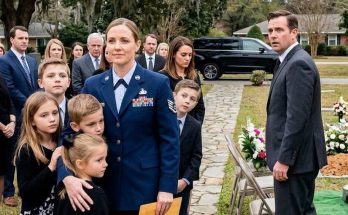
My name is Natalie Mercer. I am thirty-five, and I am a Lieutenant Colonel in the United States Army. I have spent most of my adult life in places my family could not pronounce, doing work I could not fully explain, then coming home for brief visits and pretending quiet dinners could make up for missed birthdays, empty holidays, and phone calls through bad connections.
Two weeks ago, I finally got leave. Fourteen days without briefing folders, early formations, boots on gravel, or someone knocking on my door to tell me plans had changed. My father, Robert Mercer, picked me up outside Charlotte on a humid Tuesday afternoon, wearing the same faded ball cap he had owned since I was in high school. When he smiled at me across the pickup lane, an old part of me softened. That smile used to mean safety. I should have remembered that safety can expire quietly.
My mother died when I was twenty-two, just before I commissioned. Two years later, my father married Diane. I did not hate her for that. Grief makes lonely people reach for nearby warmth, and I told myself that if Diane made him less alone, I could accept her place at the table. What I did not understand was that some people do not enter a family looking for love. They enter looking for access.
When I walked into my father’s house with my duffel still in my hand, Diane did not say, “Welcome home.” She looked me over and smiled with her mouth, not her eyes. “So, how big was the bonus this time?” The kitchen smelled of lemon cleaner and roasted chicken. My father stood near the refrigerator, pretending to care about a pitcher of iced tea.
I gave a small laugh. “Classified.”
It was not entirely a joke. Diane laughed too, but hers had a sharp edge.
That night at dinner, I noticed things I wished I had noticed sooner. Diane asked about my base pay like she already knew the bracket. She mentioned deployment allowances casually. She knew I had increased retirement contributions. She knew about an emergency savings account I had not touched in years. Those were not guesses. They were facts.
I looked at my father across the table. He kept his eyes down, cutting his food into tiny pieces like a man trying to disappear into his plate.
“Family should share what it has,” Diane said smoothly. “That is what family does, Natalie.”
My voice stayed calm. “I believe in sharing. But sharing means I know what is being shared, and with whom.”
Diane smiled like I had said something childish. My father still did not look up. That was when I understood something had been happening in that house long before I came home. Something patient. Something quiet. Something built brick by brick while I was overseas, too busy watching foreign streets to realize I should have been watching my own family.
That night, I could not sleep. I opened my banking app in the dark guest room, more from habit than suspicion. The screen lit my hands. One login alert. Then another. Multiple attempts from a device I did not recognize, spread across several weeks at hours when I would have been asleep, traveling, or on duty.
I listened to the old house settle around me and felt something inside me shift. Not panic. Something colder. Something useful. Because the Army had taught me one thing clearly: when you find the first sign of a breach, you do not react. You investigate. You gather everything. Then, when the time is right, you close the door so completely that whoever tried to get in never finds a way back.
Part 2: The Folder in the Office
The next morning, I made coffee like nothing had happened. I sat at the kitchen table while Diane watered plants by the window and my father read the local paper. I smiled in the right places, asked about her garden, and listened while she complained about grocery prices. There is a kind of stillness people mistake for peace. In the Army, we call it waiting.
I thought back to the year I turned twenty-six. My father had come to me with a blue folder holding my birth certificate, Social Security card, an old savings bond, and other documents I barely thought about. “Let me keep these here,” he had said. “You move so much with the Army. It’s safer in one place.” I was young. I was grieving. He was my father. So I said yes.
That afternoon, while Diane was out at what she called book club, though I had never seen her leave with a book, I asked my father if he still had my paperwork. He hesitated just long enough for me to notice. Then he said, “Bottom drawer in the office filing cabinet.”
The office smelled of dust, printer ink, and the cedar blocks my mother used to tuck into drawers. I found the folder exactly where he said it would be. But it was no longer only my paperwork. There were photocopies I did not remember making. A printed statement from an old account I had closed years earlier. A sticky note in handwriting that was not my father’s, with a string of numbers carefully written across it. It took me a full minute to realize they matched part of an old routing number.
I stood there with the folder in my hands and felt my body go very calm. Too calm. I did not confront anyone. Confrontation without evidence is noise, and noise gives people time to clean up before you understand the full shape of what they have done. So I went upstairs, opened my laptop, and worked like I would on an operation.
I changed every password. Checking, savings, retirement, email, backup email, phone verification, security questions—everything. Then I called the bank’s fraud department. After forty minutes on hold, the representative returned with a careful voice. There had been three attempts in two months to verify my identity using personal information: my mother’s maiden name, my childhood street, and the name of my first dog. None succeeded because I had stronger security measures in place. But someone had tried. Not once. Not by mistake. Three times.
That evening, Diane brought up her car again.
“It would really help us out,” she said over dinner. “Your father’s truck is old too, and with the credit card balance where it is, we could use some breathing room.”
She looked at me. Not him. At me.
“You don’t have children to worry about,” she added gently. “It’s not like the money is going anywhere important.”
My fork paused. My father gave a nervous little laugh, trying to walk the conversation around a land mine. I set my fork down.
“That is an interesting way to describe my life.”
Diane’s face tightened, then smoothed. “I only mean you’ve been blessed. There’s nothing wrong with helping family when you have more than enough.”
More than enough. I thought about tents during holidays, meals from pouches, phone calls from places where every outside sound made your body tense. I thought about folded flags and letters written to parents whose children would never come home. Then I looked at Diane, sitting in my father’s kitchen, describing sacrifice as excess.
I smiled. It was not warm. “I’m going to bed.”
Upstairs, I lay in the dark and let the anger move through me without acting on it. Patience is not weakness. Patience is how you win.