Part 2
Rachel’s warning stayed with me long after the call ended, sharper than the winter light pressing against the hotel curtains.
My mother sat near the heater, folding my father’s scarf into a square, then unfolding it without realizing what she was doing.
My father watched the muted television, but his eyes never moved with the images flashing across the small hotel screen.
I wanted to tell them everything would be fixed, that houses could be reclaimed and lies could be proven.
But the words felt too easy, too clean, for what had been done to them.
Rachel called again before noon and told me she had filed an emergency notice with the court.
“It does not remove them today,” she said, “but it starts a record Daniel cannot quietly erase.”
I looked down at my phone, at Daniel’s name sitting in my missed calls like a bruise.
“He keeps calling,” I said.
“Do not answer unless I am present,” Rachel replied. “Text only, and keep every message.”
After we hung up, I opened Daniel’s messages.
Emily, you are making this worse.
My mom is crying.
Vanessa’s kids are scared.
You are choosing outsiders over your own marriage.
I stared at that last sentence until the words blurred.
Outsiders.
My mother, who packed my school lunches at four in the morning before opening the laundry.
My father, who drove me to college in a borrowed van because he said taxis were for people with extra money.
I typed three different replies, deleted all of them, then placed the phone face down on the bed.
My mother noticed the movement and looked at me with a fear she tried to hide.
“Is Daniel angry?” she asked.
I almost laughed, but the sound caught somewhere in my chest.
“He is scared,” I said.
My father turned from the television. “A scared man can still hurt people.”
The quiet after his sentence felt heavier than anything Daniel had said.
I had never heard my father speak about fear that way.
He was the man who carried furniture upstairs with a bad back and smiled afterward like pain was simply weather.
Now his hands rested on his knees, swollen from cold, and he looked ashamed of needing protection.
“I should go to the house,” he said suddenly. “I should talk to him man to man.”
“No,” I said too quickly.
My mother flinched, and I softened my voice.
“No, Dad. Rachel said nobody goes there alone.”
He looked away. “Then they keep sleeping in our rooms.”
Our rooms.
Not bedrooms, not property, not the house.
Our rooms.
The phrase opened something small and painful in me.
I remembered my mother arranging porcelain bowls in the kitchen cabinet, measuring each shelf with her hand.
I remembered my father standing in the backyard with blue paint on his shirt, smiling at the uneven fence.
He had looked younger that day, as if ownership had returned some private part of him.
My phone vibrated again.
This time, it was not Daniel.
It was his mother, Margaret.
Emily, enough drama. Your parents are safe wherever they are. Vanessa needs stability more than they need space.
I read the message twice, waiting for anger to rise cleanly.
Instead, I felt something colder.
Stability.
That was the word Daniel’s family used whenever they wanted something from me.
Stability for Vanessa after her divorce.
Stability for Margaret after her retirement.
Stability for Daniel whenever my salary paid the mortgage while his consulting business “rebuilt.”
My parents’ stability had never entered the room.
Rachel arrived at the hotel at three, carrying a leather folder and wearing a gray coat dusted with snow.
She shook my parents’ hands gently, not like a lawyer greeting clients, but like a person entering someone’s pain.
My mother apologized for the room being messy.
Rachel smiled. “Mrs. Lin, you have nothing to apologize for.”
My mother looked at the floor, but I saw her shoulders loosen by a fraction.
Rachel placed copies of the documents on the small desk and pointed to the signatures.
“This one is not notarized properly,” she said. “This one references an agreement that does not exist.”
She turned another page, then another.
“And this signature was copied from a hospital benefits form, most likely from your shared files.”
My throat tightened.
Daniel had not forged my name in anger.
He had planned.
He had searched through my documents, chosen a signature, built a story, and handed it to my parents like truth.
Rachel looked at me carefully. “There is enough here for a civil claim, possibly more if authorities review it.”
My mother’s face went pale at the word authorities.
“No police,” she whispered. “Please. Emily, marriage is hard. Maybe he made mistake.”
My father closed his eyes.
I understood her before she finished.
She was not defending Daniel.
She was trying to protect me from the shame of having a husband exposed.
In her world, family damage was something you covered with silence until the fabric tore by itself.
Rachel waited, letting the room breathe.
“Mrs. Lin,” she said finally, “I will not do anything Emily does not authorize.”
All eyes shifted to me.
The heater clicked in the corner.
Outside, a siren wailed somewhere far away, then faded into traffic.
I looked at my mother’s hands, red at the knuckles from cold and years of detergent.
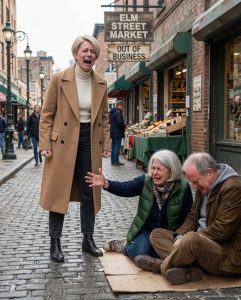
I looked at my father’s shoes, still damp near the soles from the market pavement.
Then I looked at my wedding ring.
Daniel had chosen it himself, a narrow gold band because he said simple things lasted longer.
I used to believe that.
“I need time,” I said.
Rachel nodded, but my father’s face changed in a way that hurt more than disappointment.
It was recognition.
He had seen me hesitate.
That evening, Daniel sent a voice message.
I should have deleted it.
Instead, I played it softly while standing alone in the hotel bathroom, the fan humming above me.
His voice came through warm, tired, almost familiar.
Em, I know this looks bad, but you are not seeing the whole picture.
Vanessa had nowhere to go.
Mom panicked.
Your parents misunderstood.
I was trying to protect everyone.
I closed my eyes.
His voice had carried me through hard shifts, through d3ath notices at the hospital, through nights when my body shook from exhaustion.
That same voice now tried to smooth cardboard, cold sidewalks, and fake signatures into misunderstanding.
Then he said the sentence that split something open.
You know your parents can be dramatic when they feel ignored.
I stopped the recording.
For a moment, I heard nothing except my own breathing.
Not the fan.
Not the traffic.
Only breath going in, breath going out, as if my body had become a machine keeping me alive.
When I opened the bathroom door, my mother was standing in the hallway.
She had heard enough.
Her face was not angry.
That made it worse.
She looked tired in a way that made me think of lights going out one by one.
“Maybe I was dramatic,” she said.
“No,” I answered.
She gave a small smile that held no belief. “I cried when he told us to pack.”
I stepped toward her, but she lifted one hand gently.
“He said you needed peace,” she continued. “He said our being there made your marriage heavy.”
The sentence entered me slowly.
Heavy.
I remembered Daniel rubbing my shoulders after dinner, saying, “Your parents depend on you too much.”
I remembered Margaret sighing whenever my mother called during Sunday brunch.
I remembered Vanessa joking that I was “basically their retirement plan,” then laughing when nobody else did.
Small things.
Little comments.
Moments I had folded away because love, I thought, required patience.
Now they unfolded themselves.
My father came out of the room behind her, holding his pill bottle.
“He told me I should be grateful,” my father said quietly. “He said many daughters would have forgotten us.”
His eyes met mine, and there was no blame there.
Only the terrible kindness of someone trying not to hurt me with the truth.
I wanted to say I did not know.
But I had known enough.
Not the cardboard.
Not the forged papers.
But the shape of Daniel’s contempt had been in my house for years, sitting at dinners and smiling politely.
The next morning, Rachel arranged for us to meet a locksmith and a process server outside the Queens house.
She told me again not to enter first.
Still, when the car turned onto the block, my hands went cold.
The blue fence was there.
So was my mother’s basil pot, cracked near the back steps and left empty in the snow.
A plastic scooter lay across the walkway.
Vanessa’s minivan sat in the driveway.
Through the front window, I saw movement near the curtains.
My mother made a soft sound beside me.
It was not a sob.
It was smaller, almost like surprise, as if she had expected the house to miss her visibly.
Rachel touched my sleeve. “Stay behind me.”
Daniel opened the front door before the process server reached the porch.
He looked well-rested, wearing the navy sweater I had bought him last Christmas.
For one absurd second, I noticed there was no coat on him.
He had been warm.
“Emily,” he said, ignoring everyone else. “This is embarrassing.”
Behind him, Margaret appeared in the hallway, lips pressed thin.
Vanessa stood farther back, holding a coffee mug with both hands, her children peeking around her legs.
I saw my mother’s slippers near the shoe rack.
Not packed away.
Not thrown out.
Used.
Something inside me went very still.
Rachel stepped forward. “Mr. Carter, I represent Emily Lin. You are being formally notified of unlawful occupancy concerns and document fraud allegations.”
Daniel’s face tightened at the last words.
“Fraud?” Margaret snapped. “How dare you use that word in front of children?”
Rachel did not blink. “Then perhaps the children should step away.”
Vanessa pulled them back, but her eyes stayed on me.
For the first time, she looked uncertain.
Daniel lowered his voice. “Emily, call this off. We can fix this privately.”
Privately.
The word came like a hand reaching for my mouth.
My mother’s fingers found my sleeve and gripped it.
I turned toward her.
Her eyes were wet, but she was not asking me to stop.
She was asking me to understand the cost.
If I moved forward, my marriage would not survive unchanged.
If I stepped back, my parents would learn that my comfort mattered more than their truth.
The wind moved through the bare branches above us.
A loose receipt skittered across the porch and caught against the blue fence.
Daniel looked at me, softening his face into the expression that had once made me forgive unfinished apologies.
“Come inside,” he said. “Just you and me.”
For one second, I wanted to.
Not because I trusted him.
Because I wanted the version of my life where this could still be repaired with lowered voices and closed doors.
Then my father coughed behind me, a small sound, tired and human.
I looked at his damp shoes.
I looked at the slippers in the hallway.
I looked at Daniel’s hand resting casually on the doorframe of a house he had never paid for.
“No,” I said.
The word was quiet, but everything around it seemed to stop.
Daniel’s expression flickered.
Rachel glanced at me, waiting.
I removed my wedding ring slowly, feeling the cold air touch the pale mark beneath it.
My mother made a broken sound, but she did not stop me.
I placed the ring in my coat pocket, not because the marriage was over yet, but because I needed my hand back.
Then I looked at Rachel and said, “Do it.”
The process server stepped forward.
Daniel’s mother began shouting.
Vanessa started crying.
The children disappeared into the hallway.
And I stood on the porch of my parents’ house, finally understanding that truth did not arrive like thunder.
Sometimes it arrived as a quiet word, spoken while your hand trembled inside an empty glove.
Part 3
The papers did not make Daniel leave that day.
Legal words had weight, but not the kind that could lift people from a house immediately.
He stood in the doorway, face pale with anger, while Rachel explained the timeline in a steady voice.
Margaret kept interrupting, saying family should not be treated like criminals, saying I had changed since marrying Daniel.
Vanessa cried quietly behind her, but she never offered to pack a single bag.
My parents remained near the sidewalk, not crossing the gate, as if the house might reject them twice.
I wanted to walk inside, gather my mother’s slippers, my father’s medicine box, the framed wedding photo from their bedroom.
But Rachel touched my elbow before I moved.
“Not today,” she said softly. “Today we document.”
So we documented.
The locksmith photographed the replaced lock.
Rachel photographed the basil pot, the changed curtains, the children’s toys scattered across my parents’ living room.
I photographed the slippers by the door, because for some reason that hurt more than the forged papers.
Daniel watched me through the glass, his mouth tight, no longer pretending to be gentle.
That was the first consequence of my choice.
The mask did not fall loudly.
It slipped, and once it slipped, I could not make myself unsee his face beneath it.
Over the next two weeks, my life became paperwork, hotel receipts, attorney calls, and messages I did not answer.
Daniel sent apologies at first.
Then explanations.
Then warnings.
You are destroying us.
You are letting a lawyer poison you.
Your parents will never forgive themselves when this ruins your marriage.
I saved every message.
Each one felt like another nail, not in him, but in the picture I had kept of us.
Rachel filed for emergency possession of the house and submitted the forged documents for review.
I also filed for a legal separation.
The morning I signed those papers, my hand shook so badly the pen scratched across the signature line.
My mother sat beside me in Rachel’s office, holding a paper cup of tea that had gone cold.
“You do not have to do this because of us,” she said.
I looked at her hands wrapped around the cup.
“I am not doing it because of you,” I answered. “I am doing it because of what he did.”
She nodded, but tears still gathered in her eyes.
I understood then that justice did not erase guilt.
Sometimes it simply moved it into different rooms.
Daniel moved out before the court hearing, not because he agreed, but because Rachel made staying expensive and visible.
Vanessa left two days later, posting online about “family betrayal” and “women without compassion.”
Margaret called me once from an unknown number.
When I answered, she did not say hello.
“You will regret this when you are alone,” she said.
I listened to her breathing through the line.
Then I said, “Maybe.”
It was the first honest thing I had said to her in years.
Maybe I would regret some things.
Maybe I would miss the life I thought I had.
Maybe loneliness would come home with me some nights and sit at the kitchen table.
But regret was not the same as being wrong.
The court hearing was smaller than I expected.
No dramatic shouting.
No sudden confession.
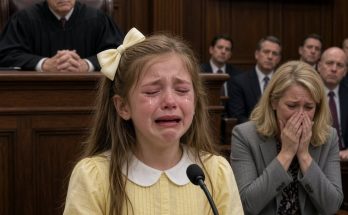
Just a narrow room, fluorescent lights, files stacked on a wooden desk, and people trying to sound calm.