They Abandoned Her to Starve in the Dead of Winter—Until a Lonely Lumberjack Found Her Cabin and Uncovered Why Her Family Wanted Her Gone
They Abandoned Her to Starve in the Dead of Winter—Until a Lonely Lumberjack Found Her Cabin and Uncovered Why Her Family Wanted Her Gone
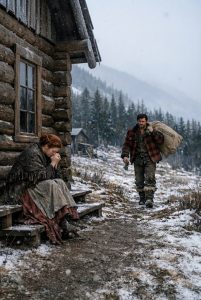
The last thing William Holt took from his brother’s widow was the flour.
He carried the fifty-pound sack out of Hannah’s kitchen, threw it onto the wagon beside the bacon, beans, coffee, lamp oil, blankets, and nearly every piece of split firewood stacked beneath the porch, then looked back at her as snow began falling across Cedar Hollow.
“You can still change your mind.”
Hannah stood in the doorway with her late husband’s deed folded inside her dress.
“No.”
William’s wife, Margaret, pulled her coat tighter.
“Hannah, don’t be stupid. Sign the timber parcel over to William and come stay with us until spring.”
“You mean work for you until spring.”
Margaret’s face hardened.
“You have no money.”
“I know.”
“No horse.”
“You took it.”
“It belonged to Samuel’s estate.”
“So does the wagon?”
“Yes.”
“The flour?”
William answered this time.
“Bought with Holt money.”
Hannah looked at the man who had once called her sister.
Her husband, Samuel Holt, had been dead thirty-eight days.
Killed when a logging skid broke loose above Black Creek and crushed him against a pine.
Since then, William had appeared almost daily.
First with condolences.
Then questions.
Then documents.
Then pressure.
The eighty-acre Cedar Hollow tract had belonged to Samuel separately from the larger Holt family logging operation.
William claimed it should return to the family.
Hannah had refused to sign.
Now kindness had become inventory.
They took the flour.
They took the meat.
They took the horse.
They took the lamp oil.
They took everything they could point to and call theirs.
But they could not take the deed without her signature.
And Hannah would not give them that.
William climbed onto wagon.
“You have maybe four days of food in there.”
Hannah said nothing.
“Road will be buried by tomorrow.”
Nothing.
“Sign now.”
“No.”
Margaret looked genuinely frightened for her.
That almost made it worse.
“You could die out here.”
Hannah held William’s gaze.
“Then I suppose you should remember this moment clearly.”
His face changed.
Not guilt.
Anger.
He snapped reins.
The wagon rolled away.
Hannah remained on the porch until its tracks disappeared beneath snow.
Then she went inside and counted what was left.
Three potatoes.
Half a jar of molasses.
One cup of cornmeal.
A handful of dried apples.
Salt.
Tea.
Two onions.
One rabbit Samuel had smoked weeks before his death.
And enough wood inside the kitchen box to keep the stove burning through one night.
She sat at the table.
The house had never sounded so empty.
Samuel’s chair remained across from her.
His boots still stood beside the mudroom wall because she had not yet found the strength to move them.
On the shelf sat the blue enamel cup he used every morning.
Hannah looked at it and whispered:
“You left me with your family.”
Then she covered her face.
“I’m sorry.”
It was unfair to a dead man.
She knew that.
Grief had not made her noble.
It had made her exhausted.
Samuel had not planned to die.
He had not planned for William to become cruel.
He had not planned for winter to arrive two weeks early.
Plans did not negotiate with death.
Hannah cried for seven minutes.
Then stopped.
Because the stove needed wood.
She put on Samuel’s old coat and walked behind the cabin.
William had taken the split stack.
He had not taken the trees.
Good.
Hannah knew how to use an axe.
Not well.
Enough.
She attacked a fallen lodgepole.
The first swing glanced.
The second buried shallowly.
By the tenth, her shoulders burned.
By the twentieth, she understood she would freeze before chopping enough fuel at this pace.
She switched tasks.
Branches.
Deadfall.
Small pieces she could break.
She carried armloads inside.
The stove would burn hotter and faster.
Inefficient.
Still heat.
At dusk, snow thickened.
Hannah ate half a potato.
Saved the rest.
She put on two dresses, Samuel’s coat, and wool socks.
Slept beside stove.
Morning:
9°F.
Wind.
Snow across windowsill.
The water bucket had a skin of ice.
Hannah melted snow.
Ate cornmeal with molasses.
Then went outside again.
Her hands blistered.
One split open.
She wrapped it.
Worked.
Second night:
The stove went out at 3 a.m.
Hannah woke shaking.
She burned one of the kitchen chairs.
Samuel had built it.
She apologized while breaking the legs.
Third day:
No sun.
She ate dried apples.
One onion.
Half the rabbit.
Her body started conserving before she understood it.
Move slower.
Think slower.
Sit longer.
She knew starvation did not arrive dramatically.
It negotiated.
First appetite screamed.
Then weakened.
Then cold became more convincing than hunger.
On the fourth morning, Hannah could not get the axe above her shoulder.
She sat against the chopping block.
Snow drifted around her boots.
For one strange moment, lying down seemed sensible.
Only for a minute.
She imagined Samuel laughing.
Not cruelly.
Hannah, if you lie down in snow because you’re tired, I’m coming back to haunt you just to call you an idiot.
She stood.
Barely.
She carried three branches inside.
Lit stove.
Then found paper.
If she died, someone needed to know.
She wrote:
William and Margaret Holt removed most winter food, fuel, the horse, and wagon on December 3 after I refused to sign over Cedar Hollow.
I was alive when they left.
The deed is—
She stopped.
No.
Do not tell them where deed was.
She folded note and placed it inside Samuel’s Bible.
Then she ate the final potato.
That evening the storm arrived.
Not the snow they had already had.
The real one.
Wind struck Cedar Hollow from northwest.
Trees bent.
The roof groaned.
Snow forced itself through gaps beneath door.
Hannah fed the last chair leg into stove at midnight.
At 2 a.m., she burned a shelf.
At 4:30, the fire died.
She stayed beneath three quilts wearing Samuel’s coat.
She thought of walking.
To where?
William’s place was nine miles.
Town fourteen.
The old logging camp at Black Creek maybe four.
No food guaranteed.
No horse.
Visibility nonexistent.
Walking would kill her faster.
So she waited.
At dawn, someone pounded on the door.
Hannah heard it through a dream.
Once.
Twice.
Then:
“Hannah Holt!”
She opened her eyes.
A man.
Or wind.
“Hannah!”
She tried to answer.
Nothing came.
The door shook.
Then stopped.
A minute later, glass broke in the kitchen window.
Hannah reached for Samuel’s shotgun beside bed.
Too weak.
Boots hit floor.
A tall man climbed through window.
Snow covered his beard and shoulders.
He held a hatchet.
Hannah tried lifting gun.
The man stopped.
“Hannah.”
She knew the face.
Jonah Reed.
The lumberjack who lived alone near Black Creek.
Forty-one.
A man children in Pine Hollow called the Bear because he was huge, quiet, and apparently capable of going an entire Saturday without speaking.
Samuel had known him.
Not closely.
Logging country made everyone know everyone enough to wave.
Hannah whispered:
“Get out.”
Jonah looked toward dead stove.
Broken furniture.
Then at her face.
“No.”
“I have a gun.”
“You have an empty gun.”
Her eyes widened.
“How—”
“Samuel never kept shells beside bed.”
She tried to sit.
The room spun.
Jonah dropped hatchet and came closer.
She pulled away.
He stopped immediately.
Good.
“Hannah.”
“What?”
“When did you eat?”
“Yesterday.”
“What?”
“Potato.”
His face changed.
“Before that?”
“I don’t remember.”
He looked toward kitchen.
Cupboards open.
Empty.
Wood box empty.
Then:
“Where’s the winter stack?”
She closed her eyes.
“William.”
“What?”
“William took it.”
Jonah became frighteningly still.
“Why?”
She did not answer.
He knelt, still several feet away.
“I have broth.”
Her eyes opened.
“In my pack.”
“No.”
“You need food.”
“I can pay.”
“Later.”
“No.”
“Hannah.”
“No favors.”
There.
He understood something.
Maybe because he lived alone long enough to know how often loneliness came with strings.
He opened his pack.
Took out a tin cup.
A small jar of beef broth.
Crackers.
Dried meat.
He set everything on floor between them.
“Then don’t call it a favor.”
“What?”
“Call it food.”
“I’ll owe.”
“No.”
“People always—”
“I don’t.”
She stared.
“You don’t know me.”
“No.”
“Then why?”
Jonah looked toward broken chair.
“Because you’re starving.”
Simple.
He warmed broth over tiny fire built from kindling he carried.
Gave her half cup.
Not more.
She drank too quickly.
He took it away.
Hannah glared.
“Again in ten minutes.”
“You’re not doctor.”
“No.”
“Then—”
“I’ve brought half-frozen men out of timber camps.”
“That is not same.”
“No.”
He handed one cracker.
“Still slow.”
She hated him.
That helped.
Anger required energy.
Twenty minutes later, more broth.
Then half cracker.
Then rest.
Jonah inspected chimney.
Fine.
Stove fine.
No fuel.
He went outside.
Hannah tried stopping.
“Storm.”
“I know.”
“You’ll get lost.”
“My sled is thirty yards away.”
“Why?”
He looked at her.
“I was checking trap line.”
“You trap?”
“Sometimes.”
“During this?”
“Before this.”
Fair.
He went.
Returned hauling canvas bundle.
Firewood.
Food.
Blanket.
A small camp stove.
Hannah stared.
“How much?”
“Enough.”
“For you?”
“Yes.”
“Then don’t leave it.”
His expression did not change.
“I can get more from Black Creek camp.”
“When?”
“After storm.”
“So you’ll have none.”
“I have some there.”
“Some?”
He sighed.
“You ask like accountant.”
“Answer.”
“Three days.”
“And you’re giving me?”
“Two.”
“No.”
He looked at her.
“You want to split?”
“Yes.”
“Fine.”
He divided food visibly.
Half.
Almost.
Hannah noticed his side smaller.
“Equal.”
He looked.
She raised eyebrow.
He adjusted.
Good.
That was how trust began.
Not with sacrifice.
With counting.
Jonah stayed six hours.
Not in her bedroom.
Kitchen.
He brought enough wood from deadfall using a saw from sled.
He split.
Stacked.
Showed Hannah where.
Before dusk, storm eased slightly.
He prepared to leave.
She stared.
“You’re leaving?”
“You wanted me out.”
“That was when I thought you were breaking in.”
“I did break in.”
“You broke window.”
“Door iced shut.”
She almost smiled.
Then looked toward white outside.
“Can you make Black Creek?”
“Yes.”
“Certain?”
“No.”
Good answer.
He added:
“So I’m staying in Samuel’s workshop.”
The detached workshop stood thirty feet away.
Cold but enclosed.
Hannah frowned.
“You’ll freeze.”
“Small stove.”
“No bedding.”
“My sled.”
She looked.
“You could stay here.”
He stopped.
“You sure?”
“Kitchen.”
“Yes.”
“Door to bedroom stays locked.”
“Yes.”
“I have key.”
“Yes.”
“You don’t.”
“No.”
She looked at him.
“Then kitchen.”
He slept on floor beside stove.
The storm lasted two more days.
Hannah ate slowly.
Strength returned by inches.
Jonah cooked badly.
His beans tasted like smoke and resentment.
She told him.
He said:
“Eat.”
She laughed for first time since Samuel died.
That startled both of them.
On second night she asked:
“Why were you really near my cabin?”
Jonah looked up from sharpening knife.
“Trap line.”
“In blizzard?”
“You asked that.”
“I don’t believe answer.”
He sighed.
“Your chimney.”
“What?”
“I can see Cedar Hollow smoke from ridge above Black Creek.”
“You watch my chimney?”
“Not you.”
“Then?”
“Landmarks.”
He looked uncomfortable.
“For three mornings smoke got smaller.”
Hannah became quiet.
“Yesterday there was none.”
“So you came.”
“Yes.”
“Why?”
His expression hardened as though question offended him.
“Because there should have been.”
That answer stayed.
When storm cleared, Jonah walked to town.
Not alone.
Hannah insisted on coming.
He refused.
She won.
Mostly.
They used his draft horse and logging sled.
He wrapped her in two blankets.
“Humiliating.”
“Warm.”
“I can sit without swaddling.”
“Then freeze proudly.”
She glared.
He handed reins.
“Drive.”
Better.
They reached Pine Hollow at noon.
Sheriff Samuel Brooks listened.
Then looked increasingly disturbed.
“You’re saying William took winter provisions?”
Hannah nodded.
“Were they legally his?”
“Some perhaps came from Holt family store.”
“Wood?”
“Cut on Cedar Hollow.”
“Horse?”
“Samuel purchased before marriage.”
“Title?”
“I don’t know.”
“Did William threaten you?”
“He said if I signed deed I could come stay with them.”
“And if not?”
“He left.”
Sheriff leaned back.
“That alone may not be criminal abandonment. You’re an adult.”
“I know.”
Jonah said:
“She nearly froze.”
Sheriff looked.
“I heard.”
Hannah continued:
“I’m not asking you to invent law because I suffered.”
Jonah looked at her.
Good.
“What do you want?” sheriff asked.
“My property returned if it is mine.”
“Food?”
“I ate it.”
“Wood?”
“Harder.”
“Horse?”
“Yes.”
“Anything else?”
Hannah pulled Samuel’s deed.
“I want to know why William wants this.”
Sheriff looked toward Jonah.
Jonah had asked same silently.
They went to attorney Rebecca Lawson.
She reviewed deed.
Eighty acres.
Fee simple.
Samuel Holt sole owner.
Will?
None filed yet.
Under Montana inheritance law of time, widow may inherit depending estate and no children? We don’t need exact legal specifics without web. Fictionalized local process. Better say county attorney needs probate, but property clearly part of Samuel’s separate estate and William had no unilateral authority.
Rebecca said:
“William cannot make you sign this.”
“I know.”
“Do you?”
“Yes.”
“Good.”
Then:
“Why does he want eighty acres of steep timber?”
Jonah spoke.
“Because it isn’t only timber.”
Everyone looked.
Hannah frowned.
“What?”
Jonah pointed at survey.
“Black Creek touches northeast corner.”
“Yes.”
“Old logging road crosses west.”
“So?”
“Pine Hollow Timber Company is bidding railroad tie contract.”
Rebecca understood first.
“Access.”
Jonah nodded.
“The best haul route from Holt family timber to Black Creek runs across Hannah’s eighty.”
Hannah stared.
Samuel had mentioned railroad expansion.
Nothing more.
Jonah continued:
“If William controls Cedar Hollow, he can haul straight to creek landing.”
“How much difference?”
“Four miles per load.”
That was huge with horse teams.
Rebecca looked at deed.
“Then this parcel is strategically valuable.”
Hannah whispered:
“William said it was worthless without family operation.”
Jonah laughed once.
“Opposite.”
There.
First twist.
William had not been trying to reclaim sentimental family land.
He wanted a road.
Rebecca ordered survey/appraisal.
Hannah had almost no money.
Jonah offered to pay.
She said no before sentence finished.
He smiled.
“Expected.”
The county had widow estate assistance fund? Maybe not. Rebecca arranged appraiser fee charged against estate if later approved.
Good.
Hannah returned to Cedar Hollow.
Against advice.
Why?
Her house.
Jonah tried:
“Stay at boardinghouse.”
“No.”
“Reed cabin has spare room.”
“No.”
“Hannah.”
“My house.”
He stopped.
“Fine.”
Then:
“I’m fixing window.”
She smiled.
“That you broke.”
“Yes.”
“Then no charge.”
“No.”
They returned.
The next weeks were winter survival, not romance.
Jonah visited every second day when roads allowed.
Never arrived empty-handed.
But he also never called everything gift.
Sometimes:
He brought wood.
Hannah mended his shirts.
He brought venison.
She kept his accounts for timber loads.
He repaired shed roof.
She cooked lunch.
Some exchanges were unequal.
They did not force math onto every kindness.
But large things stayed clear.
When Jonah offered four cords of seasoned firewood, Hannah refused.
He proposed:
“Buy it.”
“With what?”
“Spring.”
“That is not money.”
“Your land has standing deadfall near road. I’ll cut mine now, you repay equivalent cord after thaw.”
She considered.
“Written?”
He groaned.
She smiled.
“Written.”
They wrote.
Trust became something she could measure until it became something she did not need to.
William arrived in January.
He looked at stacked wood.
Jonah’s horse.
New window.
His expression changed.
“You moved him in?”
Hannah’s face went cold.
“No.”
Jonah was splitting logs.
Stopped.
Hannah raised one hand.
Her fight.
William continued:
“Town talks.”
“Town survives boredom through fiction.”
“You’re living alone with a lumberjack coming every day.”
“Every other day.”
Jonah almost laughed.
William ignored him.
“I’m trying to protect Samuel’s name.”
Hannah stepped off porch.
“You left Samuel’s wife with three potatoes.”
William flinched.
“I offered you a home.”
“In exchange for deed.”
“You were stubborn.”
“Yes.”
“You could have come.”
“Yes.”
“Then this is partly your doing.”
Silence.
Jonah’s axe stopped.
Hannah looked at William for a long moment.
Then:
“You are right about one thing.”
He seemed surprised.
“I could have signed.”
“Yes.”
“I could have surrendered land to avoid risk.”
“Yes.”
“I chose not to.”
His confidence returned.
Then she finished:
“But you chose to make hunger the price of saying no.”
His face changed.
There.
Not murder.
Not accident.