PART 3 — **THE WOMAN WHO CALLED ME HER SON**
“Forgive me, my son.”
María’s words did not sound dramatic.
They sounded exhausted.
As though she had been carrying them inside her for thirty years and had finally reached the moment when she could no longer hold their weight.
Camila stood beside me with Mateo asleep against her chest.
I remained completely still.
“You’re saying you’re my mother?”
María’s lips trembled.
“Yes.”
The room seemed to shrink around us.
For most of my life, María had been the woman who quietly appeared whenever I needed something Teresa never noticed.
A glass of milk after nightmares.
A hand on my forehead when I was sick.
A warm coat placed over my shoulders when my father left me waiting outside his office for hours.
Whenever Teresa criticized me for being too sensitive, María would find me later and say, “There is nothing shameful about having a heart.”
I had thought she was simply kind.
Now every memory felt different.
“Why?” I whispered.
Tears gathered in her eyes.
“Because I was afraid.”
“Of Teresa?”
“Of Alejandro.”
My jaw tightened.
María sat slowly.
“Thirty-two years ago, I was nineteen. My family worked on the Armenta estate. Alejandro was already married to Teresa.”
Camila moved closer.
María looked down at her hands.
“He began visiting the workers’ houses at night. Everyone believed he was checking business matters.”
Her voice became smaller.
“But he came for me.”
I felt sick.
“Did he—”
María raised one hand.
“You do not need every detail.”
I understood.
Alejandro had @b/u/sed his position.
His power.
Her fear.
“When I became pregnant,” she continued, “Alejandro panicked. Teresa had been unable to have children. The family inheritance required an heir.”
My breathing slowed.
“So they took me.”
María looked at me.
“They took both of you.”
“Both?”
She nodded.
“You and Rodrigo were born three weeks apart.”
I stared at her.
“Then Rodrigo really isn’t my biological brother.”
“No.”
“Who is his mother?”
María looked toward the floor.
“That is another truth Teresa hid.”
Camila whispered, “Isabel?”
María’s head snapped upward.
“How do you know that name?”
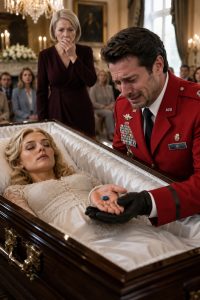
“The woman in the coffin,” I said. “Her name was Isabel Cruz.”
María covered her mouth.
For several seconds, she could not speak.
Then she whispered,
“Dear God.”
“What?”
María looked directly at me.
“Isabel was Rodrigo’s mother.”
Silence.
It seemed impossible that the woman whose body had been mistaken for Camila had been connected to us from the beginning.
“How?”
“Isabel worked in the family accounting office when she was young,” María said. “She and Alejandro had an affair.”
I almost laughed from disbelief.
“So my father had two women pregnant at the same time?”
“Yes.”
“And Teresa knew?”
“She discovered everything before either of us gave birth.”
Camila sat beside María.
“What did she do?”
María’s expression hardened.
“She made a decision.”
My skin went cold.
“What decision?”
“She would take both babies and choose which one would eventually inherit.”
I stood.
“You’re telling me Teresa stole two children?”
María nodded.
“I tried to leave. Isabel tried too.”
“What stopped you?”
“Alejandro.”
María’s eyes filled with tears again.
“He threatened our families. Our parents depended on the vineyards. He told us no one would believe poor young women over the Armentas.”
My hands curled into fists.
“And you stayed here?”
“I begged to stay near you. Teresa agreed, but only if I became invisible.”
My chest tightened.
“You became the housekeeper.”
“Yes.”
“So you watched Teresa raise me.”
“I watched her control you.”
“Why didn’t you tell me when I became an adult?”
María broke.
“Because Alejandro was still watching.”
“But he supposedly d/i/ed.”
“He never did.”
Camila exchanged a look with me.
María continued.
“When Alejandro disappeared eleven years ago, I thought perhaps it was finally safe. Then Teresa told me she knew where my sister’s grandchildren lived.”
I understood immediately.
Another threat.
Another chain.
“Isabel wasn’t as afraid as I was,” María whispered. “She left Mexico years ago. I thought she had escaped.”
“She came back,” I said.
“Yes.”
“And now she’s d/e/@/d.”
María closed her eyes.
I remembered the photograph.
Two newborn boys.
Two women.
Two stolen lives.
I suddenly felt guilty for every time I had hated Rodrigo.
He had been trapped too.
Perhaps differently.
But trapped.
“Did Rodrigo know?” I asked.
“Not until recently.”
“How recently?”
“About six months.”
Camila’s eyes widened.
“That’s when the missing money started.”
María nodded.
“Exactly.”
My thoughts raced.
Rodrigo had learned something that destabilized everything.
Then he began moving money.
Not necessarily to steal it.
Maybe to follow it.
Maybe to protect himself.
“Where did Isabel go when she returned?” I asked.
María hesitated.
“I don’t know.”
“María.”
“I swear.”
Camila touched my arm.
“She might be telling the truth.”
I looked toward Mateo.
My son.
The first Armenta in generations who might grow up free from these lies.
That thought steadied me.
Then María said something unexpected.
“There is one more thing.”
I looked at her.
“About Isabel?”
“No.”
“About Rodrigo?”
She shook her head.
“About Teresa.”
My muscles tightened.
“What?”
María whispered,
“She did not simply take you because she wanted children.”
A chill crawled down my spine.
“She needed you for something else.”
“What?”
María stood.
“To claim the vineyard inheritance.”
I frowned.
“I already know that.”
“No, Julián. You don’t.”
Her voice dropped.
“The vineyards were never supposed to belong to Alejandro.”
I stared.
“They belonged to my grandfather.”
“Yes.”
“But your grandfather never wanted Alejandro to inherit them.”
Camila leaned forward.
“Then who?”
María looked at me.
“His daughter.”
I frowned.
“My grandfather never had a daughter.”
“Yes, he did.”
I stared.
María whispered,
“He had one child before Alejandro.”
My pulse quickened.
“What happened to her?”
“She disappeared.”
“Who was she?”
María’s eyes filled with fear.
“Her name was Elena.”
The name struck me instantly.
Elena Vargas.
The woman who had hidden the decoy baby.
“No,” I whispered.
María nodded slowly.
“Yes.”
Camila stood.
“Elena Vargas is Julián’s aunt?”
“If that is really her name now.”
The entire story shifted again.
Elena had not been an outsider.
She had been inside our family long before I was born.
I looked at Camila.
“She knew exactly who I was.”
Camila’s face tightened.
“She knew much more than she told you.”
I grabbed my coat.
“Where are you going?”
“To find her.”
María rose quickly.
“Julián, no.”
“Why?”
“Because if Elena has finally returned, then everything Alejandro has done for thirty years is about to collapse.”
“That sounds like a reason to find her.”
María stared at me.
“No.”
Her voice shook.
“It is a reason to be terrified of what he will do next.”
Three hours later, Camila and I returned to Elena’s house.
The yellow front door stood open.
I knew something was wrong before stepping inside.
“Elena?”
No answer.
The living room had been searched.
Drawers pulled out.
Furniture moved.
Papers scattered across the floor.
Camila whispered,
“Someone got here first.”
I checked every room.
Empty.
Then I saw a photograph on the kitchen table.
It had not been there before.
A young woman stood beside my grandfather.
She could not have been older than twenty.
Dark hair.
Sharp eyes.
The same eyes Elena had now.
On the back were five words.
**I WAS THE TRUE HEIR.**
Below that was an address.
An abandoned wine cellar outside Dolores Hidalgo.
Camila stared at it.
“She left this for you.”
“Or someone wants me to think she did.”
A sound came from outside.
We both turned.
A car sped away from the end of the street.
Too fast to identify.
Camila whispered,
“We’re being watched again.”
I slipped the photograph into my pocket.
“Then let them watch.”
That evening, we drove to the abandoned wine cellar.
I had brought no one.
No police.
No Rodrigo.
No María.
Only Camila.
We left Mateo with Ana in a protected location.
The cellar sat beneath a ruined hacienda surrounded by fields.
The wooden doors were unlocked.
Inside, dozens of old wine barrels lined the stone walls.
“Elena?”
A lantern flickered deeper inside.
We followed it.
Then a voice called from the darkness.
“You came.”
Elena stepped forward.
She looked tired.
But alive.
I stopped several feet away.
“You’re my aunt.”
Elena gave a humorless smile.
“So María finally told you.”
“Why didn’t you?”
“Because truth is dangerous in this family.”
“That excuse is getting old.”
She looked at Camila.
“You chose well.”
Camila crossed her arms.
“Answer him.”
Elena nodded.
“My father—your grandfather—wanted the vineyards to pass to me.”
“Why not Alejandro?”
“Because Alejandro was already corrupt by twenty-five.”
She walked toward an old table.
“My father knew he was moving company money. He planned to remove him from the business.”
“What happened?”
“Alejandro learned about the new will.”
My chest tightened.
“And?”
Elena looked toward the shadows.
“Three days later, my father suffered a sudden medical collapse.”
Camila whispered,
“You think Alejandro p/o/isoned him?”
Elena nodded.
“We never proved it.”
I felt cold.
“And you disappeared?”
“He tried to have me declared mentally unfit. Teresa helped him. I escaped before they could lock me away permanently.”
“So Alejandro inherited everything.”
“Not immediately.”
Elena smiled bitterly.
“There was one condition.”
“What?”
“My father’s will said that if Alejandro had no lawful heir by age thirty-five, control reverted to me.”
I understood.
“That’s why Teresa needed children.”
“Yes.”
“And because she couldn’t have them…”
“They took yours and Rodrigo’s births and rewrote everything.”
My stomach turned.
Every part of my identity had been paperwork.
A transaction.
A solution to an inheritance problem.
“Elena, why now?”
She looked at me.
“Because Isabel found the original will.”
Silence.
“Where?”
“In Alejandro’s secret archive.”
“Why was she looking?”
“Because Rodrigo asked her.”
My head snapped up.
“Rodrigo was working with Isabel?”
Elena nodded.
“For months.”
Everything became clearer.
Rodrigo’s strange behavior.
The missing money.
The fear.
The contradiction between guilt and loyalty.
“He wasn’t stealing from the vineyards.”
“He was moving funds to keep Alejandro from transferring them overseas.”
Camila whispered,
“He was trying to stop him.”
“Yes.”
I sat down slowly.
Rodrigo had done terrible things.
But perhaps not the things I believed.
“Elena, who k/i/lled Isabel?”
Her face hardened.
“I don’t know.”
“Do you suspect Alejandro?”
“I suspect everyone.”
“Even Teresa?”
“Especially Teresa.”
A faint sound echoed above us.
A floorboard.
Elena froze.
Camila looked up.
“What was that?”
Then the cellar lights went out.
Darkness swallowed us.
A second later, something crashed near the entrance.
Elena shouted,
“Get down!”
Glass shattered.
Smoke began filling the cellar.
Someone had thrown an incendiary device through the door.
Camila coughed.
Flames climbed one wall.
“Elena!”
“This way!”
She led us through a hidden passage behind stacked barrels.
We ran through darkness until cold night air hit my face.
We emerged behind the hacienda.
Then a spotlight blinded us.
A vehicle waited.
The rear door opened.
A man stepped out.
Alejandro.
My father.
He looked directly at Elena.
“So,” he said softly, “the prodigal sister finally came home.”
Elena stiffened.
Alejandro smiled.
“And this time, you’re not going anywhere.”
**END OF PART 3**
PART 4 — **THE WILL THAT COULD DESTROY AN EMPIRE**
For several seconds, nobody moved.
Alejandro stood beside the black vehicle as flames rose behind us.
Two men waited near him.
Neither wore uniforms.
Neither looked surprised.
Camila whispered,
“Julián…”
“I know.”
Alejandro spread his hands.
“Family reunion.”
Elena stepped in front of us.
“You should have stayed buried.”
He smiled.
“So should you.”
The cruelty in his voice made something inside me settle.
For years I had feared my father’s approval.
Now I understood something liberating.
**There was nothing in this man worth earning approval from.**
“What do you want?” I asked.
Alejandro looked at me.
“The original will.”
“I don’t have it.”
“Elena does.”
She laughed.
“If I had it, you’d already be finished.”
Alejandro’s expression hardened.
“Isabel found it.”
“And look what happened to Isabel,” Elena replied.
His jaw tightened.
That reaction told me more than any confession could.
“You had something to do with her d/e/@/th,” I said.
Alejandro looked at me calmly.
“You continue to mistake suspicion for evidence.”
“Then why was her body delivered under Camila’s identity?”
For the first time, surprise flickered across his face.
He had not known that detail.
Interesting.
Camila saw it too.
“You didn’t arrange the coffin,” she said.
Alejandro’s gaze shifted to her.
“No.”
Elena turned slowly.
“Then who did?”
Nobody answered.
A distant siren cut through the night.
Alejandro looked toward the road.
“You brought police?”
Elena smiled.
“No.”
The sirens came closer.
Alejandro swore.
His men moved toward their vehicle.
“Go,” he ordered.
They drove away before the first patrol car appeared.
I watched the taillights disappear.
Camila whispered,
“He was afraid.”
“Of being found here.”
“No,” Elena said. “Of being found near me.”
The police questioned us for nearly two hours.
The fire destroyed half the old cellar, but the hidden passage survived.
Inside it, investigators discovered metal cabinets.
Records.
Old contracts.
Employee files.
And boxes of documents dating back decades.
Elena looked stunned.
“I didn’t know these were here.”
Camila frowned.
“Then who did?”
The answer arrived the next morning.
Rodrigo.
He called me from custody.
“You found the archive.”
I gripped the phone.
“You knew about it?”
“Yes.”
“Why didn’t you tell me?”
“Because I didn’t know whether you would believe me.”
“You could have tried.”
He exhaled.
“I tried being your brother for thirty years. You were always the good son. I was the useful one.”
“That doesn’t answer me.”
He fell silent.
Then he said,
“Isabel and I found references to that cellar six months ago.”
“Why were you working with her?”
“Because she contacted me.”
I closed my eyes.
“Did you know she was your mother?”
“Yes.”
Hearing him say it made the truth heavier.
“How did you react?”
Rodrigo laughed bitterly.
“How do you think? I spent thirty years believing Teresa loved me because I was stronger than you.”
“And then?”
“And then I discovered she didn’t love either of us.”
His voice cracked slightly.
“She selected us.”
The word was perfect.
Selected.
Like livestock.
Like assets.
“Rodrigo, who k/i/lled Isabel?”
Silence.
“I don’t know.”
“Do you suspect Father?”
“Yes.”
“Mother?”
“Yes.”
“Anyone else?”
Another silence.
Then he whispered,
“María.”
I nearly dropped the phone.
“What?”
“I saw her meeting Isabel three days before she d/i/ed.”
My heart pounded.
“Why?”
“I don’t know.”
“You never asked?”
“I was supposed to meet Isabel the next day. She never came.”
I ended the call twenty minutes later and drove straight to María.
She was staying with Ana under protection.
When I entered the room, she knew immediately.
“Rodrigo told you.”
I stopped.
“Told me what?”
“That I met Isabel.”
Camila entered behind me.
María sighed.
“Yes.”
“Why?”
“She wanted to leave.”
“Leave what?”
“The investigation.”
I stared.
“She had found enough to prove Alejandro’s financial crimes. She wanted to disappear again.”
“Why?”
“Because she was afraid for Rodrigo.”
Camila asked,
“Did she have the original will?”
María nodded.
“Yes.”
“Where is it?”
“I don’t know.”
I slammed my palm against the table.
“Everyone keeps saying that!”
María did not flinch.
“I told her to give it to the authorities.”
“And?”
“She refused.”
“Why?”
“She said the authorities could be bought.”
Not impossible.
Especially with Alejandro.
“Did you argue?”
“Yes.”
“Did you see her again?”
“No.”
“Rodrigo thinks you had something to do with her d/e/@/th.”
Pain crossed María’s face.
“Of course he does.”
“Did you?”
“No.”
I wanted to believe her.
More than that, I wanted one person in this story to be exactly who they claimed to be.
But wanting was no longer enough.
Camila asked softly,
“Where did you meet Isabel?”
María looked at her.
“In the old chapel.”
The same chapel where Mateo had been hidden.
Of course.
Everything circled that place.
“What did she say?” I asked.
María took a long breath.
“She said the original will was only half the truth.”
I frowned.
“What does that mean?”
“There was another document.”
“What document?”
“A letter from your grandfather.”
“To whom?”
“To you.”
I stared.
“That’s impossible. He d/i/ed before I was born.”
“Yes.”
“How could he write to me?”
“He didn’t write your name.”
María reached into her bag.
She removed a folded copy.
At the top were the words:
**TO THE CHILD WHO INHERITS MY NAME BUT NOT MY BL/O/OD.**
My hands went numb.
“What does it say?”
María shook her head.
“I only saw the first page.”
“Read it.”
She handed it to me.
The letter began:
To the child Alejandro eventually claims as his heir,
If you are reading this, then my worst fears were justified.
Alejandro will attempt to preserve control through a child who may not be his.
Do not punish that child.
None of this will be his fault.
The true inheritance will belong not to bl/o/od, but to the one who protects the workers, the land, and the families who built our vineyards.
I read it twice.
Camila whispered,
“He knew Alejandro might fabricate an heir.”
Elena entered the room behind us.
“My father knew exactly who Alejandro was.”
She looked at the paper.
“I never saw this.”
María nodded.
“Isabel did.”
“Where is the rest?”
“I don’t know.”
Elena stared toward the window.
“Maybe Rodrigo does.”
We returned to the detention center that afternoon.
Rodrigo looked terrible.
Unshaven.
Exhausted.
But his eyes sharpened when I mentioned the letter.
“Isabel had it.”
“Where?”
“She said she hid it somewhere Teresa would never search.”
Camila asked,
“Where would that be?”
Rodrigo laughed once.
“Inside Teresa’s own house.”
Of course.
The arrogance of hiding evidence in the enemy’s home.
That evening, police accompanied us to the Armenta mansion.
Teresa’s rooms were sealed.
Alejandro had disappeared again.
The house felt hollow.
No servants.
No music.
No commands.
María walked slowly through the hallway where she had spent most of her life.
“You all right?” I asked.
“No.”
It was the most honest answer possible.
We searched Teresa’s room.
Nothing.
The office.
Nothing.
The library.
Nothing.
Then Camila stopped in front of a portrait.
Teresa at age thirty-five.
Elegant.
Cold.
Wearing a pearl necklace.
Camila leaned closer.
“Look.”
“What?”
“One pearl is different.”
I stared.
She was right.
The center pearl was larger.
María whispered,
“That necklace was Teresa’s favorite.”
The actual necklace sat inside a glass display case nearby.
Police opened it.
Camila examined the clasp.
Then twisted the center pearl.
It opened.
Inside was a tiny rolled strip of paper.
A number.
317.
Rodrigo immediately understood.
“Wine vault.”
We went downstairs.
The mansion’s wine vault contained hundreds of bottles.
Rack 317 held a single bottle from my grandfather’s final vintage.
1959.
I removed it.
Something rattled inside.
The cork was sealed.
Investigators opened it carefully.
Inside was a wax-wrapped document.
The original will.
And a letter.
The full letter.
My hands shook as I read.
My grandfather had changed everything.
The vineyards would not automatically pass through Alejandro’s biological line.
Instead, ownership after Alejandro’s generation would pass to the person who demonstrated stewardship.
Not wealth.
Not bl/o/od.
Stewardship.
The board would evaluate labor conditions, financial integrity, environmental preservation, and treatment of local families.
And there was one final clause.
If Alejandro committed fraud to manipulate succession, control would revert permanently to Elena—or, if Elena declined, to a worker trust.
Elena stared at the page.
“A worker trust.”
Her voice trembled.
“My father finally understood.”
Camila smiled.
“He wanted the vineyards protected.”
Not inherited.
Protected.
I felt something shift inside me.
For the first time, the vineyards no longer felt like a burden.
They felt like a responsibility.
Then an officer entered.
“Mr. Armenta?”
“Yes?”
“We found something else upstairs.”
He handed me a sealed plastic bag.
Inside was a small medical vial.
The label had been removed.
Next to it was a handwritten note.
ISABEL.
María gasped.
Elena stepped backward.
Camila whispered,
“Where was this?”
The officer looked uncomfortable.
“In María’s bedroom.”
Every eye turned toward her.
María went completely pale.
“I’ve never seen that before.”
No one spoke.
Then another officer appeared.
He held a photograph.
A security camera still.
It showed María entering the house on the night Isabel d/i/ed.
At 2:13 a.m.
Exactly twenty minutes before Isabel disappeared.
I stared at María.
“You told me you never saw her again.”
María’s eyes filled with tears.
“I didn’t.”
“Then what were you doing here?”
She opened her mouth.
Closed it.
“María.”
Finally she whispered,
“I came to save you.”
“From what?”
Her face collapsed.
“From learning who your real father is.”
Silence.
I felt my heart stop.
“Alejandro isn’t my father?”
María shook her head.
“No.”
Camila covered her mouth.
Elena whispered,
“Then who is?”
María looked at me.
And said a name that none of us expected.
“Your real father was Teresa’s brother.”
**END OF PART 4**
PART 5 — **THE BROTHER TERESA ERASED**
For a moment, my mind refused to understand.
“Teresa had a brother?”
María nodded.
“Yes.”
“What was his name?”
“Gabriel.”
I looked toward Elena.
She seemed equally stunned.
“I never knew.”
“Almost nobody did,” María said. “Teresa erased him from the family history.”
“How?”
“He was sent away when he was seventeen.”
“Why?”
María looked at me.
“Because he loved someone his parents considered unsuitable.”
“Who?”
“Young women from vineyard families were never considered suitable.”
I understood before she said it.
“You.”
“Yes.”
My knees weakened.
María continued.
“Gabriel and I loved each other.”
There was something unbearably sad in the simplicity of her voice.
“Then Alejandro wasn’t the one who—”
María shook her head.
“No. He threatened me later. Controlled me. But you were conceived from love.”
Relief and anger collided inside me.
“Then why did Alejandro claim me?”
“Because Gabriel disappeared.”
“Disappeared?”
María nodded.
“Teresa told everyone he had gone to Argentina.”
“And the truth?”
“I never knew.”
Elena stepped forward.
“Teresa’s maiden name was Velasco.”
“Yes.”
“My father did business with the Velascos.”
María looked at her.
“Exactly.”
Suddenly, the family structures connected.
The Armentas.
The Velascos.
The vineyards.
Money.
Marriages.
Inheritance.
I asked,
“Did Gabriel know you were pregnant?”
“Yes.”
“What did he say?”
“He wanted to marry me.”
My throat tightened.
“What happened?”
“He vanished two days before we planned to leave.”
Camila whispered,
“You think Teresa was involved.”
María’s eyes turned cold.
“I know she was.”
“How?”
“Because years later, I found Gabriel’s watch in Teresa’s safe.”
A silence heavier than anything before settled over us.
I whispered,
“Did she k/i/ll him?”
“I don’t know.”
“But you suspect it.”
“Yes.”
The medical vial found in María’s room suddenly felt like part of another trap.
Someone wanted us to suspect her.
The question was who.
Teresa?
Alejandro?
Or someone else?
Police tested the vial.
The contents were a sedative.
The same compound found in Isabel’s toxicology results.
María became the primary suspect.
I refused to believe it.
Evidence could be planted.
But the investigator, Detective Salazar, remained cautious.
“Belief is not evidence, Julián.”
“I know.”
“Then understand why we need to question her.”
“She’s being framed.”
“Possibly.”
“You sound unconvinced.”
“I am unconvinced by everyone in this family.”
Fair.
María voluntarily went with police.
Before leaving, she touched my face.
The gesture was so instinctive that it hurt.
“My son.”
I swallowed.
“We’ll fix this.”
She smiled sadly.
“You sound like Gabriel.”
That sentence followed me for hours.
Camila and I returned to Ana’s safe house.
Mateo slept in a portable crib.
I sat beside him.
Camila joined me.
“You believe María?”
“Yes.”
“Because she’s your mother?”
“No.”
“Then why?”
“Because she could have told a simpler lie.”
Camila nodded.
“True.”
A liar usually reduces complexity.
María had added more.
Painful, unnecessary truth.
That felt real.
The next morning, Rodrigo was temporarily released under supervised cooperation after handing investigators more financial evidence.
When he saw me, he stopped.
“You look terrible.”
“So do you.”
“Good. At least we agree on something.”
For the first time since childhood, we almost smiled at each other.
Then I told him about Gabriel.
Rodrigo sat silently.
“So Alejandro isn’t your father.”
“No.”
“Lucky bastard.”
I laughed despite myself.
Then his face softened.
“Sorry.”
“No. You’re right.”
He looked away.
“Isabel told me something similar about me.”
“What?”
“She said Alejandro probably wasn’t my biological father either.”
I stared.
“Who was?”
“She never told me.”
“Why?”
“She said knowing could put him in danger.”
“Still alive?”
“Apparently.”
Another secret.
Another missing father.
Camila entered.
“We found something.”
She placed an old photograph on the table.
María and a young man.
Gabriel.
I stared at his face.
My face.
Not identical.
But close enough.
Same eyes.
Same jaw.
Same uneven smile.
I had spent my entire life being told I looked like nobody.
Now I understood why.
On the back was an address in Guanajuato.
Below it:
**FOR WHEN JULIÁN IS READY.**
“Where did you find this?”
“In María’s sewing box.”
Rodrigo stood.
“That address is familiar.”
“How?”
“It belongs to an old monastery.”
We drove there with Detective Salazar.
The monastery had been converted into a care home years earlier.
The administrator searched old records.
Then she frowned.
“Yes. We had a resident under the name Gabriel Velasco.”
My heart stopped.
“When?”
“For twenty-nine years.”
“Twenty-nine?”
She nodded.
“Severe memory impairment after a head injury.”
My hands began shaking.
“Is he still here?”
The administrator hesitated.
“Yes.”
I could barely breathe.
She led us through a garden.
An elderly man sat beneath a jacaranda tree.
Thin.
White-haired.
Reading a newspaper.
He looked up.
The world slowed.
I recognized him from the photograph instantly.
Gabriel.
My father.
Alive.
I stopped several feet away.
He studied my face.
Then his newspaper slipped from his hands.
“María?”
My throat closed.
“No.”
His eyes filled with confusion.
I whispered,
“I’m Julián.”
Something changed in his expression.
He stood slowly.
“Julián?”
I nodded.
His lips trembled.
“My son?”
That was the second time in three days someone had called me that.
But this time the word broke me.
I stepped forward.
Gabriel touched my face.
“You grew up.”
I laughed and cried at the same time.
“You knew about me?”
“I remembered.”
The administrator looked stunned.
“He rarely remembers anything clearly.”
Gabriel stared at me.
“Your mother came.”
“When?”
“Years ago.”
“María?”
He shook his head.
“Teresa.”
My body went cold.
“What did she want?”
His face tightened.
“She told me you were d/e/@/d.”
I closed my eyes.
Of course.
Another lie.
“She said María lost the baby.”
“Why didn’t you leave?”
Gabriel touched the scar behind his ear.
“I couldn’t remember who I was for years.”
“What happened?”
“I remember a car.”
He looked frightened.
“Teresa was driving.”
Detective Salazar stepped closer.
“Mr. Velasco, did Teresa cause your injury?”
Gabriel’s hands trembled.
“She said she only wanted to talk.”
Then he whispered,
“She drove toward the cliff.”
The garden seemed to fall silent.
“The car crashed?”
“Yes.”
“How did Teresa survive?”
“She jumped out.”
My stomach turned.
“And you?”
“I woke up here months later.”
Someone had found him.
No identity.
No memory.
Teresa had erased him without needing to k/i/ll him.
Maybe she thought he had d/i/ed.
Or maybe she knew he survived and kept him hidden.
“Why didn’t the care home contact family?”
“He was registered under a false name,” the administrator said.
“Who paid?”
She checked the records.
Then looked at us strangely.
“The Armenta Foundation.”
I laughed once.
Of course.
Teresa had paid to keep him alive and invisible.
A quiet prison.
We brought Gabriel into protective care.
When María saw him later that afternoon, nobody spoke.
She stopped in the doorway.
Gabriel stood.
For thirty years, both had believed the other gone.
María whispered,
“Gabriel?”
His face crumpled.
“María.”
They crossed the room.
No dramatic words.
No explanations.
They simply held each other.
Camila cried.
Rodrigo looked away.
I did too.
Some reunions were too private even when witnessed.
That night, Gabriel remembered something else.
“Isabel.”