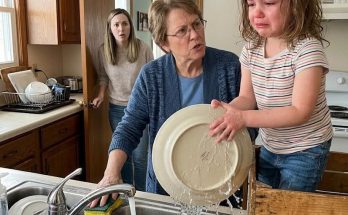
During a family vacation, my sister pushed my six-year-old daughter out of our hotel room and left her barefoot and crying in the hallway for three hours.
When I confronted her, she stared at me with a cold expression and said, “That room is for family only.”
My parents sided with her.
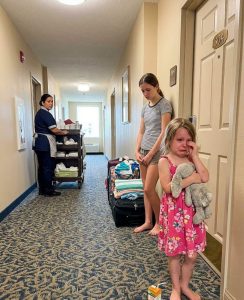
I did not yell, throw anything, or make the scene they seemed to expect. I picked up my daughter, made a few phone calls, and waited.
Three days later, the consequences started arriving.
My name is Claire Bennett, and until last summer, I believed the worst thing my family could do was make me feel as though I did not matter.
I was wrong.
The vacation was supposed to be peaceful—five nights at a beachfront hotel in South Carolina with my parents, my older sister Vanessa, her husband Mark, their two sons, and my six-year-old daughter, Lily.
It was the first family trip I had agreed to take since my husband, Daniel, died in a construction accident two years earlier.
After the funeral, my family kept telling me that I needed to get back to normal. What they meant was that they wanted me to stop making them uncomfortable.
They wanted me to attend birthday dinners, smile for photographs, and laugh at the same jokes as though Daniel’s chair had not suddenly become empty.
Whenever I became quiet, Vanessa accused me of bringing down the mood. My mother would touch my wrist and tell me Daniel would not want me to be sad forever. My father usually changed the subject before anyone had to sit with the reality of what Lily and I had lost.
So I stopped attending most family celebrations.
It was easier to stay home than to perform recovery for people who treated grief like bad manners.
Lily was four when her father died. She remembered the sound of his truck pulling into the driveway and the way he carried her on his shoulders when her legs became tired. She remembered that he always cut her pancakes into crooked stars.
She did not understand construction accidents, insurance paperwork, or why adults lowered their voices when they said his name.
She only understood that he had left for work one morning and never walked through our front door again.
For two years, I had been the person who checked every lock, packed every lunch, paid every bill, and sat beside her bed whenever a bad dream woke her.
That was why agreeing to the vacation felt like a risk.
My mother promised there would be no pressure and no family arguments. She said Lily deserved time with her cousins and that the ocean might be good for both of us.
I wanted to believe her.
I paid for my own hotel room and every expense involving Lily. I bought her a pink swimsuit, a plastic bucket for seashells, and sandals with tiny silver stars across the straps.
I also rented a car because I did not want to depend on anyone else for transportation.
Within a day, my parents were borrowing it.
They needed snacks from the store. My father had forgotten sunscreen. My mother wanted a particular brand of coffee creamer that the hotel did not carry.
Each time, they acted as though the rental car belonged to the whole family because I was not using it at that exact moment.
That had always been the pattern with us.
What belonged to me became communal. What belonged to Vanessa remained hers.
I tried not to let it bother me. I had promised myself I would get through five nights without reopening every old family wound.
The first day was almost pleasant.
Lily ran toward the water with her cousins, laughing whenever a wave chased her back up the sand. She filled her bucket with broken shells and insisted each one was treasure.
That evening, she fell asleep with sand still caught between her toes.