My six-week-old daughter was waiting with my neighbor while I lay in the ER with broken ribs. My parents chose their dinner reservation. I didn’t beg twice. I canceled the monthly bank transfer they had treated like oxygen for nine years.
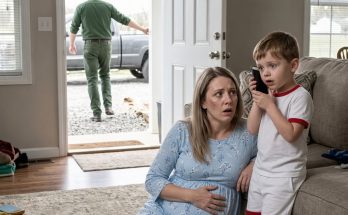
That is the cleanest way to say it, but the real version had antiseptic in the air, dried blood under one fingernail, and a nurse telling me not to move while somewhere across town my baby was waking up hungry in a living room that was not ours. Nora was six weeks old, still measured in ounces and minutes, and I had left her with Diane for one errand because Diane was kind, retired, and lived close enough to hear me knock.
Then the red light happened.
The driver came through Clearwater Avenue like the rules were for other people. The impact hit my side of the car. I remember the sound first, a deep metal scream, then the powdery smell of the airbag, then nothing.
When I opened my eyes, the sky was cut into pieces by ambulance lights.
Someone asked me who to call.
I said my mother.
I was thirty-four years old, with a baby of my own and bills of my own, but when the paramedic asked who to call, I gave him my mother’s number because I thought a mother would come.
At St. Augustine Medical, they told me I had a broken collarbone and two cracked ribs. They were still checking for internal bleeding when my mother finally answered. Her voice sounded annoyed before it sounded worried, but I told myself I was hearing it wrong. I told her I had been in an accident. I told her I was being admitted. I told her Nora was with Diane and needed to be picked up within the hour.
My mother went quiet.
Not scared quiet.
Calculating quiet.
She said she needed to speak with my father.
So I lay there in a hospital gown, staring at the ceiling tiles, listening to the muffled shape of my parents deciding whether my emergency was convenient. A nurse adjusted the brace near my shoulder, and I bit down so hard my jaw clicked. I could hear carts rolling in the hall. A man behind a curtain kept coughing. Somewhere, a machine beeped with the steady confidence of something that had never needed family.
Then my mother came back and said they had a dinner reservation for their anniversary, booked weeks ago and hard to move. I asked her to repeat it, because surely pain had rearranged the words, and when she did, I said, “Mom, Nora is six weeks old.”
My voice broke on the number.
She sighed, as if my newborn had personally insulted the restaurant.
“Call a babysitting service,” she said. “Your sister never has these emergencies.”
My sister was on a ten-day Caribbean cruise, sending filtered photos of blue water and breakfast trays. Bri did not have emergencies because Bri had made a career out of floating above them. She did not call from hospital beds. She did not send 4,500 dollars every month. She did not refill the silence when my father’s unemployment stretched from weeks into years and my mother began saying things like, “Just until we get back on our feet.”
I hung up without saying goodbye.
There is a kind of hurt that makes you loud, and there is a kind that makes you efficient. Mine went quiet and sharpened itself into a checklist: find emergency childcare, call Diane, authorize payment, send the feeding schedule, confirm the car seat, keep breathing.
Between X-rays, I found a vetted emergency childcare agency. I explained the situation to a woman named Celeste, who did not know me and still sounded more concerned than my own mother had. She asked for Diane’s address, Nora’s age, feeding times, allergies, pediatrician, and emergency contacts. I gave her everything.
When my ribs screamed, I stopped talking until the pain passed.
Then I kept going.
Forty minutes later, Celeste texted me a photo from Diane’s entryway. She was holding Nora’s diaper bag in one hand and the car seat base instructions in the other. Diane stood beside her with a worried face and Nora tucked against her shoulder in the yellow blanket my grandfather had bought before she was born.
I cried then, not hard and not dramatic, just two tears slipping sideways into my hair while a nurse pretended not to notice.
After they moved me to a room, I opened my banking app. The automatic transfer was sitting there like it had always sat there, scheduled for the first of the month, clean and obedient. 4,500 dollars. Every month. Nine years. 486,000 dollars total, not counting the little extras my mother never counted as asking. A water heater. Car insurance. Dental work. Bri’s emergency plane ticket once, though Bri never called it a loan.
I had told myself the money was love with numbers attached. Now I saw what it had really become: rent I paid to keep the title of good daughter.
My thumb hovered over the cancel button.
I thought I would feel guilty.
Instead, I felt awake.
I canceled the transfer, turned the phone face-down, and let the room go still around me.
That evening, Celeste sent another photo. Nora asleep. Clean onesie. Tiny mouth open. One fist near her cheek. The sight hurt me worse than the ribs because she looked so peaceful, so trusting, so completely unaware that her first family emergency had already drawn a map around who would come and who would not.
At 8:30, my hospital door opened.
My grandfather Gerald walked in.
He was seventy-nine and moved like his bones were negotiating with him, but his eyes missed nothing. They went from the brace to the IV to the phone on my tray. Then he pulled the chair close and took my hand.
“I heard what happened,” he said.
I did not ask how.
In our family, my grandfather had always been the person people underestimated right before discovering he knew the truth.
“Your mother called me,” he said, “to complain that you hung up on her.”
I laughed once.
It came out broken.
Then I told him everything. I told him about the red light, the ambulance, Diane, the dinner reservation, Bri’s cruise, Celeste, the transfer, all of it. I even told him the number because I needed one person in my family to hear it out loud.
486,000 dollars.
My grandfather closed his eyes.
When he opened them, he looked older and angrier than I had ever seen him.
“You’ve been carrying this family too long, Paige.”
That sentence did something no pain medicine had done.
It loosened the tight thing in my chest.
I had not realized how badly I needed someone to say I was not selfish for being tired. I had spent years making my help small enough that nobody had to feel ashamed taking it, and responsible is a sweet word until it becomes a cage.
My grandfather stayed almost two hours. He called Celeste with me. He asked about Nora’s bottles like the details mattered because they did. He watched me take three bites of hospital chicken and praised me as if I had finished a feast. When he left, he kissed my forehead and told me he was proud.
I held those words all night.
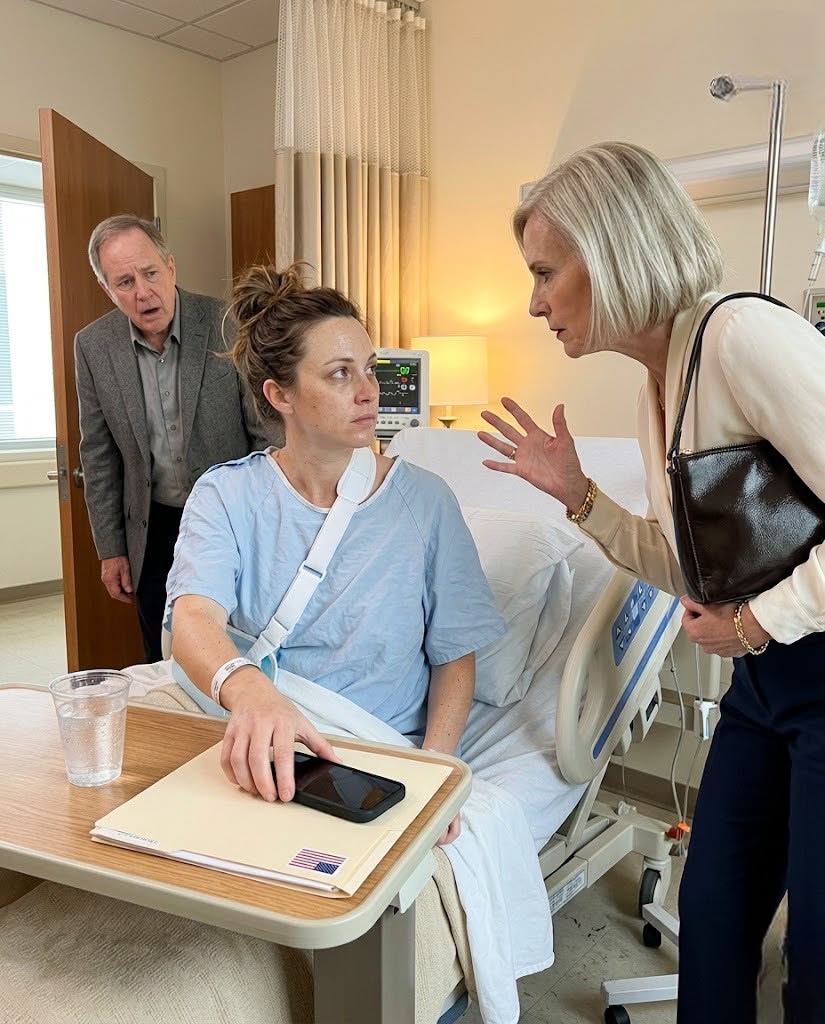
The next morning, my parents arrived with no diaper bag, no apology, and not even a stuffed animal from the gift shop. My mother came in first, wearing the cream coat she saved for restaurants. My father followed with his hands in his pockets, staring at the floor like he already knew she was about to make things worse.
“We need to talk,” my mother said.
I looked at her coat.
No hospital coffee stain. No rushed hair. No face of a woman who had been awake all night worrying about her daughter and granddaughter.
“How is Nora?” I asked.
My mother blinked.
One second too long.
“I’m sure she’s fine,” she said. “Your neighbor had her.”
Someone else had it handled, so my need did not count.
She began explaining the dinner. The reservation, the anniversary, the difficulty of getting that table. She said I had put her in an impossible position. She said I was emotional from the accident. She said hanging up had been disrespectful.
She did not say sorry.
She did not ask whether I could breathe without pain.
She did not ask whether Nora had taken her bottle.
I let her finish.
Then I said, “The transfer is canceled.”
My father’s head came up.
My mother stared at me as if I had spoken in another language.
“What transfer?”
I almost admired the performance.
“The 4,500 dollars I send every month,” I said. “The one I have sent for nine years.”
My father whispered my mother’s name, a warning.
She ignored him.
“Paige, this is not the time to be dramatic.”
“It is permanent.”
Her mouth opened.
For the first time in my life, I watched my mother search for the version of me she knew how to control and fail to find her.
She said one dinner did not erase nine years.
I said one dinner had revealed them.
She said I was punishing my parents for having a life.
I said I was making a financial decision based on new information.
My father tried to step in then. “Maybe everyone should calm down.”
“I am calm,” I said.
That stopped him.
Calm had always been their word for quiet obedience. They did not know what to do when calm looked back and said no.
They left after twenty minutes. My mother did not hug me. My father touched the doorframe like he wanted to say something, then followed her out.
The first frantic call came three days later.
I was home by then, sitting on my couch with Nora asleep on my chest and a pillow braced against my ribs. My grandfather had driven me from the hospital, carried the diaper bag, put the kettle on, and washed the bottles without asking where anything was. Diane had left soup in my fridge. Celeste had texted twice to check on us.
My phone rang.
Mom.
I let it go to voicemail.
Then came a text.
The mortgage drafts tomorrow. Call me.
I looked at Nora’s soft hair, the curve of her ear, the tiny milk blister on her lip.
Another text.
Your father is very upset.
Then another.
We budgeted around that money, Paige.
There it was.
Not, Are you healing?
Not, Is Nora home?
Not, We were wrong.
We budgeted around that money.
I typed one sentence, erased it, typed it again, and set the phone down without sending it. Some replies are too expensive. Some silence finally pays you back.
That night, my grandfather came over with a folder. Not a dramatic black folder, not a movie prop. Just a plain manila envelope with my name written in his square handwriting.
“I want you to read this when you’re not on pain medicine,” he said.
Inside was a copy of his updated will and a new custodial account for Nora. He had funded it with 54,000 dollars, exactly one year of the transfers I had stopped sending my parents.
“Grandpa,” I whispered.
He lifted one hand.
“No speeches. I am old, not sentimental.”
But his eyes were wet.
The account was not the twist.
The twist was the second page.
For years, my parents had assumed my grandfather’s emergency fund would come to them one day. They had spoken about it in careful little ways, never directly enough to sound greedy, always clearly enough that everyone understood. My mother called it “Dad’s safety net.” My father called it “the family cushion.”
Gerald had changed the beneficiary.
The cushion now skipped them entirely.
It went to Nora.
Not because I asked. Not because I wanted revenge. Because my grandfather had listened to one phone call from his daughter, heard her complain that I hung up from a hospital bed, and understood what I had taken nine years to accept.
Some people do not fail you by accident.
They fail you by priority.
My parents found out from the attorney two weeks later.
My mother called sixteen times.
I answered the seventeenth because Nora was asleep and I was curious whether she would finally say the word sorry.
She did not.
“You turned him against us,” she said.
I looked around my apartment. Bottles drying by the sink. A folded yellow blanket on the couch. My hospital discharge papers under a magnet on the fridge. My life, sore and imperfect and finally mine.
“No,” I said. “You called him yourself.”
She started crying then, but even her crying had edges. She said they could lose the house. She said my father was humiliated. She said Bri could not help because cruises were expensive and she had her own life. She said family was supposed to show up.
And there it was.
The door she had opened without realizing.
“Then your family should have shown up.”
Six words.
After years of sending money, answering calls, smoothing feelings, shrinking needs, and pretending I did not notice the difference between being loved and being useful, that was all I had left to say.
My mother went silent.
For once, I did not fill it.
I ended the call and lifted Nora from her bassinet because she was beginning to stir. She made one soft sound against my shoulder, the tiny breathy complaint of a person who trusted I would answer.
So I answered.
I warmed the bottle. I counted the ounces. I held her carefully against the side that hurt less. Outside, traffic moved along the avenue like nothing important had happened, but inside my apartment, an entire family system had ended without a shout.
Months have passed now. My collarbone healed crooked in a way I can feel when rain is coming. Nora is rolling over, grabbing my hair, and smiling with her whole gummy mouth like joy is something she invented.
My parents have seen Nora twice, both times at my grandfather’s house, both times with boundaries clear enough to stand on: no money, no guilt, and no pretending dinner was the point.
Because dinner was never the point.
The point was that I had built a bridge to my parents out of my own money, time, patience, and silence. The first time I needed them to cross it toward me, they complained about traffic.
So I stopped maintaining the bridge.
And the strangest thing happened.
I did not fall.
I found solid ground underneath me.
Sometimes family failing you feels like an ending at first. Then the dust settles, and you realize it was the first honest map you ever received. Mine was drawn in a hospital room, with a broken collarbone, two cracked ribs, a sleeping newborn, and one canceled transfer.
I keep that map close.
Not because I am bitter.
Because one day Nora will ask me what family means, and I want to tell her the truth.
Family is not who takes from you the longest.
Family is who shows up when showing up costs something.