The old Diego would have assumed.
The new one asked.
That mattered.
Not enough to erase everything.
But enough for that night.
“You can stay,” I said.
He nodded.
“Thank you.”
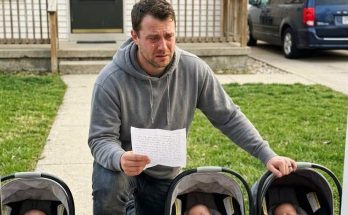
The girls were born at thirty-five weeks.
Small.
Furious.
Perfect.
Isabel came first, screaming like she had a legal objection.
Lucía came second, quieter but gripping the nurse’s finger with astonishing force.
Sun and Moon.
Real names.
Real faces.
Real daughters.
When Diego saw them through the NICU glass, he wept so hard a nurse handed him tissues.
I watched him from my wheelchair.
Part of me was angry that he got to cry over beauty after causing so much pain.
Part of me was relieved he cared.
Motherhood made room for complicated truths.
He did not hold them first.
I did.
That was not punishment.
That was order.
My body had carried them through fear, shame, nausea, court dates, and lonely nights.
My arms were the first home they needed.
Diego held them later, one at a time, sitting down, supervised by a nurse because they were tiny and he was trembling.
When Isabel opened one eye, Diego whispered, “I’m sorry.”
I looked away.
Not because I wanted to interrupt.
Because some apologies belong to the future, not the past.
Dolores met the twins three weeks later.
After written boundaries.
After Diego made it clear that one insult would end the visit immediately.
She arrived with gifts and red eyes.
At first, she tried to kiss me.
I stepped back.
“No.”
She froze.
Then nodded stiffly.
She looked at the babies and began crying.
“My granddaughters.”
I held Lucía closer.
“They are Laura and Diego’s daughters. Being their grandmother is a privilege. Not a right.”
Dolores’s mouth tightened.
Diego said quietly, “Mom.”
She swallowed whatever she wanted to say.
Good.
Progress, sometimes, is only a cruel person staying silent because consequences are standing nearby.
Years passed.
Co-parenting was not easy.
Diego missed the marriage at times.
Or maybe he missed who he was before the truth.
He went to therapy.
So did I.
Not together.
That was important.
He became a decent father.
Careful.
Present.
Sometimes awkward.
He never brought Paula near the girls.
He never allowed Dolores to speak badly of me.
When Isabel was three and knocked over a vase at his apartment, she burst into tears and said, “Mommy will be mad.”
Diego called me immediately, panicked.
I drove over.
Isabel ran into my arms.
I looked at the broken vase.
Then at Diego.
He looked devastated.
“I didn’t yell,” he said. “I swear.”
I believed him.
Isabel had simply inherited fear from a world she did not remember but had lived inside me.
I knelt.
“Baby, people are more important than vases.”
She sniffed.
“Even expensive ones?”
“Especially expensive ones.”
Diego threw the broken pieces away himself.
Later, he said quietly, “I hate what I made you feel while you were carrying them.”
I looked at him.
“I do too.”
He nodded.
No defense.
That was growth.
Not redemption.
Growth.
When the girls turned five, Isabel asked why Daddy lived in a different house.
I knew the question would come.
I had practiced answers.
Still, my throat tightened.
“Because sometimes adults hurt each other and cannot stay married safely. But Daddy and I both love you.”
Lucía asked, “Did Daddy hurt you?”
Diego happened to be there.
He had come for birthday cake.
The room went still.
He looked at me.
Then at the girls.
I could have softened it.
Protected him.
Preserved comfort.
But I had promised myself never to build their childhood on lies.
Diego knelt.
“Yes,” he said quietly. “I hurt Mommy with my words and choices. I was very wrong. I am sorry, and I work every day to be kinder now.”
Isabel stared at him.
“Did Mommy hurt you?”
Diego shook his head.
“No. Mommy told the truth.”
Lucía considered that.
Then said, “Can we have cake now?”
Children have a gift for moving forward when adults think the world has ended.
We had cake.
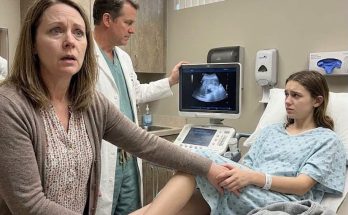
Years later, I sometimes think back to that first ultrasound room.
The cold gel.
The heartbeat.
Diego walking in with Paula behind him.
His cruel voice asking how many weeks along another man’s child was.
And Dr. Salinas turning to him with the calm fury of a woman who knew the truth was about to draw blood.
“Mr. Diego, before you continue insulting your wife…”
That sentence saved something in me.
Not my marriage.
That was already dying.
It saved my belief that truth could still enter a room where lies had arrived first.
Diego had a vasectomy.
I got pregnant.
He called me a traitor.
He left me for another woman.
He tried to turn my babies into evidence against me before they were even big enough to kick.
But the biggest shock waiting in that ultrasound room was not only that the pregnancy began before the surgery.
It was not even the second heartbeat.
The biggest shock was what happened to me.
I stopped begging to be believed by people who benefited from doubting me.
I stopped confusing humiliation with proof.
I stopped thinking a husband’s accusation was stronger than my own truth.
The day Diego saw those two heartbeats, he lost the story he had written about me.
And I gained the one thing I needed most before becoming a mother.
My own voice.
Now, when Isabel and Lucía ask about the first picture of them, I show them the ultrasound.
Two tiny shapes.
Two stubborn heartbeats.
Two daughters who entered my life surrounded by lies and turned it toward truth.
I do not tell them every detail yet.
One day, I will.
When they are old enough to understand.
I will tell them love must ask questions before making accusations.
I will tell them never to accept shame that does not belong to them.
I will tell them a woman’s dignity is not something a man can destroy by posting a lie online.
And I will tell them that before they were born, their mother sat in a clinic room alone, terrified and humiliated…
until two heartbeats answered for her.
Diego thought the ultrasound would expose me.
It did.
It exposed me as faithful.
As pregnant before his careless surgery could become his excuse.
As the mother of twins.
As the woman he had underestimated.
And when the truth appeared on that screen, clear and undeniable, it did not just show my babies.
It showed the end of his lie….
Eight years after Diego accused me of carrying another man’s child, my thirteen-year-old daughter placed a screenshot of his old Facebook post on our dinner table.
“Mom,” Isabel whispered, “Dad said we weren’t his.”
Her twin sister stood beside her, pale and trembling.
Then Lucía said something even worse.
“Grandma Dolores says you destroyed our family—and she’s been talking to us for months.”
For several seconds, I could not breathe.
The kitchen remained exactly as it had been moments earlier.
A pot of pasta simmered on the stove.
Three plates waited on the table.
Isabel’s backpack rested near the door, half-open, with one of her notebooks hanging out.
Everything looked normal.
But nothing was normal anymore.
I stared at the phone between us.
On its screen was a screenshot I had not seen in thirteen years.
Diego’s old post.
The one he had written before the ultrasound.
Before the truth.
Before the twins were born.
I could still remember every word.
Eight years of therapy disappeared in a single heartbeat.
I was pregnant again.
Alone again.
Sitting in that house while strangers whispered that I had betrayed my husband.
I reached for the phone, but Isabel pulled it back.
“No,” she said.
Her voice cracked.
“I want you to answer first.”
I looked at my daughter.
Isabel had always been the louder twin.
The defender.
The one who raised her hand in class even when she was not completely sure of the answer.
But now her eyes were filled with something I had never wanted either of my daughters to feel when looking at me.
Doubt.
“Where did you get that?” I asked.
“That isn’t an answer,” Lucía said.
Her voice was sharper.
Unlike Isabel, Lucía usually became quiet when she was hurt.
That sharpness frightened me more than shouting would have.
“You’re right,” I said. “It isn’t.”
I turned off the stove and sat across from them.
I wanted to grab the phone.
I wanted to call Diego.
I wanted to drive to Dolores’s house and ask what kind of grandmother would place thirteen-year-old girls inside a war that had ended before they could speak.
But I did none of those things.
My daughters needed their mother.
Not the frightened pregnant woman I had once been.
Not the furious ex-wife.
Their mother.
“The screenshot is real,” I said.
Isabel inhaled sharply.
Lucía looked away.
“Your father wrote those words when I told him I was pregnant.”
Isabel’s eyes filled with tears.
“So he really thought we belonged to someone else?”
“Yes.”
“Why?”
I folded my hands to stop them from shaking.
“Because he had recently undergone a vasectomy. He believed that meant he could not be your father.”
“But he was wrong,” Isabel said.
“Yes.”
“How do we know?”
The question cut deeper than she intended.
I reminded myself that Isabel was not accusing me.
She was a frightened child trying to understand why the adults she loved had given her two different versions of her own life.
“After you were born, a DNA test legally confirmed that Diego is your biological father.”
Both girls stared at me.
They had never known about the test.
During the custody proceedings, Diego’s first lawyer had requested it.
By then, Diego said he no longer needed proof.
But I had agreed anyway.
Not for him.
For my daughters.
I never wanted his original accusation hanging over them for the rest of their lives.
“The result was more than 99.9 percent,” I continued. “There has never been any question since.”
“Why didn’t you tell us?” Lucía demanded.
“Because you were children.”
“We’re still children!”
“I know.”
“Then why did Grandma tell us?”
The anger in her voice finally cracked.
Tears rolled down her cheeks.
I stood, but she stepped away from me.
That hurt more than anything Dolores could have said.
“How long has she been contacting you?” I asked.
Neither girl answered.
“Isabel?”
She stared down at the table.
“Since our birthday.”
Three months.
Dolores had been secretly communicating with my daughters for three months.
“How?”
“She created another account,” Lucía answered. “She said Dad wouldn’t let her use her real one because you check everything.”
“I don’t check everything.”
“She said you would say that.”
Of course she had.
That was how manipulation worked.
Dolores had prepared them to distrust every answer I could possibly give.
“What else did she tell you?”
Lucía wiped her face angrily.
“She said you stopped Dad from coming home. She said he begged you to forgive him, but you cared more about punishing him.”
“She said you used us to take his money,” Isabel added quietly.
My stomach turned.
“What else?”
“She said the house belonged to Dad’s family and you stole it during the divorce.”
“That is not true.”
“She showed us court papers.”
“What court papers?”
Lucía took out her own phone.
There were dozens of messages.
Photographs.
Cropped documents.
Voice recordings.
Dolores had not contacted my daughters because she missed them.
She had constructed an entire case.
She sent them the original deed but removed the page showing that my inheritance had paid the down payment.
She sent them sections of the divorce agreement showing the support Diego paid but excluded his income and the amount he had attempted to take from me.
She sent them photographs of Diego crying outside the courtroom.
There were no photographs of me crying alone during my pregnancy.
No picture of the chair I had pushed against my bedroom door.
No screenshot of the message in which he told me never to contact him after the babies were born.
And there was no copy of his public correction.
Only the accusation.
Only the pieces that made me appear cruel.
“She said you hated her because she discovered the truth,” Lucía said.
“No,” I answered. “I stopped trusting her because she threatened me while I was pregnant and treated both of you as possessions.”
“She said she never threatened you.”
“She did it at our front door. The camera recorded everything.”
Both girls became silent.
Dolores had probably told them no recording existed.
I stood and walked to the cabinet beside the refrigerator.
Inside was a locked metal box.
It contained birth certificates, medical records, legal documents, and several pieces of a life I had hoped my daughters would never need to examine.
I entered the code and removed a folder.
I placed Diego’s public correction on the table.
Isabel read it first.
Her lips moved silently.
Weeks ago, I publicly implied that my wife Laura had betrayed our marriage because she became pregnant after my vasectomy. I was wrong.
Lucía leaned over her shoulder.
They continued reading.
I accused her unfairly and caused harm. Laura did not betray me. I did.
Isabel looked at me.
“Grandma never showed us this.”
“I know.”
“Maybe she didn’t have it,” Lucía said quickly.
“She had it,” I answered. “Your father sent copies to everyone in his family.”
Lucía’s face hardened again.
“You always have an explanation.”
The words stung, but I kept my voice calm.
“I do because these things happened to me.”
“What if Grandma has explanations too?”
“Then we will listen to them together.”
She appeared surprised.
“You’re not going to tell us we can’t see her?”
“Right now, I’m telling you that no adult should be secretly contacting you and asking you to hide conversations from your parents.”
“She said you’d stop us from learning the truth.”
“I will never stop you from learning the truth. But the truth does not need secret accounts, cropped documents, or hidden messages.”
Isabel sat down slowly.
“Did Dad leave you because of us?”
“No.”
“But he thought—”
“Your father made his own choices. Neither of you caused them.”
“Did he love Paula?”
The name sounded strange in my daughter’s mouth.
I had never told them much about Paula.
“How do you know her name?”
“Grandma told us,” Lucía said. “She said Dad only went to Paula after you told him the babies weren’t his.”
“I never told him that.”
“Grandma said you wanted him to believe it.”
“That makes no sense.”
“She said you were already planning to divorce him.”
My hands tightened around the back of the chair.
“No. Your father was involved with Paula before he knew I was pregnant.”
Lucía shook her head.
“No.”
“Yes.”
“Dad wouldn’t do that.”
“He did.”
“You’re lying!”
Isabel flinched.
I did not.
Those words had once destroyed me.
But they came differently from my child.
Lucía was not Diego.
She was not trying to humiliate me.
She was trying to protect the image of the father she loved.
“I wish I were lying,” I said.
Her face crumpled.
“You want us to hate him.”
“No.”
“You divorced him!”
“I divorced him because I could no longer trust him as my husband. I never stopped him from becoming your father.”
“You made rules for everything he did!”
“Because rules were necessary.”
“You made him ask permission to see us.”
“When you were babies, yes. The court approved those boundaries because of his behavior.”
“Grandma said you manipulated the judge.”
“I didn’t.”
“She said Dad was too ashamed to fight you.”
I looked at both my daughters.
For years, Diego and I had given them an age-appropriate version of our past.
We told them he had hurt me.
We told them I had chosen divorce.
We told them he worked hard to become a better father.
All of that was true.
But in protecting them from the ugliness, we had left empty spaces.
Dolores had entered those spaces and filled them with lies.
“Your father needs to be part of this conversation,” I said.
Lucía crossed her arms.
“Why? So you can tell him what to say?”
I picked up my phone and opened the parenting app Diego and I had continued using, even after we no longer legally needed it.
I wrote:
The girls have your original post. Your mother has secretly contacted them for three months and sent cropped legal documents. Come immediately. Alone. Do not call Dolores first.
Diego responded before I could put the phone down.
I’m coming.
Isabel saw the message.
“You didn’t tell him what to say.”
“No.”
“Is he going to be angry with us?”
The fear in her voice broke my heart.
I moved slowly, giving her time to step away.
She did not.
I wrapped my arms around her.
“No, sweetheart. You did nothing wrong.”
She began crying against my shoulder.
Lucía remained near the window, looking outside.
I wanted to hold her too.
But I could see she was not ready.
So I waited.
Twenty minutes later, headlights swept across the front windows.
Diego’s car stopped in the driveway.
Lucía straightened.
Isabel wiped her face.
The front door opened.
Diego still had a key for emergencies, but he did not use it.
He knocked.
Even after all these years, he waited for permission.
I opened the door.
He looked from me to the girls.
“What happened?”
I handed him Isabel’s phone.
The moment he saw the screenshot, all the color disappeared from his face.
He scrolled through Dolores’s messages.
His expression changed from confusion to disbelief.
Then from disbelief to rage.
“She did this?”
“For three months,” I said.
Diego looked at the girls.
“Why didn’t you tell me?”
Lucía lifted her chin.
“Grandma said Mom would make you block her again.”
“I would have blocked her.”
“Why?”
“Because she had no right to do this.”
Lucía pointed toward the screenshot.
“Did you write that?”
Diego went completely still.
I watched the struggle cross his face.
This was the moment that would reveal whether he had truly changed.
He could soften the story.
Blame the surgery.
Blame fear.
Blame Paula.
Blame Dolores.
He could protect the father our daughters believed him to be.
Or he could tell them who he had once been.
“Yes,” he said.
Isabel began crying again.
Lucía stared at him.
“You said we weren’t yours.”
“I said something cruel before I knew the truth.”
“Did Mom cheat on you?”
“No.”
“Did she take your house?”
“No. It was always legally hers.”
“Did she keep us away from you?”
“No.”
“Did she lie in court?”
“No.”
Each answer seemed to make Lucía smaller.
Finally, she whispered, “Did Grandma lie about everything?”
Diego looked down at the messages again.
His hand began trembling.
“Your grandmother took pieces of the truth and rearranged them until your mother looked guilty.”
“Why would she do that?”
“Because admitting the truth would require her to admit what she helped me do.”
Lucía’s eyes filled.
“But she loves us.”
“I believe she does,” Diego said. “But loving someone does not give you permission to lie to them.”
Isabel wiped her cheeks.
“Why didn’t you tell us?”
Diego looked at me.
I said nothing.
This answer belonged to him.
“Because I was ashamed,” he admitted. “And because your mother showed me more mercy than I deserved.”
Lucía shook her head.
“Grandma said Mom enjoyed making you suffer.”
“No,” Diego answered. “Your mother gave me the opportunity to become your father after I had already rejected you.”
Silence filled the kitchen.
Then Lucía unlocked her phone.
“There’s something else.”
She opened a folder filled with voice recordings.
“Grandma told us to save these somewhere Mom couldn’t find them.”
She pressed play.
Dolores’s voice entered my kitchen.
Soft.
Patient.
Poisonous.
“Your mother has spent your entire lives punishing your father. One day, you girls will have to decide whether you want to remain her weapons or finally become part of your real family.”
Diego closed his eyes.
Another recording played.
“Laura was not innocent. She knew exactly how to use that pregnancy to trap everyone. Your father lost his home, his money, and his children because she wanted revenge.”
The final recording was worse.
“You must never tell your father we’re talking. He is still afraid of Laura. When you are old enough, I will help you choose where you truly belong.”
Diego took one step back as if his mother were standing inside the room and had struck him.
Lucía stopped the recording.
“Is that why she wasn’t allowed to see us alone?”
“Yes,” I said.
She looked down.
All her anger disappeared at once.
What replaced it was worse.
Shame.
“I believed her.”
I crossed the room.
This time, she did not step away.
I held her face gently.
“You trusted your grandmother. That is not something you should be ashamed of.”
“I kept secrets from you.”
“Because an adult told you that secrecy was the price of knowing the truth.”
She collapsed into my arms.
“I’m sorry, Mom.”
I held her while she sobbed.
Over her shoulder, I looked at Diego.
His face was wet with tears.
But I felt no sympathy for him in that moment.
His mother’s lies had grown from the first lie he planted thirteen years earlier.
He had corrected it publicly.
He had apologized.
He had become a better father.
But consequences did not disappear simply because a person changed.
Sometimes they waited until your children were old enough to ask questions.
Isabel looked at Diego.
“Is that everything?”
He did not answer.
She stepped closer.
“Dad, is that the whole story?”
Diego stared at the screenshot in his hand.
Then he looked at me.
I saw terror in his eyes.
Not fear that I would expose him.
Fear that he would finally have to expose himself.
He slowly placed the phone on the table.
“No,” he whispered.
Lucía pulled away from my arms.
“What else happened?”
Diego looked at both of his daughters.
“Your grandmother lied to you,” he said. “But your mother hasn’t told you the worst thing I did yet.”…
“Your grandmother lied to you,” Diego said. “But your mother hasn’t told you the worst thing I did yet.”
Neither of the girls moved.
I felt Isabel’s fingers tighten around mine.
Lucía stared at her father as if she were trying to decide whether she wanted him to continue.
“What could be worse than saying we weren’t yours?” she finally asked.
Diego lowered his eyes.
“The reason I left your mother so quickly.”
The kitchen became painfully quiet.
Diego pulled out a chair but did not sit.
It was as if he knew he did not deserve to make himself comfortable.
“When your mother told me she was pregnant, I said I believed she had cheated on me,” he began. “I used my vasectomy as proof, even though the doctor had warned me that the procedure wasn’t immediately effective.”
“You didn’t understand,” Isabel said quietly.
Diego looked at her.
“I pretended not to understand.”
My breath caught.
That was more honest than I expected.
“What does that mean?” Lucía asked.
“It means I knew there was a possibility the pregnancy was mine. Your mother reminded me that I had never gone back for the medical test. But I didn’t want to listen.”
“Why?”
Diego’s face folded with shame.
“Because believing she had cheated gave me an excuse to leave.”
Isabel released my hand.
Lucía’s expression hardened.
“Leave for Paula?”
“Yes.”
“Were you already in love with her?”
Diego looked at me before answering.
Perhaps he wanted permission.
Perhaps he wanted rescue.
I offered neither.
“I had been involved with Paula before I knew your mother was pregnant.”
Lucía stepped back.
“You cheated first?”
“Yes.”
“How long?”
“A few months.”
“A few months?” Isabel repeated.
Diego nodded.
He looked smaller with every truth.
“I had already told Paula I was unhappy. I told her I was thinking about leaving the marriage.”
“Were you unhappy?” Isabel asked.
Diego swallowed.
“I was selfish. That isn’t the same thing.”
He finally sat down.
“I wanted the comfort of my marriage and the excitement of another relationship. Your mother gave me a home, loyalty, and love. Instead of appreciating that, I began treating those things as if I were entitled to them.”
I watched my daughters absorb his words.
There are things children should never have to know about their parents.
But there are also lies that become more dangerous when hidden.
Dolores had already opened the door.
Now the only choice left was whether truth or manipulation would walk through it.
Lucía’s voice dropped to a whisper.
“Did you get the vasectomy because you didn’t want us?”
“No.”
Diego answered so quickly that his chair moved.
“I didn’t know you existed.”
“But you and Mom wanted children?”
I closed my eyes briefly.
That question belonged to an older wound.
“We had discussed having children,” I said. “But we kept delaying it.”
“I kept delaying it,” Diego corrected.
The girls looked at him.
“I told your mother we needed more money. Then I said we needed a larger house. Then I said my career was too demanding. The truth was that I was afraid of becoming responsible for anyone other than myself.”
“Then why did you have the operation?” Isabel asked.
Diego rubbed both hands over his face.
“I told your mother I didn’t want any more pregnancy scares. But I made the appointment without truly discussing what it meant for our future.”
I remembered that argument.
He had come home with the appointment already scheduled.
When I asked why he had not discussed it with me first, he said it was his body.
He was right about that.
But he used that truth to avoid speaking honestly about our marriage.
“I supported his right to make the decision,” I explained. “But I was hurt that he made such an important choice without a real conversation.”
Lucía stared at the floor.
“So you didn’t trick him?”
“No.”
“Grandma said you stopped taking birth control without telling him.”
“That is a lie,” I said. “We both knew I had stopped because the medication was causing health problems. The doctor instructed us to use another form of protection until your father’s follow-up test.”
Diego nodded.
“Your mother reminded me. I ignored her.”
“Why would Grandma lie about that?”
Diego’s face became hard.
“Because my mother has spent years trying to turn my decisions into your mother’s fault.”
“She was protecting you,” Lucía said.
“No. She was protecting the version of me she wanted to believe in.”
Lucía looked at him.
“Is there a difference?”
“Yes,” Diego answered. “Protecting someone means helping them become better. Hiding what they did only helps them remain cruel.”
Isabel began crying silently.
I placed my arm around her.
She looked at Diego.
“When Mom said she was pregnant, did you really leave that morning?”
“Yes.”
“And you moved in with Paula?”
“Yes.”
“Did you call Mom?”
“No.”
“Did you ask if we were healthy?”
Diego’s mouth opened, but no sound came out.
Isabel wiped her face.
“Did you care whether we died?”
“Isabel,” I whispered.
“No, Mom. I want him to answer.”
Diego’s eyes filled with tears.
“At that moment, I was thinking only about myself.”
“That isn’t an answer.”
“No,” he admitted. “I didn’t ask whether you were healthy. I didn’t ask whether your mother needed help. I didn’t behave as if I cared.”
Isabel stood.
“You didn’t want us.”
“I was wrong about you before I knew you.”
“You called us somebody else’s children.”
“Yes.”
“You said you would never raise us.”
“Yes.”
“And then you saw two heartbeats and suddenly wanted to be our dad?”
Diego began to cry.
I had seen him cry many times over the years.
At the hospital.
At birthdays.
When Lucía broke her arm.
When Isabel called him “Daddy” for the first time.
But my daughter did not comfort him.
Neither did I.
His tears were real.
So were the things that caused them.
“The ultrasound showed me how completely wrong I had been,” he said. “But I didn’t become a good person in that room. I was only a frightened man realizing that his lie had collapsed.”
Isabel’s chin trembled.
“Do you love us now?”
Diego stood slowly.
“More than anything.”
“How do we know you won’t stop?”
He took one step toward her, then stopped.
“You don’t know because I say it. You know because I will continue showing up.”
“But you didn’t show up at the beginning.”
“No.”
“Then maybe Grandma is right. Maybe Mom forced you away, and now you’re saying this because you’re still afraid of her.”
Diego looked at me.
Then he did something I did not expect.
He reached into his wallet and removed an old folded paper.
The creases were nearly torn.
He placed it on the table.
It was a copy of the DNA report.
The girls’ names were printed at the top.
Below them was the probability of paternity.
99.99 percent.
“I have carried this since the day the results arrived,” he said.
Lucía picked it up.
“Because you needed proof?”
“At first, yes.”
His honesty struck again.
“Later, I carried it because it reminded me of the ugliest mistake I ever made.”
Isabel looked at him.
“Why didn’t Mom tell us all this?”
“Because she wanted you to love me without carrying her pain.”
“That isn’t fair,” Lucía whispered.
“No,” Diego said. “It wasn’t fair to her.”
I finally spoke.
“I also wanted you to have a childhood that wasn’t controlled by what happened before you were born.”
Lucía looked at me.
“Did you forgive him?”
“No.”
Diego flinched, but I continued.
“I accepted that he changed. I learned to trust him with both of you. I respected the father he became. But forgiveness does not always mean returning to the person who hurt you.”
“Do you hate him?”
I looked at Diego.
“No. But I will never forget who I had to become to survive what he did.”
The girls fell silent.
Then Diego picked up Lucía’s phone.
He opened Dolores’s secret account and pressed the call button.
“What are you doing?” Lucía asked.
“Something I should have done years ago.”
Dolores answered almost immediately.
“My darling,” she said warmly. “Is everything okay?”
“It’s me,” Diego said.
The warmth vanished.
“Diego?”
“Yes.”
A pause.
Then her voice became defensive.
“Laura took their phones, didn’t she?”
“No. Lucía gave it to me.”
“You don’t understand what is happening.”
“I understand that you secretly contacted my daughters and told them lies.”
“I told them the truth their mother concealed.”
“You showed them my accusation but not my correction.”
“Because your correction was written under pressure.”
“It was written because I lied.”
“You were confused.”
“I was cruel.”
“You were grieving!”
“Nothing had died, Mother. My daughters were alive inside Laura while we treated them like evidence of betrayal.”
Dolores became quiet.
Then she said, “Laura is standing beside you, isn’t she?”
“Yes.”
“Of course she is. She never allows you to speak freely.”
Diego’s expression changed.
For years, he had responded to his mother with frustration, embarrassment, or exhausted silence.
This time, something colder entered his voice.
“Laura is not controlling me. I am telling you that you will never contact Isabel or Lucía secretly again.”
“You cannot keep my granddaughters from me.”
“I can protect my daughters from anyone who asks them to lie to their parents.”
“I was protecting them from her.”
“No. You were teaching them to distrust the mother who carried and raised them.”
Dolores inhaled sharply.
“You ungrateful coward.”
Diego closed his eyes.
“You are right about one word. I was a coward. I allowed you to attack Laura because it kept attention away from what I had done.”
“Diego—”
“I blamed my wife for my affair. I blamed her pregnancy for my abandonment. I blamed the vasectomy for an accusation I wanted to believe. And every time you defended me, I let you.”
I felt something shift inside me.
I had heard Diego apologize before.
I had watched him admit his failures in court, in therapy, and in front of our daughters.
But this was the first time I heard him say it directly to the woman who had taught him that consequences were humiliation.
Dolores’s voice trembled.
“You are choosing her over your own mother.”
“No. I am choosing my daughters over your lies.”
“You think Laura is innocent?”
“I know she was faithful.”
“That isn’t what I mean.”
Diego opened his eyes.
“What are you talking about?”
Dolores laughed softly.
The sound made my skin turn cold.
“She has convinced those girls she never tried to keep them from you.”
“She didn’t.”
“Are you sure?”
“Yes.”
“You weren’t present for every conversation.”
Neither was she.
But the confidence in Dolores’s voice unsettled me.
“What are you trying to do?” I asked.
Dolores ignored me.
“Diego, ask your precious Laura what she said outside the courthouse when she was six months pregnant.”
My heart began pounding.
Outside the courthouse.
Six months pregnant.
Then I remembered.
It was the day Paula agreed to testify.
Dolores had appeared near the parking garage.
She screamed that Paula and I were conspiring to destroy her son.
Valeria pushed me toward the car because my blood pressure had risen.
I remembered shouting something.
I remembered being frightened.
But thirteen years had worn the edges off the exact words.
“What did she say?” Lucía asked.
Dolores’s voice became almost gentle.
“I don’t want to upset you, sweetheart.”
“You already upset them,” Diego snapped.
“I have proof,” Dolores replied.
My phone vibrated on the table.
A new message had arrived from an unknown number.
Then Lucía’s phone vibrated.
So did Isabel’s.
Dolores had sent the same file to all of us.
A video.
Only eleven seconds long.
The image shook as if the person filming had been hiding behind a parked car.
I appeared on the screen.
Twenty-four weeks pregnant.
My face was wet with tears.
My hands protected my stomach while Valeria tried to guide me away.
A younger Dolores shouted from somewhere outside the frame.
“You cannot take my son’s children from him!”
Then my own voice answered.
Cold.
Furious.
Undeniable.
“I don’t care what Diego wants anymore. I will make sure he never gets those girls.”
The video ended.
Nobody spoke.
I stared at the frozen image of myself.
I remembered the confrontation.
I remembered Dolores following me.
I remembered Valeria telling her to leave.
But I did not remember saying those exact words.
Isabel pulled away from me.
Lucía’s face went pale.
“You said you never kept us from Dad.”
“I didn’t.”
“We just heard you!”
“That video is missing something.”
“What?” Lucía demanded.
“I don’t know.”
Dolores remained on the phone.
Her voice entered the silence triumphantly.
“Ask your mother why she has lied to you for thirteen years.”
Then she ended the call.
Diego replayed the video.
Once.
Twice.
Three times.
Each time, the same words came from my mouth.
I will make sure he never gets those girls.
Isabel stared at me as tears filled her eyes.
“Mom,” she whispered, “what if Grandma wasn’t lying about you?”….
“Mom,” Isabel whispered, “what if Grandma wasn’t lying about you?”
The question hurt.
But I could not blame my daughter for asking it.
She had just watched a video of me saying I would make sure her father never got his daughters.
The voice was mine.
The face was mine.
The anger was mine.
But something was missing.
I could feel it.
“I’m not asking you to believe me without evidence,” I said. “I’m asking you to give me time to find the complete recording.”
Lucía looked at the frozen video.
“How do you know there’s more?”
“Because eleven seconds cannot show an entire confrontation.”
Diego played the clip again.
I heard myself say the words that had already begun damaging everything I had spent thirteen years building.
I will make sure he never gets those girls.
Diego enlarged the image.
“This was recorded outside the courthouse,” he said. “The day Paula gave her first statement.”
“Yes.”
“Was Paula there?”
“I think so. Valeria was definitely with me.”
“Then we call Valeria.”
“It’s almost ten o’clock.”
“I don’t care.”
I did.
Valeria had retired from regular practice two years earlier. She had earned the right to sleep without my old marriage dragging her out of bed.
But this was no longer only about the divorce.
It was about my daughters.
I called.
Valeria answered on the fourth ring.
“Laura?”
“I’m sorry it’s late.”
“What happened?”
I explained the secret account, the cropped documents, and the video.
Valeria did not interrupt.
When I finished, her voice became sharp.
“Send me the file.”
I forwarded it.
For several minutes, we heard only the clicking of her keyboard.
“I remember this confrontation,” she finally said.
“Do you remember what I said?”
“I remember Dolores threatened to take the twins after they were born. I pulled you away because your blood pressure was dangerously high.”
“Was someone recording?”
“Yes.”
My knees nearly gave way.
“Who?”
“Paula.”
Diego looked up.
“Why was she recording?” I asked.
“Her attorney instructed her to document every interaction involving Diego or Dolores. At that time, Diego was refusing to leave her apartment, and Dolores had accused Paula of conspiring with you.”
Diego lowered his head.
Another piece of his past placed itself on the table.
“Do you still have the complete video?” I asked.
“Not at my house. The file should be in the archived case records.”
“How long will it take to retrieve?”
“I’ll request access first thing in the morning.”
Lucía crossed her arms.
“So we have to wait?”
Valeria heard her.
“Is that Lucía?”
“Yes.”
“Put me on speaker.”
I did.
“Lucía, I understand why you have questions,” Valeria said. “Your mother should not ask you to ignore something you saw with your own eyes. But an edited video can contain real words while still creating a false story.”
“Do you remember what she said after the clip ended?”
“No,” Valeria admitted. “And I won’t pretend I do. We will retrieve the evidence.”
That honesty calmed Lucía more than a confident denial would have.
Valeria continued.
“Until then, save every message Dolores sent. Do not delete anything, even if it is painful.”
“Could Grandma get in trouble?” Isabel asked.
“That depends on what she did and how she obtained the records.”
The girls exchanged a frightened glance.
Despite everything, Dolores was still their grandmother.
I understood that loving someone did not disappear the moment you learned they had hurt you.
That was one of the cruelest lessons adulthood had taught me.
“We aren’t deciding anything tonight,” I said. “You both need rest.”
“I’m not going to sleep,” Lucía muttered.
“Then you can stay beside me without making decisions while you’re hurt.”
Diego looked toward the door.
“I should leave.”
Isabel stared at him.
“Why?”
“Because this is your mother’s home.”
“But this is about you too.”
Diego hesitated.
Then he looked at me.
“May I stay until they fall asleep?”
I nodded.
We sat in the living room together.
Not as a family restored.
Not as a husband and wife.
As four people waiting for the truth.
Isabel rested against me.
Lucía sat at the opposite end of the couch, close enough that her feet touched mine.
Diego remained in a chair.
No one turned on the television.
At midnight, Isabel fell asleep against my shoulder.
Lucía lasted another twenty minutes before closing her eyes.
Diego helped me carry Isabel upstairs.
I tucked her into bed and kissed her forehead.
When I entered Lucía’s room, she was awake again.
“Mom?”
“Yes?”
“If the full video shows the same thing, will you admit it?”
The question struck hard.
But I answered immediately.
“Yes.”
“You won’t make excuses?”
“I will explain the circumstances, but I will not deny my own words.”
She studied my face.