
PART 1
After four daughters, my husband finally got the son he’d spent years begging for.
But the moment he held our newborn boy for the first time, the look on his face changed—and the words he whispered made my stomach drop.
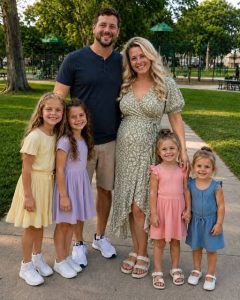
Julian and I had been together for eight years.
From the very beginning, we’d dreamed of having a large family. We imagined a noisy home filled with children, birthdays, holidays, and all the chaos that came with raising a family together.
But there was one thing Julian had always wanted more than anything else.
A son.
Even before we were married, he talked about having a boy who would carry his last name and continue the family legacy.
“A family without a son just wouldn’t feel complete,” he’d say.
At first, I thought it was harmless.
Then, shortly after our wedding, I discovered I was pregnant.
Julian was overjoyed.
From the moment we found out, he became convinced our first child would be the son he’d always dreamed about.
Instead, we welcomed a beautiful baby girl.
Julian loved her.
I never doubted that.
But beneath his smiles and excitement, I could still see the disappointment he tried desperately to hide.
He kissed our daughter’s forehead and smiled at me.
“We’ll give her a little brother someday.”
So we tried again.
And again.
Every year or so, another beautiful little girl entered our lives.
Four daughters.
Four precious children who filled our home with laughter, toys, bedtime stories, and endless noise.
Julian cared deeply for all of them, but every time the ultrasound revealed another girl, that same flicker of disappointment returned.
He would smile.
He would say he was happy.
But I knew him well enough to see what he wasn’t saying.
By our fourth daughter, I was exhausted.
Four pregnancies had taken a physical and emotional toll on me, and I couldn’t help wondering how many more children Julian expected me to have before he finally accepted that we might never have a son.
Then, unexpectedly, I became pregnant for the fifth time.
When I showed Julian the pregnancy test, his entire face lit up.
He barely let me finish speaking.
“I know it,” he said confidently. “This time, it’s finally my boy.”
Throughout the pregnancy, he talked about our unborn son constantly.
He imagined teaching him to throw a baseball.
He talked about taking him fishing.
He even started discussing which family traditions he would pass down to him.
For the first time in years, Julian seemed completely satisfied.
And then the day finally came.
After hours of painful labor, I heard the doctor announce the words we’d been waiting for.
“It’s a healthy baby boy.”
Julian looked happier than I’d ever seen him.
His eyes filled with tears as the nurse carefully placed our newborn son into his arms.
I watched them together from the hospital bed.
After four daughters, this was the moment Julian had dreamed about for years.
I expected him to laugh.
I expected him to cry.
Maybe he’d finally whisper, “We did it.”
Instead, he stared down at our baby’s face.
His smile slowly disappeared.
The happiness drained from his expression.
Then he looked directly at me.
There was something strange in his eyes.
Something I couldn’t understand.
He opened his mouth.
And the first words he said after holding our son made my entire body go cold.
Preview
“Don’t let my mother see him,” Julian whispered. His voice was so low I almost thought I had imagined it. He tightened his arms around our newborn son, staring at the baby as though he were holding something dangerous instead of the child he had wanted for years. “Claire, listen to me. Whatever happens, do not let my mother take him.”
For several seconds, I couldn’t speak. My body was still shaking from labor, my mind fogged by pain, exhaustion, and medication. I stared at Julian, waiting for him to smile and tell me it was some terrible joke. Instead, he turned toward the hospital-room door with a look I had never seen on his face before. It was fear.
“What are you talking about?” I asked. “Why would your mother take our baby?” Julian didn’t answer. The nurse standing beside him shifted uncomfortably, obviously sensing that something had changed. Julian handed our son back to her so quickly that she nearly had to adjust her grip. Then he walked toward the door and quietly turned the lock.
“Julian,” I said again, louder this time. “What is going on?” He leaned his forehead against the door for a moment. When he turned around, he looked ten years older. “There’s something I should have told you before we ever got married,” he said. “Something about my family. About why my mother cared so much about us having a son.”
My stomach tightened. Throughout our marriage, Julian’s mother, Margaret, had always been strangely interested in my pregnancies. She attended every gender reveal. She asked invasive questions about fertility appointments. Whenever another daughter was born, she brought expensive gifts but always managed to say something like, “Well, perhaps next time we’ll finally have someone to carry the name.”
I had disliked those comments, but Julian always defended her. “She’s old-fashioned,” he would say. “Don’t take it personally.” Now he stood three feet from my hospital bed telling me not to let that same woman near my newborn son. Suddenly, every strange comment Margaret had made during the last eight years began replaying inside my head with an entirely different meaning.
“There’s a trust,” Julian finally said. “My grandfather created it almost forty years ago. Real estate, investments, family companies. It’s worth somewhere around thirty-two million dollars now.” I stared at him. Julian had never told me his family possessed anything close to that amount of money. Margaret lived comfortably, but she certainly never behaved like someone controlling a fortune.
“The trust doesn’t belong to my mother,” he continued. “She manages part of it. But she can’t touch the principal permanently. According to the original terms, control eventually passes to the first male descendant born into my branch of the family.” He looked toward the nurse holding our son. “That means him. At least, that’s what my mother believes.”
I actually laughed once, a short confused sound caused more by shock than humor. “You’re telling me your mother wants our newborn because he’s worth money?” Julian’s expression didn’t change. “Not just money. Control. Properties. Voting shares. Everything my grandfather built.” My skin prickled. “And you knew this?” I asked. Julian closed his eyes. That tiny movement answered before he spoke.
Preview
“I knew about the trust,” he admitted. “I didn’t know everything she was planning.” Rage pushed through my exhaustion. “Planning?” I repeated. “What exactly was she planning?” Before Julian could answer, someone knocked sharply on the hospital door. Three knocks. A pause. Then Margaret’s familiar voice floated through the wood. “Julian? Claire? I heard he’s here. Open the door.”
Julian went completely pale. Margaret knocked again, harder. “Julian, open this door.” The nurse looked at me. I looked at Julian. He lifted one finger to his lips, then whispered, “Tell her the baby is being examined.” The nurse hesitated before finally approaching the door. “Mrs. Hartwell, the newborn is currently undergoing routine evaluation,” she called.
Margaret stopped knocking. For two seconds there was silence. Then she said something that made the nurse turn toward us. “That’s strange. I was told his evaluation finished twelve minutes ago.” Julian’s head snapped up. Margaret continued calmly. “Please open the door. I have paperwork that requires Claire’s signature before discharge arrangements can be finalized.”
“Discharge?” I said. “I gave birth less than an hour ago.” Julian grabbed the door handle but didn’t unlock it. “Go away, Mom.” Margaret’s voice immediately changed. The sweetness disappeared. “Julian,” she said slowly, “do not become sentimental now. We discussed what had to happen. Open the door before you make this difficult for everyone.”
My eyes locked on Julian. “Discussed what?” His face crumpled. Margaret had unknowingly answered the question he had been avoiding. I pushed myself upright despite the sharp pain across my abdomen. “Julian, what did you discuss with her?” He looked at me, then at our son. “Claire, I need you to stay calm.” That sentence frightened me more than anything else.
“Do not tell me to stay calm,” I said. “Tell me what your mother thinks is supposed to happen to my baby.” Julian dragged both hands over his face. “She planned to become his legal guardian.” For a moment, the words didn’t make sense. “If something happened to you,” he added quietly, “she wanted guardianship of all five children.”
“If something happened to me?” I whispered. The room seemed suddenly colder. Julian looked at the floor. “She made me sign documents three months ago.” The nurse stepped closer to my bed. I barely noticed. “What documents?” I demanded. “A temporary guardianship agreement,” he said. “Medical authorization. Some financial documents. She said they were only precautions.”
I stared at the man I had slept beside for eight years. “You signed papers giving your mother rights over our children without telling me?” Julian immediately shook his head. “They weren’t supposed to activate unless you became incapacitated.” “And why,” I asked, every word trembling, “was your mother preparing for me to become incapacitated?”
Julian didn’t answer. The silence was devastating. Outside the door, Margaret spoke again. “Claire, sweetheart, Julian is overwhelmed. He has always been emotional under pressure. Open the door and I’ll explain everything.” I reached toward the nurse. “Please call hospital security.” Margaret must have heard me because she slammed her palm against the door. “That would be extremely unnecessary.”
The nurse pressed the emergency button beside the wall. Julian looked relieved, which confused me. Then Margaret shouted, “Julian, remember what you signed!” He flinched. I turned to him. “What else did you sign?” Julian opened his mouth, but the door suddenly rattled violently as Margaret tried the handle. Security arrived seconds later and escorted her away while she screamed his name down the corridor.
Once the hallway became quiet, Julian sank into a chair. Our son began crying in the nurse’s arms. I wanted desperately to hold him, but I was suddenly terrified of everything around us. Julian stared at me and whispered, “My mother took out an insurance policy on you.” The sound of my baby crying seemed to disappear behind a roaring noise in my ears.
Preview
“How much?” I asked. Julian swallowed. “Five million dollars.” I felt as if someone had struck me. “And you allowed that?” “I didn’t know the amount at first,” he said. “She told me it was standard estate planning because of the children. She’s been managing our family finances for years.” I laughed bitterly. “You’re thirty-six years old, Julian.”
“I know.” Tears filled his eyes. “And I was stupid.” I wanted to scream at him, but something about his terror made me hesitate. “Why are you telling me now?” I asked. Julian looked toward our son again. “Because when I held him, I finally understood what she had been doing. And because of what she said yesterday.”
My heart started pounding again. “What did she say?” Julian leaned forward. “She told me that after the baby was born, you were going to have a breakdown.” I stared at him. “She predicted I was going to have postpartum depression?” “Not predicted,” Julian whispered. “She said it like she already knew.”
The nurse stopped moving. Even she understood what that meant. Julian continued. “I asked her what she meant. She said you’d be exhausted, unstable, probably confused. She told me not to argue when doctors recommended psychiatric observation.” My mouth went dry. “Doctors?” I asked. “Which doctors?” Julian shook his head. “I don’t know. That’s when I started realizing something was wrong.”
I remembered Margaret visiting me three days earlier. She had brought herbal tea and insisted I drink it because it would “help prepare the body for labor.” I had taken two sips before the taste bothered me and poured the rest away. I told Julian. His face changed instantly. “Did she bring anything else?” he asked. I nodded slowly. “Vitamins.”
Julian stood so quickly the chair tipped backward. “Where are they?” I pointed toward my overnight bag. The nurse immediately stopped him from touching it. “Nobody handles anything until security arrives,” she said. Her voice was calm, but her face had tightened. She called the charge nurse, who contacted hospital administration and requested that my belongings remain untouched.
Within twenty minutes, our peaceful maternity room had become something resembling an investigation. A hospital social worker arrived. Security stationed someone outside. My blood was drawn again. The vitamins Margaret had given me were sealed inside a specimen bag. Julian sat against the wall, answering questions while I held our sleeping son against my chest.
Then the social worker asked one question that changed everything. “Mrs. Hartwell, did you sign any psychiatric power-of-attorney documents during your pregnancy?” “Absolutely not,” I said. She looked at Julian. “Did your wife sign anything in front of you?” Julian shook his head. The social worker placed a photocopy on the table beside my bed.
My signature was at the bottom. I recognized it immediately. It looked nearly perfect. The document stated that if I experienced postpartum psychiatric symptoms, Julian and Margaret could authorize temporary inpatient treatment and make decisions regarding my children. My hands started shaking. “I never signed this.” The social worker nodded. “That is why we are asking.”
Julian stared at the paper as though it were poisonous. “Where did you get that?” he asked. “Your mother submitted it electronically to hospital administration six weeks ago,” the woman replied. Julian stood. “Six weeks?” His confusion appeared genuine. “She told me Claire signed everything.” I turned toward him. “And you never asked me?”
He had no answer. My anger changed shape. Until that moment I had believed Margaret was the monster and Julian was merely weak. Now I realized weakness had consequences. He had spent years allowing his mother into our marriage, our finances, my pregnancies, and our daughters’ lives because confronting her was inconvenient. Whatever Margaret had planned, Julian had helped build the doorway she entered through.
Preview
A police officer arrived shortly after noon. Margaret had refused to leave hospital property and was waiting downstairs with an attorney. When the officer mentioned the attorney’s name, Julian’s expression changed again. “Victor Dane?” he asked. “You know him?” the officer said. Julian nodded. “He’s the trustee attorney. He works for my mother.”
The officer asked Julian to explain the trust. Julian hesitated, then told us something he had never told me. His grandfather, Theodore Hartwell, had founded a construction company that eventually became a regional property empire. When Theodore died, he created separate trusts for his descendants. Julian’s branch contained an unusual clause favoring the first surviving male descendant after Julian.
Margaret had spent decades expecting Julian to produce that heir. Until then, she maintained limited control as trustee. Once a qualifying boy was born, certain assets would move into a new sub-trust controlled initially by the child’s legal guardian. I looked down at my son. “So whoever controls him controls the money.” Julian nodded. “Until he turns twenty-five.”
The officer leaned forward. “Approximately how much money?” Julian answered, “Thirty-two million, possibly more.” Nobody spoke for several seconds. Then I understood why Margaret had attended every ultrasound. Why she kept asking whether we planned another pregnancy. Why she had offered to pay for fertility specialists after our fourth daughter.
“She didn’t want a grandson,” I whispered. “She wanted a key.” Julian lowered his eyes. That was when another memory surfaced. During my third pregnancy, Margaret had joked that daughters were “wonderful practice.” After my fourth daughter, she had cried privately in our kitchen. I had assumed she was emotional about the birth. Now I wondered whether those had been tears of frustration.
But the worst discovery came two hours later. The hospital pharmacy tested Margaret’s vitamins. They were ordinary prenatal supplements. For one brief second, everyone relaxed. Then the toxicology specialist asked whether Margaret had given me anything else. I mentioned the tea. There was none left to test, but my bloodwork showed traces of a sedative not normally used during childbirth.
The level was low, not enough to harm me or the baby. But the medication wasn’t listed anywhere on my chart. The doctor asked whether I had taken any sleep medication during the previous forty-eight hours. I hadn’t. Julian buried his face in his hands. I suddenly remembered how unusually dizzy I had felt the night before labor began.
Margaret had brought soup to our house. She had insisted I rest while she fed the girls. I ate half a bowl before becoming overwhelmingly tired and going upstairs. At three in the morning my contractions started. Now, lying in that hospital bed, I realized someone might have been preparing a story about an unstable, confused mother before I had even delivered.
The police officer’s expression became much more serious. “Nobody is accusing anyone yet,” he said, “but we are going to document everything.” Julian suddenly stood. “Check our kitchen camera.” I looked at him. “What kitchen camera?” His face went blank. He realized he had revealed another secret.
Apparently, Julian had installed a small security camera above the kitchen cabinets six months earlier. He claimed there had been several missing checks from his home office and he suspected our cleaning service. He had never told me about the camera. Normally I would have been furious. At that moment, however, it might have been the only thing capable of proving what happened.
Julian accessed the footage from his phone. The recordings were stored online. We found the previous evening. Margaret entered our kitchen at 6:14 p.m. She placed a pot of soup on the stove. At 6:32, I walked upstairs to help our youngest daughter change clothes. Margaret looked toward the staircase. Then she reached into her handbag.
Preview
The room fell silent as we watched her remove a small bottle. She unscrewed the cap and tipped something into one bowl. Not the pot. One specific bowl. Mine. She stirred it carefully, returned the bottle to her purse, and smiled when I came downstairs three minutes later.
Julian made a sound I had never heard before. It was halfway between a sob and a gasp. “Oh my God.” The officer immediately requested a copy of the video. I stared at the frozen image of Margaret standing in my kitchen and felt something inside me break. She had held my daughters. She had babysat them. She had kissed me at Christmas.
Then Julian said, “There’s more.” He scrubbed backward through the recordings. Two weeks earlier, Margaret had been alone in our kitchen while we attended our daughter’s school performance. She opened a drawer where we stored spare keys, removed one, pressed it into a small piece of putty, then returned it. “She copied our house key,” I whispered.
Julian looked sick. The officer asked whether Margaret had entered our home without permission recently. We didn’t know. The camera only covered the kitchen. Then I remembered waking several times during my pregnancy and finding objects slightly moved downstairs. Once, I discovered our filing cabinet open. Julian blamed the children. Suddenly nothing seemed accidental anymore.
Margaret’s attorney tried to characterize everything as a misunderstanding. He claimed the substance placed in my soup was an approved herbal sleep aid. He claimed the guardianship document had been prepared in advance and mistakenly filed before my signature was properly verified. He claimed Margaret copied the key because Julian had previously asked her to keep an emergency spare.
But then the police found the bottle in Margaret’s handbag. It contained prescription sedatives issued to someone named Elaine Foster. Margaret didn’t know anyone by that name. At least, that was what Julian said. The officer searched the database. Elaine Foster had died nine months earlier at the age of eighty-three.
When Julian heard the name, he stood perfectly still. “Elaine Foster was my grandmother’s sister,” he said. Margaret had been executor of her estate. Suddenly the medication had a traceable source. It still didn’t prove everything, but Margaret’s explanation began collapsing piece by piece.
That evening, Margaret was taken away for further questioning. I assumed the nightmare had reached its peak. I was wrong. Around eight o’clock, while Julian sat beside the window holding our son, my oldest daughter Emma video-called us from my sister’s house. She was seven years old and desperately wanted to see her new brother.
We showed her the baby. Emma squealed with happiness. Then, completely innocently, she said, “Daddy, Grandma was right. The boy did come before my birthday.” Julian froze. “What did Grandma tell you?” Emma shrugged. “She said after the baby came, Mommy was going away to rest and we might live with her for a while.”
The entire room seemed to stop breathing. I forced myself to smile at Emma. “When did Grandma tell you that?” “A long time ago,” she said. “She said not to tell because it was a surprise.” Julian’s eyes filled with horror. “How long ago, sweetheart?” Emma thought for a moment. “Before Christmas.”
That had been seven months earlier. Margaret had been telling my daughter I would disappear months before anyone knew exactly when I would give birth. This wasn’t panic. It wasn’t a last-minute mistake. Whatever she intended, she had been preparing my children to accept my absence.
After we ended the call, I turned toward Julian. “You’re going to tell me everything now.” He nodded. “Everything.” “And if I discover one more secret later,” I said, “you will never live under the same roof as me or our children again.” He closed his eyes. “I understand.”
Then he confessed why he had truly been so desperate for a son. It wasn’t simply tradition. Margaret had told him since childhood that the Hartwell family fortune had been “stolen” from their branch by his uncles. According to her, producing the next male heir would restore what belonged to Julian. She repeated that story until he believed having a son was almost a duty.
Preview
When our first daughter was born, Margaret congratulated him, then privately reminded him that “the real future” still depended on a boy. After our second daughter, she began sending him articles about increasing the chances of conceiving sons. After our third, she blamed my diet. After our fourth, she suggested fertility treatment even though doctors said neither of us needed it.
“And you let her do that to me,” I said. Julian nodded slowly. “Yes.” He didn’t defend himself. “I told myself I wanted a big family anyway. I told myself you wanted children too. I never forced you to keep trying.” I stared at him. “You didn’t need to. You made me feel like our family was unfinished.”
That sentence broke him. He began crying quietly, but I felt no urge to comfort him. “Every daughter I gave you,” I continued, “you loved her while waiting for someone better.” “No,” he said. “Never better.” “Then why did every ultrasound feel like an apology?” He couldn’t answer.
The next morning, another visitor arrived. He introduced himself as Samuel Price, an attorney representing the estate of Julian’s grandfather. Julian immediately looked confused. “Victor handles the trust.” Samuel shook his head. “Victor represents Margaret. He has never represented the trust itself.” That distinction would eventually destroy Margaret’s entire plan.
Samuel had learned about the hospital incident because police contacted him regarding the trust documents found in Margaret’s possession. He asked to speak with Julian and me privately. Then he placed a thick envelope on the table. “There is something both of you need to understand,” he said. “Margaret has been lying about the Hartwell trust for years.”
Julian stared at him. Samuel opened the envelope and removed a notarized document dated eight years earlier—the same year Julian and I married. “This is the final amendment signed by Theodore Hartwell before his death.” Julian shook his head. “My grandfather died ten years ago.” “Correct,” Samuel replied. “This amendment was executed two years before that.”
Samuel pointed to a paragraph. The original trust had indeed favored the first male descendant. But Theodore changed it. After decades of family arguments over sons, surnames, and inheritance, he removed every gender requirement. The beneficiary was no longer the first male descendant. It was the first biological great-grandchild born to Julian.
I stopped breathing. “Emma,” I whispered. Samuel nodded. “Your oldest daughter has been the primary beneficiary since the day she was born.” Julian stared at the document. “That’s impossible.” Samuel looked at him with something resembling pity. “Your mother knew.”
The words landed harder than any accusation. Margaret had spent seven years making Julian feel that four daughters had somehow failed him while knowing the first daughter had already activated the trust. “Why?” I asked. Samuel turned another page. The answer was worse.
The amendment removed Margaret as controlling trustee once the beneficiary’s existence was formally acknowledged. Theodore had apparently distrusted her. He ordered that an independent trust company take control upon the birth of Julian’s first child. Margaret was legally required to notify the estate administrator within ninety days of Emma’s birth.
She never did. Instead, she concealed the amendment, continued exercising authority over accounts she should have surrendered, and spent years moving money through companies she controlled. The male-heir story hadn’t been about obtaining control. It had been about delaying the moment she lost it.
Julian stood and paced toward the window. “But why would a boy change anything?” Samuel took a breath. “Because Margaret believed the original trust could be revived if she challenged the amendment.” She had apparently spent years consulting Victor about claiming Theodore lacked mental capacity when he signed the new terms.
A male descendant would give her a stronger argument under the original version. If she simultaneously controlled that child through guardianship, she could challenge the amended trust while maintaining access to its assets. My newborn son wasn’t the prize. He was the legal weapon she thought she needed to steal the prize from Emma.
Preview
I looked at my sleeping daughter’s photograph on my phone and felt physically ill. Margaret hadn’t merely devalued my girls. She had known Emma was worth millions and hidden it from us. She had spent years standing beside the actual beneficiary at birthday parties while pretending everyone was waiting for a boy.
Then Samuel delivered another blow. “Based on preliminary records, approximately eleven million dollars may have been improperly transferred since Emma’s birth.” Julian slowly turned around. “Eleven million?” “Possibly more,” Samuel said. “Your mother may face substantial civil liability even without considering anything that happened here.”
I thought about Margaret’s expensive vacations, renovated home, and mysterious investments. Julian always said she was “good with money.” Apparently she had been good with someone else’s money. Samuel explained that if the amendment was validated and the concealed transfers confirmed, Emma’s trust could recover assets and damages.
For the first time since giving birth, I almost smiled. Margaret had spent years chasing a grandson who might help her retain control, never realizing—or refusing to accept—that the granddaughter she treated like a placeholder could be the person who ended everything.
But Julian wasn’t smiling. He had gone completely still. “She told me something last month,” he said. Samuel looked up. “What?” Julian hesitated. “She said Emma could never be allowed to undergo genetic testing.” Every hair on my arms rose. “Why would she say that?” I asked.
Julian claimed Margaret had made the comment when Emma’s pediatrician suggested testing for a minor hereditary condition. She became unusually angry and insisted genetic testing was unnecessary. At the time, Julian assumed she disliked doctors. Samuel, however, immediately looked concerned.
“Has Emma ever had a paternity test?” he asked. I stared at him in disbelief. “Of course not.” Samuel explained that the trust required biological descent from Theodore’s bloodline. Margaret might have feared DNA testing for reasons unrelated to money transfers. Julian’s face slowly lost its color.
“What are you suggesting?” he asked. Samuel answered carefully. “I’m suggesting we stop assuming we know which family secrets Margaret was protecting.” Julian shook his head. “Emma is my daughter.” I reached across the bed and took his hand despite everything. “All four girls are your daughters.” But I understood Samuel’s point.
The hospital offered to collect samples for an independent laboratory. Julian agreed immediately. I did too. Not because I doubted our marriage, but because Margaret’s reaction to genetic testing suddenly demanded an explanation. Julian had been the only man I had been with during our marriage. I knew what the results would say.
Two days later, our son and I were discharged under security precautions. Margaret had been released pending investigation but was prohibited from contacting us. We changed our locks, installed cameras, froze joint accounts connected to her, and temporarily moved the children to my sister’s house.
The DNA results arrived four days later. I sat beside Julian at our dining table while Samuel joined us by video call. The report confirmed exactly what I expected: Julian was the biological father of Emma, Lucy, Grace, Nora, and our newborn son, whom we had named James.
Julian exhaled with relief. I almost laughed at him. “Did you seriously think otherwise?” “No,” he said quickly. “I just don’t know what to believe anymore.” Samuel interrupted. “There’s another result.” The laboratory had compared Julian’s sample against genetic markers preserved from Theodore Hartwell’s estate medical records.
Preview
Julian was not Theodore Hartwell’s biological grandson.
The room disappeared around me. Julian stared at the screen. “Run that again.” Samuel already had. Twice. The results were conclusive. Julian shared no paternal genetic relationship with the man he had spent his entire life believing was his grandfather.
Suddenly Margaret’s terror of genetic testing made perfect sense. If Julian was not Theodore’s biological descendant, then none of our children qualified for the Hartwell trust—not Emma, not James, nobody. Margaret had concealed the amendment because genetic verification could expose something even bigger than financial theft.
Julian whispered, “Then who was my father?” His father, Robert Hartwell, had died when Julian was twelve. Samuel ordered records reviewed. Two days later he arrived at our temporary apartment carrying an old sealed file recovered from Theodore’s attorney archives.
Inside was a letter written by Robert shortly before his death. Julian’s hands shook so badly that I read it aloud. Robert wrote that he had discovered Margaret’s affair shortly after Julian was born. A private blood test showed Julian was not his biological child.
Robert intended to divorce Margaret, but Theodore convinced him to remain publicly silent to protect Julian from scandal. Theodore loved the baby and refused to punish a child for his mother’s choices. Then came the sentence that made Julian cover his mouth.
“If Julian ever has children,” Robert had written, “they should never be made to believe blood determines whether they belong to this family. My father agrees. That is why he intends to rewrite the trust.”
The amendment had not been written because Theodore suddenly became progressive about daughters. It had been written because he already knew Julian wasn’t biologically related to him. Theodore deliberately changed the trust so Julian’s future children could inherit regardless of gender and, in a separate clause Margaret had hidden, regardless of strict genetic descent.
Samuel turned to the final page. Theodore had anticipated everything. The trust defined Julian legally as his grandson and any child legally recognized by Julian as a descendant. Emma was still the beneficiary. DNA could not disqualify her.
Margaret had spent years terrified of a genetic test that could embarrass her but could never actually defeat Emma’s claim. Her entire scheme had been built on a document she either misunderstood or hoped nobody else would find.
Then Julian asked the question nobody had yet answered. “Who is my biological father?” Samuel hesitated. That hesitation told me the answer was terrible. “The old records mention a name,” he said. “But you should prepare yourself.”
The name was Victor Dane.
Margaret’s attorney.
The man standing beside her outside my hospital room.
Julian pushed back from the table so violently his chair hit the wall. Victor wasn’t merely Margaret’s lawyer. He was the man she had been having an affair with thirty-six years earlier. He was Julian’s biological father.
Preview
And suddenly Victor’s involvement became terrifyingly personal. He hadn’t spent decades helping Margaret because she paid him. He had helped her protect a secret that connected him directly to Julian—and potentially to millions of dollars they believed could be controlled through Julian’s children.
Police investigators obtained phone records shortly afterward. Margaret and Victor had exchanged hundreds of messages during my pregnancy. Most were mundane legal conversations. Several were not.
One message from Margaret read, “Once the boy is here, Claire becomes the only unpredictable variable.”
Victor replied, “Then remove the variable legally. Nothing reckless.”
Margaret answered, “I understand.”
Another message, sent after she gave me the soup, read simply, “Tomorrow begins.”
I had to stop reading.
Victor insisted those messages referred only to a planned guardianship petition. But combined with the forged psychiatric form, medication in my food, secret key copy, insurance policy, and preparations to portray me as unstable, investigators saw something far darker.
Margaret had apparently intended to have me placed under temporary psychiatric observation immediately after childbirth. While I was isolated, Victor would file emergency guardianship paperwork portraying me as dangerous and Julian as emotionally incapable of managing five children alone.
Margaret would then step in as temporary guardian.
Temporary was never meant to remain temporary.
But there was still one question haunting me. Why had Julian suddenly warned me the instant James was placed in his arms? Why not the week before? Why not when Margaret predicted my breakdown? Why wait until that exact second?
Late one night, after our daughters were asleep, I finally asked him.
Julian sat beside James’s bassinet for a long time before answering.
“Because he looked at me,” he said.
I frowned.
“He opened his eyes for maybe two seconds. And I remembered Emma doing exactly the same thing when she was born. Then Lucy. Grace. Nora.” His voice cracked. “I suddenly realized I had spent eight years calling our family incomplete.”
He wiped his face.
“And then I remembered what my mother said when you were pregnant with Emma.”
I waited.
“She told me daughters belonged to their mothers. Sons belonged to the family.”
My stomach tightened.
Julian looked at James.
“When I held him, I realized she never saw any of them as children. She saw Emma as money she had to hide, the girls as irrelevant, James as leverage, and you as an obstacle.”
He looked at me.
“And I realized I had spent years repeating softer versions of the same poison.”
For once, I believed him completely.
Believing him didn’t mean forgiving him.
Over the following months, our lives changed in ways I could never have predicted. Margaret was charged with multiple offenses related to forgery, unlawful administration of medication, financial misconduct, and attempted fraud. Victor faced separate investigations connected to falsified trust records and financial transfers.
The civil case became even larger.
Forensic accountants discovered Margaret had diverted nearly fourteen million dollars from assets associated with the Hartwell estate. She had purchased properties through shell companies, paid Victor enormous “legal consulting” fees, and used trust collateral to secure private investments.
Every transaction had been hidden behind the same lie: no qualifying beneficiary existed yet.
But Emma had existed for seven years.
When the court formally recognized Emma as the beneficiary, Margaret’s control ended instantly.
The irony was almost cruel.
For years Margaret had looked at my daughters as disappointments because none of them were boys. Yet the first little girl she dismissed had unknowingly possessed the legal authority capable of dismantling everything Margaret had built.
Emma, of course, understood none of that.
She was more concerned about whether James would eventually be allowed inside the blanket fort she shared with her sisters.
I decided that was exactly how childhood should remain.
Preview
The recovered money went into professionally managed trusts that neither Julian nor I could casually access. I wanted no part of Margaret’s obsession with inheritance becoming another disease passed into our children.
Money could pay for education, homes, medical care, opportunities.
It would never decide which child mattered.
Julian entered therapy before I ever asked him to.
He also signed documents permanently removing Margaret and Victor from any authority involving our children.
But our marriage did not magically repair itself because he finally did the right thing.
Some betrayals happen through action.
Others happen through years of silence.
I told Julian I needed space.
He moved into a nearby apartment and visited the children according to a schedule we arranged with a family counselor. He never complained. He never used James as an excuse to return.
For the first time since I had known him, he stopped talking about legacy.
Instead, he started showing up.
He attended Emma’s school play.
He learned how Lucy liked her sandwiches cut.
He spent forty minutes helping Grace rebuild a cardboard castle after Nora accidentally crushed it.
When people congratulated him for “finally getting his boy,” he corrected them.
“I already had four children I was lucky to have,” he would say. “James just happened to come fifth.”
It didn’t erase the past.
But our daughters heard him.
That mattered.
Margaret attempted to contact me once before her trial.
She sent a handwritten letter through her attorney.
I almost threw it away unopened.
Instead, I read it.
She claimed everything she had done was to “protect the Hartwell legacy.”
She insisted Theodore had humiliated her by accepting Julian despite knowing he wasn’t Robert’s biological child.
She said she had spent her life trying to ensure Julian received the status she believed had been stolen from him.
Then came the sentence that revealed she still understood nothing.
“You will thank me someday when your son inherits what his sisters never could.”
I laughed aloud.
Samuel had apparently never told her the court had already validated Theodore’s final amendment.
Emma was the beneficiary.
Not James.
I decided Margaret deserved to discover that in court.
The hearing occurred six months after James was born.
Margaret entered wearing a dark blue suit, her hair perfectly styled, looking like the elegant grandmother who had attended every birthday party.
She refused to look at me.
Victor sat at another table with separate counsel.
Julian sat beside Samuel.
I sat behind them.
When the judge confirmed the amended trust and formally recognized Emma as Theodore’s first qualifying great-grandchild, Margaret initially seemed confused.
Then Samuel explained the amendment’s legal-descendant clause.
Her face changed.
“No,” she said.
The courtroom went silent.
Her attorney touched her arm.
Margaret pulled away.
“No. The male heir clause supersedes that.”
The judge calmly informed her that it did not.
Margaret looked at Julian.
“You knew?”
Julian shook his head.
“Not until after James was born.”
She turned toward me next.
Preview
For the first time since the hospital, I saw genuine panic in her eyes.
“You don’t understand what she has,” Margaret said, pointing toward me as though I had stolen something.
I stood.
“No,” I replied. “You never understood what she was.”
Margaret stared.
“Emma isn’t an account,” I said. “She’s your granddaughter.”
The judge ordered me to sit down, but I had already said everything necessary.
Margaret began crying.
Not because she had drugged me.
Not because she had forged my signature.
Not because she had spent years manipulating her son.
She cried because she had lost control of the money.
That was the moment Julian finally stopped seeing his mother as someone who had made terrible choices.
He saw her clearly.
After the hearing, he removed his wedding ring.
I noticed immediately.
“Are you asking for a divorce?” I asked.
He shook his head.
“No.”
“Then why take it off?”
He looked at the ring in his palm.
“Because I kept wearing it like being your husband was something I automatically deserved.”
He handed it to me.
“If you ever want me to wear it again, you can give it back.”
I didn’t.
Not then.
Maybe that sounds cruel.
But love without trust becomes a memory pretending to be a relationship.
For almost a year, we lived separately.
Julian continued therapy.
I did too.
Our daughters adjusted better than I expected.
James grew into a cheerful baby with Julian’s dark eyes and Emma’s stubborn expression.
Then, on James’s first birthday, something happened that finally closed the circle.
We held a small party in my backyard.
No expensive decorations.
No dramatic family gathering.
Just cake, balloons, five children, my sister, a few friends, and Julian.
Emma helped James destroy his birthday cake while her sisters laughed.
At one point, Julian stood beside me watching them.
“Do you remember what you said when you first held him?” I asked.
His smile faded.
“Every day.”
“Do you know what I thought you were going to say?”
He shook his head.
“I thought you were going to tell me he wasn’t yours.”
Julian gave a sad laugh.
“In a way, that was what scared me.”
I looked at him.