When I first agreed to foster a little boy who did not speak, my kitchen smelled like lemon cleaner and old coffee.
The hallway was so quiet I could hear the refrigerator click on from the kitchen, a small mechanical sound that seemed too loud in a house built for more than one person.
Outside, rain tapped against the porch rail.

Not hard.
Not dramatic.
Just steady, like someone knocking who did not want to be rude.
I was not brave when I said yes.
I know people like to imagine foster parents as saints, but I had never trusted that word.
Saints do not stare at unused bedrooms until their chest aches.
Saints do not keep folded baby blankets in closets because throwing them away feels like admitting the whole dream was foolish.
I was lonely.
My name is Elena Brooks, and by then silence had already learned its way around my house.
Three pregnancies had ended before any nursery needed paint.
My marriage had ended one gray morning over coffee, when my husband pushed his mug away and said hope had worn him out.
He did not shout.
That was what made it worse.
He just looked tired, like loving me through grief had become a job with no clock-out time.
After he left, I kept the house too clean.
Lemon cleaner on the counters.
Fresh sheets on the guest bed no one used.
Coffee reheated in the microwave because making a new pot for one person felt excessive.
So when Janice, the foster care caseworker, sat across from me at my kitchen table with a thin folder and careful eyes, I did not pretend I was doing something heroic.
She knew it too.
Good caseworkers can smell performance from across a room.
Janice tapped the folder once.
“He’s nine,” she said. “His name is Miles Turner. He hasn’t spoken at school, in therapy, or in any placement.”
The little clock above my stove ticked too loudly.
“Not one word?” I asked.
“Not one,” she said.
She turned the folder slightly, not opening it yet.
“Most families pass when they hear that.”
I looked toward the front window.
The mailbox leaned a little from last winter’s ice, and the porch steps still had a dark stain from an old flowerpot I had once sworn I would replace.
There was nothing special about that house.
A small kitchen.
A narrow hallway.
A second bedroom with a quilt folded at the foot of the bed.
But I thought about all the unused love sitting in it like folded blankets in a closet.
“Bring him,” I said.
Janice looked at me for a long second.
“Do you understand what that may mean?”
“I understand that he may not talk.”
“That is only one part of it.”
I nodded.
I did not fully understand.
No one ever does at the beginning of a child.
Miles arrived on a Tuesday at 4:18 p.m.
He had a worn backpack, a hoodie two sizes too big, and eyes that found every door before they found my face.
He did not cry.
He did not cling.
He did not ask where the bathroom was or what time dinner would be or how long he had to stay.
He stood just inside the doorway like a child who had already learned not to trust welcome mats.
“Hi, Miles,” I said softly. “I’m Elena. You’re safe here.”
He said nothing.
He walked to the couch, sat down, and set his backpack between his shoes like a shield.
That was how we began.
Not with a breakthrough.
Not with a hug.
With a backpack on the floor and a child sitting behind it.
I did not ask him to talk.
That seemed like the only decent thing I knew how to do.
I made hot cocoa and left the mug on the coffee table where he could reach it without asking.
I put chicken soup on the stove.
I read aloud from an old children’s book while he stared at the carpet and twisted one hoodie string around his finger until the tip turned pale.
That first night, he ate three spoonfuls of soup and half a roll.
He slept with his backpack beside the bed.
The next morning, I packed his lunch and slipped a note beside the sandwich.
I’m glad you’re here.
It came back wrinkled at the bottom of the lunchbox.
The next day, I wrote another one.
You did great today.
That one disappeared.
By the third week, I found one of my notes folded neatly under his pillow.
He had not written back.
He had not drawn anything on it.
He had just kept it.
Some children scream for help.
Some children hide the proof that somebody tried to give it.
I learned Miles in pieces.
He hated scrambled eggs but ate toast if I cut it into triangles.
He watched the school bus from the front window for six full minutes before stepping outside.
He rinsed his mug even when I told him he did not have to.
He froze if a door closed too hard.
He watched adult faces the way other children watched cartoons.
Not curious.
Prepared.
I told Janice that on her second home visit.
She wrote it down in the placement summary.
“Door sounds startle him,” she said while her pen moved.
“Not just startle,” I said. “He counts them.”
She looked up.
“When the dryer shuts. When the mailbox clicks. When my neighbor’s pickup door slams. He notices every one.”
Janice’s face softened in the way hers did when she wanted to tell me more than the paperwork allowed.
“Keep documenting,” she said.
So I did.
October 3, 7:12 p.m., Miles ate a full bowl of soup.
October 5, 6:40 a.m., Miles placed his sneakers beside mine by the door.
October 8, 8:09 p.m., Miles put a blanket over my shoulders after I fell asleep on the couch.
Those were not miracles to anyone else.
They were to me.
The school office called on October 12 at 1:36 p.m.
I remember the exact time because I was stepping out of the shower when my phone rang, and my hair was still wet when I answered.
The assistant principal told me there had been an incident in the cafeteria.
A boy in Miles’s class had knocked his lunch tray to the floor.
Milk, sandwich, apple slices, all of it.
The boy laughed when Miles dropped to his knees to pick up the milk carton.
Miles had not yelled.
He had not pushed.
He had not cried.
“He never made a sound,” the assistant principal said.
Something in me went cold.
I drove there with damp hair and a sweater thrown on inside out.
In the school office, the air smelled like copier paper, pencil shavings, and old cafeteria pizza.
Miles stood beside the secretary’s desk, staring at a map of the United States on the wall.
He stared at it like he was trying to disappear into one of the blue states.
The assistant principal slid an incident report toward me.
I read it twice.
Student knocked lunch tray from foster student’s hands.
Foster student did not respond verbally.
Adult intervention occurred after spill.
After.
That word sat on the page like an accusation.
I wanted to rage.
I wanted to ask every adult in that building how a child could be humiliated in a room full of grown people and still be the quietest person there.
For one ugly heartbeat, I imagined my voice filling the office until everyone finally looked as ashamed as they should have looked in the cafeteria.
Then I saw Miles’s hands.
They were tucked into his sleeves.
Only the tips of his fingers showed.
So I signed the incident report with shaking fingers, crouched in front of him, and held out my hand.
He looked at it for a long time.
Then he took it.
After that, silence changed shape in our house.
It stopped feeling like a wall.
It started feeling like a room we were both learning how to stand inside.
Miles still did not speak, but he began answering in other ways.
His empty mug rinsed and placed carefully in the sink.
His sneakers lined up beside mine by the door.
His homework folder left open on the table when he wanted help.
A blanket over my shoulders one night when I fell asleep waiting for him to finish a math sheet.
I did not tell him I loved him.
Not yet.
Some words are too heavy for a child who has survived being promised things by adults.
So I packed lunches.
I wrote notes.
I waited.
The first court review came on a cold morning in late November.
The family court hallway smelled like floor wax, wet coats, and paper coffee.
A small American flag stood near the courtroom door, its gold fringe completely still while everyone else shifted and whispered around it.
Janice met us there with the case file tucked under her arm.
“Just stay close,” she told me.
Miles stood beside me in his blue jacket.
One hand gripped the strap of his backpack.
The other was tucked into his sleeve.
Across the hallway, a man I had only seen in paperwork leaned against the wall with his arms crossed.
Darren Turner.
Miles’s biological uncle.
I knew his name from the placement file.
I knew he had come forward after the emergency placement.
I knew he wanted Miles moved to his home.
That was all I was officially supposed to know.
Unofficially, I knew Miles had gone rigid the first time Janice said his uncle’s name at my kitchen table.
A child learns to fear some names before anyone teaches him how to spell them.
Darren smiled when he saw us, but it never reached his eyes.
“Still playing mute?” he said, just loud enough for me to hear.
Miles went still beside me.
I felt it before I saw it.
His whole body changed, like someone had pulled a cord tight from the top of his spine to the soles of his shoes.
For one ugly heartbeat, I imagined stepping between them so fast my shoulder hit Darren’s chest.
I imagined telling him exactly what kind of man mocks a scared child in a courthouse hallway.
But Miles’s fingers found the cuff of my coat.
So I breathed in.
I signed the attendance sheet at 9:07 a.m.
I said nothing.
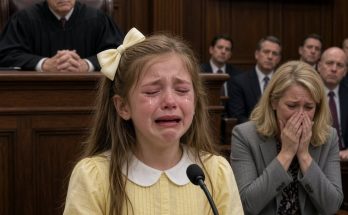
Inside the courtroom, everything became polished wood and paper.
The judge sat above us in a black robe.
A clerk moved quietly near the side desk.
Janice laid the case file open in front of her.
Darren sat in the back row with his arms crossed again, as if the whole process bored him.
The judge reviewed the placement summary.
She reviewed the school incident report.
She reviewed the therapist’s notes.
She reviewed Janice’s updated recommendation.
Page after page, Miles’s life became dates, checkboxes, and adult explanations.
That is what happens to children in rooms full of grown people.
Their pain becomes paperwork.
Their fear becomes a line somebody files in the right folder.
Then the judge looked over her glasses at Miles.
“Miles,” she said gently, “I know you don’t have to speak today. Nobody here can make you.”
His eyes stayed on the floor.
Darren shifted in the back row.
“See?” he muttered. “Waste of time.”
The judge’s face changed.
Not anger.
Worse than anger.
Still.
The courtroom froze around that stillness.
Janice’s pen stopped above the case file.
A woman in the second row held a paper coffee cup halfway to her mouth and forgot to drink.
The lawyer at the adjacent table looked down at his folder like the wood grain mattered more than the child at the front of the room.
Nobody moved.
The judge leaned forward.
“Miles,” she said, soft enough that the whole courtroom seemed to hold its breath, “do you feel safe going with your uncle?”
For a moment, nothing happened.
I heard the air vent hum.
I heard paper shift under someone’s nervous hand.
I heard my own heartbeat so clearly it felt embarrassing.
Then Miles reached into his backpack.
His fingers trembled on the zipper.
He pulled out every lunch note I had ever written him, folded into a careful little stack.
I saw the first one on top.
I’m glad you’re here.
The courtroom went silent in a way I had never heard before.
Silence can be empty.
Silence can be cruel.
But that morning, silence became a witness.
Miles opened his mouth.
“No,” he said.
It was one word.
Rough.
Tiny.
The kind of word that sounded like it had been sitting in his throat for years and had forgotten how to be used.
I felt his hand find mine under the table.
His fingers were cold.
The stack of notes shook in his other hand.
Darren stood halfway up.
“He’s confused,” he snapped. “That woman coached him.”
The judge did not look at him.
She looked at Miles.
“Miles,” she said, “did Ms. Brooks tell you to say that?”
Miles shook his head once.
“Did anyone tell you to say that?”
Another shake.
Then Janice moved.
She opened the case file and slid out one sheet I had not seen before.
It was a sealed therapist addendum marked received at 8:42 a.m. that same morning.
Janice’s face had gone pale.
“Your Honor,” she said, and her voice cracked on the second word, “before the court decides anything today, you need to see the sentence he wrote during intake.”
Darren stood so fast the bench behind him scraped the floor.
The bailiff turned toward him.
Darren sat back down, but now both hands were clenched on his knees.
Janice unfolded the page with shaking fingers.
Before she handed it over, she looked at Miles.
It was not a question she asked out loud.
It was permission.
Miles nodded.
The judge took the page.
She read the first line.
Then she went so still the whole room seemed to tilt around her.
“Mr. Turner,” she said, looking directly at Darren, “before you say one more word, I need you to explain why this child wrote, ‘Please don’t send me back to the man who laughs when I am scared.’”
Darren’s face changed.
Not fear at first.
Calculation.
That was the part that stayed with me later.
He did not look at Miles.
He looked at the judge, then at Janice, then at the bailiff, as if searching the room for the person most likely to believe him.
“He’s a kid,” Darren said. “Kids write things.”
The judge placed the page on the bench with careful hands.
“Yes,” she said. “They do.”
Then she turned to Janice.
“I want the therapist’s full notes submitted under seal.”
Janice nodded.
“I want the school incident report attached to the review packet.”
“It already is, Your Honor.”
“And I want the record to reflect that the child has verbally answered the court’s safety question.”
The clerk began typing.
The sound of the keys filled the room.
Miles’s hand tightened around mine.
The judge looked at him again.
“Miles, you did a very brave thing,” she said.
He did not look brave.
He looked exhausted.
There is a difference.
Adults love calling children brave because it makes the world sound less guilty for what they had to survive.
The hearing did not become a movie after that.
No one dragged Darren away.
No one shouted from the back row.
There was no perfect speech that fixed every broken piece of a nine-year-old boy’s life.
There was paperwork.
There were orders.
There were instructions spoken slowly for the record.
Temporary placement continued with me.
Unsupervised contact with Darren was denied pending further review.
The therapist’s addendum was accepted under seal.
Janice was instructed to update the safety plan by the end of the day.
The judge said the next hearing date would be set through the clerk’s office.
It all sounded so dry.
So ordinary.
So official.
But under the table, Miles was still holding my hand.
When the judge dismissed us, Darren stood in the aisle.
For one second, I thought he might say something to Miles.
He did not.
He looked at me instead.
“This isn’t over,” he said.
The bailiff stepped closer before I could answer.
“Sir,” the bailiff said, “you need to keep moving.”
Darren moved.
That was the first kindness the room gave us after the ruling.
Space.
Janice walked us into the hallway.
Her eyes were wet, though she kept her voice professional.
“You both did well,” she said.
Miles stared at the floor.
I knelt in front of him, the same way I had in the school office.
I did not say I was proud.
I did not say everything would be fine.
Children who have survived adults can smell false certainty.
I just held out my hand.
This time, he took it right away.
At home, the house smelled like the chicken soup I had left cooling on the stove.
Rain had started again.
The porch rail was wet.
The mailbox leaned in the gray light.
Miles went straight to the kitchen table and placed the stack of lunch notes beside his backpack.
For a long time, he looked at them.
Then he slid the top note toward me.
I’m glad you’re here.
His mouth moved once before sound came.
“Me too,” he whispered.
I sat down so quickly the chair scraped the floor.
I covered my mouth with one hand because I did not want my face to scare him.
He looked at me carefully, still measuring, still deciding whether my tears were dangerous.
“They’re happy tears,” I said.
He nodded like he did not entirely believe me but was willing to keep watching.
That night, I made grilled cheese and tomato soup because it was the only dinner I could cook without shaking too badly.
Miles ate half his sandwich.
Then he pushed the plate toward the center of the table and touched the stack of notes again.
“You wrote them every day,” he said.
His voice was barely there.
“Yes,” I said.
“Even when I didn’t answer.”
“Yes.”
He looked down.
“I was answering.”
I did not move.
Not because I was calm.
Because I finally understood that one wrong motion from me could turn a holy moment into pressure.
“I know,” I said.
The next weeks were not easy.
That is the part people skip when they tell stories about first words.
They want the breakthrough to be the ending.
It is not.
It is the door opening.
After that, you still have to walk through the house.
Miles spoke sometimes.
One word.
Then two.
Mostly at home.
Never when rushed.
Never when someone demanded it.
At school, the assistant principal called again, but this time it was to ask how they could support him better.
I asked for a written plan.
I asked that cafeteria supervision be documented.
I asked that any future incident report be sent to me the same day.
Janice told me I sounded like I had been preparing for war.
I told her I had been preparing a lunchbox.
Sometimes that is the same thing.
At the next review, Miles did not speak to the court.
He did not have to.
The judge did not ask him to perform his healing for a room full of adults.
She simply noted the therapist’s progress summary, the school update, and Janice’s recommendation.
Darren did not appear.
His attorney did.
That told me enough.
Months passed in small, ordinary increments.
A toothbrush left on the sink without being packed away every night.
A backpack dropped by the door instead of carried room to room.
A laugh that escaped him once during a cartoon and startled us both.
The first time he called my house home, he said it by accident.
He was looking for his math folder.
“I left it at home,” he said, then froze.
I kept washing the mug in my hand.
“Okay,” I said. “We’ll check the table.”
He watched me for a reaction.
I gave him an ordinary one.
Sometimes love is not making the moment bigger than the child can carry.
The adoption conversation came later.
Much later.
It came after more visits, more reviews, more signatures, more careful questions asked by people whose job was to make sure hope did not outrun safety.
When Janice finally sat at my kitchen table again with a different folder, the house smelled like lemon cleaner and coffee.
But it did not feel empty anymore.
Miles was in the living room, building something complicated out of blocks, humming under his breath.
Janice looked toward him and smiled.
“He seems settled,” she said.
I laughed softly.
“He still hides the good cereal behind the oatmeal.”
“That sounds settled to me.”
The day the adoption was finalized, Miles wore the same blue jacket he had worn to that first review.
It was too small by then.
He insisted.
I wore a plain dress and cried before we even left the driveway.
At the courthouse, the hallway smelled like floor wax and paper coffee again.
The same kind of small American flag stood near the door.
Miles noticed it.
He noticed everything.
He reached for my hand before I reached for his.
The judge remembered him.
Of course she did.
Some children pass through courtrooms like paperwork.
Some change the air inside them forever.
When the final order was signed, she asked Miles if there was anything he wanted to say.
No pressure.
No demand.
Just an open door.
Miles looked at the papers.
Then at me.
Then at the stack of lunch notes he had brought again, tucked carefully into the front pocket of his backpack.
He had kept them all.
Every single one.
“I’m staying,” he said.
The clerk smiled down at her keyboard.
Janice wiped under one eye with the side of her finger.
I tried to answer, but nothing came out.
For once, I was the quiet one.
On the drive home, Miles watched rain slide down the passenger window.
The world looked washed clean, though I knew better than to believe anything was that simple.
Healing does not erase the past.
It teaches the body that the past is not the only place it has to live.
When we pulled into the driveway, the mailbox was still leaning.
I had never fixed it.
Miles looked at it and said, “We should fix that.”
“We should,” I said.
So we did.
Not that day.
The next Saturday.
He held the screws in his palm while I steadied the post.
The sun was bright.
The grass was damp.
A neighbor’s dog barked behind a fence.
Miles handed me one screw at a time, careful as ever.
When the mailbox stood straight again, he stepped back and nodded like we had repaired something larger than wood and metal.
Maybe we had.
People think the day Miles spoke was the day everything changed.
They are almost right.
The day he spoke in court mattered.
The judge’s question mattered.
The lunch notes mattered.
But the truth is, he had been speaking long before that.
With rinsed mugs.
With lined-up shoes.
With a blanket over my shoulders.
With folded paper hidden under a pillow.
Some children scream for help.
Some children save every note until the right grown-up finally asks the right question.
And when Miles finally answered, the whole courtroom heard what I had been learning all along.
Silence was never proof that he had nothing to say.
It was proof that too many adults had made speaking feel unsafe.
So I kept writing notes.
Even after he learned to answer.
Even after the adoption.
Even after the house grew loud with cartoons, homework complaints, sneakers in the hallway, and a boy who sometimes talked from the kitchen all the way to the living room just because he could.
The notes changed over time.
I’m proud of you.
Don’t forget your library book.
Pizza tonight.
You are safe here.
That last one stayed in the rotation.
Not because he needed reminding every day.
Because some promises deserve to be repeated until the walls learn them too.