
Lila was the one holding the phone when she saw the message that changed the meaning of the entire night. Her mother had already taken her out of the house, locked every card connected to the account, and ignored a growing stream of calls from Derek, Judith, and Kendra. But the message on that screen suggested the seafood dinner had not been an isolated act of selfishness. It was connected to a plan they had been discussing inside the home while Lila and her mother were being pushed aside.
Lila read the message slowly. Her fingers tightened around the phone case. Then she handed it back.
Her mother looked at her daughter, then toward the car, and made the only decision that still felt clear: she would not go back into that house just because the people inside were suddenly demanding her attention.
Only hours earlier, she had walked through the front door expecting an ordinary evening with her 11-year-old daughter.
Instead, the first thing she noticed was the smell.
Butter. Garlic. Grilled salmon. Seafood.
It filled the house before she even reached the dining room.
After another exhausting week at work, she had imagined something much simpler. She had spent four straight days staying late, handling accounts, keeping things moving, and making sure the household bills were covered. She was tired in the ordinary way that comes from carrying too many responsibilities at once. What she wanted was one quiet night with Lila.
The scene waiting for her was anything but quiet.
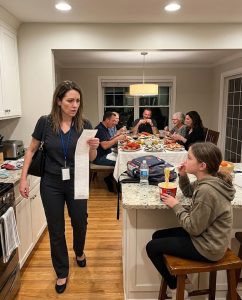
The dining table had been turned into what looked like an expensive restaurant spread. Snow crab legs covered serving plates. Steaks sat beside them. Bottles of wine were open. Takeout containers from one of the nicest restaurants in town crowded the table.
Derek was sitting at the head of it.
His mother, Judith, was beside him. His sister, Kendra, was busy taking pictures of the food before anyone touched another plate.
For a moment, the mother simply looked at the table.
Then she noticed who was missing.
Lila.
She looked toward the kitchen.
Her daughter was sitting alone on a stool with a cup of instant noodles in front of her.
The steam rose from the cup while Lila kept her shoulders tucked in. She was not eating with the adults. She was not being offered a plate. She was not part of the dinner that was happening ten feet away.
She was simply sitting there by herself.
When Lila finally looked up and saw her mother, she lowered her eyes almost immediately.
Then she explained why.
“Grandma said you and I don’t get the same food they do.”
The words were simple.
That was what made them hurt.
There was no elaborate accusation. No long argument. No dramatic speech. Just an 11-year-old explaining that she had been told she did not belong at the same table as the adults enjoying the meal.
Her mother had spent days working late because she believed she was taking care of her family. She had been paying the bills, keeping the household running, and accepting the exhaustion that came with it.
Now she was looking at her daughter eating instant noodles while the adults were eating seafood paid for with her money.
Then Derek spoke from the dining room.
“Pass me another crab leg, Mom. Tessa can afford it.”
The comment made the situation even clearer.
This was not simply a family dinner that had gotten out of hand. Derek was comfortable spending money from a card that was not his while his stepdaughter sat separately in the kitchen.
And the bill was sitting right there.
$684.
She saw the amount beside the dishes.
Six hundred eighty-four dollars.
Charged to her card.
She could have walked into the dining room and demanded an explanation. She could have asked who ordered the food. She could have asked why Lila had been left alone. She could have argued with Judith. She could have confronted Kendra about taking pictures while the family dynamic in front of her was already so ugly.