An Army Colonel Was About to Board His Flight When He Learned That a Pair of Abandoned Twins Had Been Left Alone at O’Hare Airport—He Ordered the Plane to Wait, Never Imagining That One Decision Would Uncover a Truth That Stunned Everyone in the Terminal
I watched a woman walk away from two five-year-old twins at O’Hare without one glance back.
No hug.
No goodbye.
She did not see the Army colonel standing less than fifty feet away, or realize that I had already made a decision.
Major Marco Hayes and I had just returned from an official assignment and were crossing the terminal toward the military VIP lounge when the woman hurried past us in a beige coat, pulling a designer suitcase.
Two small children struggled to keep up behind her.
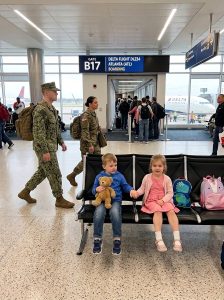
The boy carried a worn teddy bear pressed against his chest, while the girl held his free hand and watched the woman as though losing sight of her would be dangerous.
They were both blond, both exhausted, and both so quiet that the silence around them felt wrong even in a crowded airport.
“Colonel Steel, transport is waiting,” Marco reminded me.
I stopped walking.
The woman reached Gate 17 and pointed toward a row of black seats without bending down or speaking softly enough for anyone else to hear.
The twins sat immediately.
They did not ask where she was going.
They did not ask when she would return.
The boy tightened his arms around the teddy bear, and the girl placed both hands over his wrist as if she were making sure they would not be separated too.
Their stepmother rolled her suitcase onto the jet bridge and disappeared.
She never looked back.
The terminal continued moving around them as travelers hurried toward departures, paper coffee cups balanced on luggage, children arguing about snacks, and gate announcements echoing above the crowd.
No one stopped.
But I did.
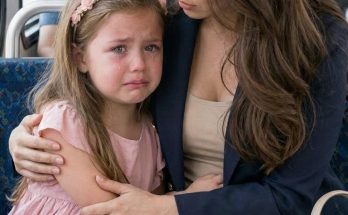
The girl stared at the closed boarding door until her chin began to tremble.
The boy squeezed the teddy bear so hard that his knuckles turned pale.
Neither child cried.
Children who believe someone is coming back often cry because they expect to be comforted.
Children who have learned that comfort may not come sometimes make themselves silent instead.
That silence hit me harder than shouting ever could.
I walked toward them while Marco followed several steps behind, but I raised one hand and continued alone so the sight of two uniformed men would not frighten them.
I knelt beside the seats.
The girl looked directly at me, frightened but steady.
“Where’s your mom?” I asked.
The boy lowered his eyes to the bear.
“She isn’t our mom,” he said.
“What are your names?”
“Lily,” the girl answered.
“Owen,” the boy added. “We’re twins.”
“How old are you?”
“Five.”
I sat beside them instead of standing over them.
“Is somebody coming to pick you up?”
Lily shook her head.
That small movement landed harder than anything I had heard in years.
I had spent twenty-five years in the Army learning to remain steady under pressure, make decisions quickly, and keep emotion from interfering with the mission.
Yet these children had already learned to make themselves small so no adult would accuse them of being difficult.
“Where is your dad?” I asked.
Owen’s lower lip trembled, and Lily tightened her grip on his hand.
“He died,” she whispered. “She said we’re too much trouble now.”
Behind me, Marco exhaled slowly.
I looked toward the gate where the woman in the beige coat had disappeared.
She thought she was free.
She had no idea she had abandoned those children in front of the wrong man.
I rose and turned toward Marco.
“Major Hayes.”
“Yes, sir.”
“Contact airport security immediately, tell them two unattended children were left at Gate 17, ask operations to hold that aircraft, and notify airport police and Child Protective Services.”
Marco already had his phone in his hand.
I looked down at Lily and Owen.
“No child gets left behind on my watch.”
The first radio call went out, and the entire rhythm of Gate 17 changed.
A gate agent closed the boarding door controls, another employee lifted the phone at the counter, and two airport security officers began moving toward the jet bridge.
The aircraft had not left the gate, but its doors were being prepared for departure, which meant every second mattered.
A supervisor approached me and asked what I had witnessed.
I gave her the facts in order: the woman arrived with the twins, directed them to the seats, boarded with her suitcase, and left without speaking to any employee about their care.
The supervisor looked at the children, then at the closed jet bridge door.
“Did she say someone was meeting them?”
“No.”
“Did she speak to the gate staff?”
“No.”
Lily raised one hand slightly.
“She told us not to move,” she said.
The supervisor crouched near her.
“For how long, sweetheart?”
Lily glanced at Owen before answering.
“Until somebody finds us.”
That was the first moment the situation stopped looking like a terrible misunderstanding and began looking deliberate.
The gate supervisor spoke into her radio again, this time with a sharper voice.
Within minutes, the jet bridge door reopened.
Two officers appeared first, followed by the woman in the beige coat.
She was no longer pulling her suitcase.
An airline employee carried it several steps behind her while she protested that the delay was unnecessary and that she had a right to continue her trip.
Then she saw me standing beside the twins.
Her expression changed—not into fear for the children, but irritation that someone had interfered.
“What did you do?” she demanded.
I did not answer her question.
An airport police officer stepped between us and asked her to identify herself and explain why the children had been left unattended.
“They were safe,” she said. “There are employees everywhere.”
The gate supervisor’s face tightened.
“You did not place them in the care of any employee.”
“I was going to call someone after takeoff.”
“Who?” the officer asked.
The woman hesitated.
“A friend.”
“What is the friend’s name?”
She looked toward the boarding door instead of answering.
Owen had begun rocking the teddy bear against his chest in a slow, repetitive motion.
The woman noticed him and reached out.
“Come here, Owen.”
He pressed his back against the seat.
Lily stepped in front of him despite being no taller than my belt.
“You left us,” she said.
The woman lowered her voice as if quietness could make the scene private.
“I told you to wait.”
“You said somebody would find us,” Lily replied.
The officer asked the woman to move several feet away for questioning, and she immediately began explaining that her husband’s death had left her overwhelmed.
She said the twins had behavior problems, that she had no support, and that she had been under pressure for months.
Grief can make people exhausted, angry, confused, or desperate.
It does not make an adult roll a suitcase onto a plane while two five-year-olds sit alone at a gate.
A child welfare worker arrived with a soft-sided bag containing water, crackers, tissues, and two small fleece blankets.
She introduced herself to the twins and asked whether they would come with her to a quieter family room nearby.
Lily looked at me.
“Are you coming?”
“Yes,” I said.
Marco quietly reminded me that our transport and debrief were still waiting.
“Cancel the transport,” I told him.
“Sir, the debrief—”
“Reschedule it.”
He studied my face for half a second, then nodded.
“Yes, sir.”
The family room was small and bright, with vinyl chairs, a low table, a box of crayons, and a window overlooking service vehicles moving beyond the terminal glass.
Lily sat close to Owen while the child welfare worker placed crackers on the table.
Neither child touched them until I opened one package and ate a cracker myself.
Then Owen took one.
Lily followed.
The teddy bear remained wedged between Owen’s chest and the table.
The worker asked simple questions about their home, school, relatives, and the days since their father died.
The twins answered in fragments.
Their stepmother had packed their clothes that morning but had left both bags in the car.
She had told them they were going somewhere new.
At the terminal, she had taken the folder containing their personal papers from Lily’s backpack.
She had warned them not to bother anyone because people did not like troublesome children.
Owen stopped eating when the worker asked whether they knew any relatives they trusted.
“We had an aunt,” Lily said.
“What is her name?”
“Grace.”
“Do you know where she lives?”
Lily shook her head.
“She went away.”
Owen finally looked up.
“She didn’t go away,” he said.
Lily frowned at him.
Owen turned the teddy bear over and rubbed one finger along a frayed seam near its back.
“Dad said Bear knows how to call her.”
The adults in the room exchanged confused looks, but Owen began working at a small fabric flap hidden beneath the bear’s worn shirt.
Inside was an ordinary emergency-contact label protected by a strip of clear tape, with a name and phone number written in faded ink.
It was not a secret message or some dramatic final clue.
It was the practical act of a father who had wanted his children to know whom to call if they were ever lost.
The name on the label was Grace.
The child welfare worker asked permission to copy the number, and Owen held the bear out only after she promised to return it immediately.
The call was placed on speaker at a low volume.
A woman answered on the second ring.
When the worker identified herself and mentioned Lily and Owen, there was a sharp intake of breath on the other end.
“Are they alive?” Grace asked.
Lily’s eyes widened.
The worker reassured her that the children were physically safe and asked about her relationship to them.
“I’m their father’s sister,” Grace said. “I’ve been trying to reach them for months.”
The worker asked why she had stopped visiting.
“I didn’t stop,” Grace replied. “Their stepmother told me the children were too upset to see anyone, then changed her number and returned every card I mailed.”
Lily leaned toward the phone.
“She said you forgot us.”
Grace’s voice broke, but she did not turn the moment into a speech about herself.
“I did not forget you,” she said. “I need you to hear that, but you don’t have to believe me yet.”
Owen placed one hand over the teddy bear’s label.
“Dad wrote your number.”
“I know,” Grace said. “I helped him sew that flap after you lost your backpack at the zoo.”
For the first time, Owen’s grip on the bear loosened.
The worker took the phone off speaker and began verifying Grace’s information through the appropriate channels.
The call did not solve everything.
A name on a fabric label could provide a lead, but it could not replace background checks, identity verification, or a safe-placement review.
That mattered because children deserve protection that is careful, not merely emotional.
Meanwhile, airport police continued questioning the stepmother.
Her explanation changed three times.
First, she said a friend was coming.
Then she said she assumed an employee would notice the children.
Finally, she admitted there had never been a pickup plan.
Her ticket was one-way.
She had already surrendered the keys to the apartment where the twins had lived with their father, and most of their belongings had been placed in storage.
She had not acted in a moment of panic.
She had prepared to disappear and expected strangers to handle the consequences.
When an officer explained that she would not be reboarding the aircraft and would remain for further investigation, she asked what would happen to her suitcase.
She did not ask what would happen to Lily and Owen.
Marco heard that exchange from the hallway and looked toward me.
I had seen soldiers absorb terrible news with more concern for the people beside them than that woman showed for two children she had raised in her home.
Still, anger was not the mission.
The mission was safety.
I returned to the family room and found Lily coloring two small figures beneath a large blue square that might have been a roof.
Owen had lined three crackers along the table in front of the teddy bear.
“Is she coming back?” Lily asked.
“The woman from the plane?”
Lily nodded.
“She will not be taking you anywhere today,” I said. “The adults here are making sure you are safe.”
“Are you leaving?” Owen asked.
“Not until you know where you’re sleeping tonight.”
That promise cost me less than many promises I had made in uniform, but it mattered more than most of them.
Grace lived several hours away by air and said she could reach O’Hare that evening.
She booked the first available flight, then sent the worker the identification and family records needed to begin verification.
A temporary foster placement was prepared as a backup in case the checks could not be completed before nightfall.
The twins were told this gently and honestly.
No one promised them that Grace would automatically take them home.
No one used the word forever.
Children who have already been failed should not be handed promises that adults may not be able to keep.