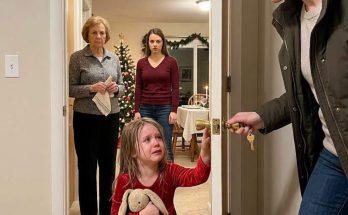
Later, after staff had checked her again and the hallway had quieted, we started talking through the previous hours in order.
Not to build some perfect case.
Not to turn ourselves into investigators.
We needed to understand which decisions had been hers and which ones had been made around her while she was vulnerable.
My sister remembered arriving frightened and in pain.
She remembered her mother-in-law answering questions she had not been asked.
She remembered being told not to upset herself.
She remembered asking where her husband was.
She remembered being told he was dealing with something outside.
My brother had been outside, but not because he had chosen to stay away.
He had been trying to get back to her.
That distinction mattered.
The more my sister talked, the less the phone looked like an isolated act of cruelty.
It looked like the simplest version of the same behavior.
Answer for her.
Decide for her.
Remove somebody she might call.
Explain afterward that it was done for her own good.
My brother rubbed a hand across the back of his neck.
“I should’ve seen it sooner.”
My sister looked at him.
“So should I.”
I expected that sentence to turn into guilt.
It didn’t.
She shook her head.
“No. I’m not doing that.”
“Doing what?” I asked.
“Making this about how stupid I was.”
She glanced toward the phone.
“I trusted people I was supposed to be able to trust.”
My brother’s eyes lowered.
My sister reached for his hand.
That surprised both of us.
She was not forgiving anybody in that moment.
She was not pretending nothing had happened between them.
She was telling him which side of the bed he was allowed to stand on.
He took her hand carefully.
The baby moved beneath her palm a moment later, and she shifted her hand back over her belly.
Her face tightened with the effort of getting comfortable.
My brother immediately reached for the pillow, then stopped.
“Can I?”
She nodded.
He adjusted it.
That became the pattern for the rest of the day.
Can I move this?
Do you want the door closed?
Should I answer that?
Do you want me here?
Tiny questions.
Ordinary questions.
Questions that would have seemed ridiculous a day earlier.
Now they were rebuilding something.
The confrontation in the room had been loud, but recovery began with permission spoken quietly.
At one point, my sister asked me to bring the blanket back up over her legs.
I froze when I touched it.
That was the same blanket that had fallen and revealed the phone.
Only a few hours earlier, it had hidden the one object showing us how deliberately her access to people had been narrowed.
Now it was just a hospital blanket again.
I pulled it gently over her knees.
My sister watched me do it.
“Don’t throw it away,” she said.
I almost laughed because I thought she was joking.
She wasn’t.
“They don’t get to ruin normal things for me.”
That stayed with me.
The two women outside did not get back into the room.
There was no grand showdown after that.
No final screaming match.
No satisfying line delivered through a doorway.
My sister did not need one.
She had already made the decision that mattered while lying bruised in a hospital bed with an IV in her arm.
Access was no longer automatic because somebody shared a last name or claimed to be helping.
It required her permission.
The phone required her permission.
The room required her permission.
Her next conversation required her permission.
So did her next decision.
My brother respected that even when it hurt.
Especially then.
Before I left the room for the first time, my sister asked me to check one thing.
“My contact.”
I opened my phone.
Her number was there.
I showed her.
She looked at hers.
Mine was there too.
Neither of us said anything dramatic.
We did not need to.
The emergency had started with people deciding who she could reach.
The first piece of normal life returned when she decided for herself.
My brother placed her phone on the bedside table beside her water cup, close enough that she could reach it without asking anybody.
Then he slid his chair away from the table so nothing blocked her hand.
My sister noticed.
She rested her palm on the phone for a second, not clutching it, not checking it, just confirming it was there.
After everything that device had represented that morning, the most important thing about it was finally ordinary again.
It belonged to her.