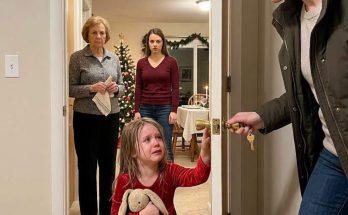
I didn’t answer him right away; I just reached down, scooped Toby up into my arms with his blanket trailing behind him on the floor, and told Eli to grab his shoes and hold onto my belt loop. Brenda took a step forward, her hands clenched into tight fists at her sides, her voice dropping into a low, venomous hiss that sounded like something crawling out from under the porch. “You take those boys out of this house, James, and you mark my words, you’ll never set foot on this property again, and I’ll make sure Clara knows what kind of husband she ended up with.”
I didn’t look back at her as I carried Toby down the hallway and out the front door into the fading light of the late afternoon, Eli stumbling along behind me with one sneaker half-zipped and dragging on the porch boards. I bundled them both into the back seat of the wagon, shoved the red duffel bag onto the floorboards between their feet, and slammed the heavy tailgate shut with a force that made the rear shocks groan in protest. Brenda was standing on the front porch now, framed by her potted geraniums and the old screen door, watching me with a look of pure, unadulterated malice that finally stripped away every last illusion we had carried about her for the past ten years. I cranked the engine, threw the car into reverse, and kicked up a storm of grey gravel as I spun the tires around in the narrow driveway, leaving her standing alone under the cedar trees as the sun dipped below the hills. The drive home was quiet except for the ragged, rattling sound of Toby’s breathing in the back seat, but as the miles ticked away and the cool air from the cracked windows began to clear the heavy chemical smell from their hair, I could already feel the poison starting to lose its grip on their little bodies.
When we pulled into our own driveway twenty minutes later, Clara was waiting on the front porch with a worried frown on her face, having wondered why we hadn’t made it past the county line. She took one look at Toby’s glazed eyes and the pale, sweaty skin on Eli’s forehead, and before she could even open her mouth to ask what happened, I set the amber medicine bottle down on the porch railing right in front of her. “Your mother has been poisoning them with nighttime sedatives every time we drop them off,” I said, my voice shaking with a cold, hard anger that didn’t leave any room for argument or doubt. Clara stared at the brown glass bottle for a long, silent moment, reading the faded warning label with her hands pressed tight against her mouth, and I watched the last remaining shreds of her childhood loyalty fracture right there in the porch light.
She didn’t defend her mother; she didn’t make excuses about old-fashioned remedies or nervous exhaustion; she just covered her face with her hands and began to shake with a quiet, furious realization that cost her the only family structure she had ever known. We didn’t wait until morning to take the boys to the county medical center; we drove straight into town with the amber bottle sitting on the passenger seat between us like a loaded gun.
The doctor on duty was an old family practitioner named Miller who had patched up half the kids in the county over the past thirty years, and he didn’t need more than five minutes with our boys to confirm what I already knew in my gut. He ran a quick panel, checked their blood pressure and oxygen levels, and looked us dead in the eye with a grim, set jaw that didn’t soften for politeness. “They’ve been getting heavy doses of doxylamine succinate combined with cough suppressants for months, maybe years,” Dr. Miller said, setting his chart down on the metal examination table with a sharp click. “It’s enough to cause chronic respiratory irritation, lethargy, and mild chemical dependency if it’s administered on a regular cycle. If you hadn’t brought them in tonight after an extra dose, we might have been looking at serious respiratory depression by morning.” Clara sat in the corner of the small exam room with her head bowed, her fingers locked together so tight her knuckles were stark white, and I knew right then that the line had been drawn once and for all.
We didn’t call Brenda that night, and we didn’t drive out to the quarry to deliver a final speech or listen to her excuses; we simply let the silence do the work, blocking her number on both of our phones and filing the formal report with the county sheriff before the sun came up over the valley.
The fallout through the extended family was brutal and immediate, with several of Clara’s aunts and cousins calling us cold-hearted monsters who were cutting off a lonely old widow over a harmless family misunderstanding. Brenda tried to drive out to our house twice during that first week, pounding on our front door and shouting through the wooden panels about ungrateful children and stolen grandchildren, but we kept the deadbolt thrown and the curtains drawn until her old Ford truck finally backed out of our driveway for the last time. It took nearly a month of clean home-cooked meals, fresh air, and regular sleep schedules before the dark circles under Toby’s eyes finally faded and Eli stopped waking up in the middle of the night crying for his grandmother’s special bedtime milk. The chronic bronchitis that had plagued our household like clockwork every second weekend of the month vanished completely within thirty days, proving once and for all that the only thing making our boys sick was the woman who claimed she was the only one who could heal them.
Now, six months later, the red canvas duffel bag sits at the back of the hall closet collecting dust, and our weekends belong to us again, quiet and unbroken by the sound of an old woman’s car coming down the gravel road. Today, the two healthy boys are playing tag out in our own sunny backyard, their laughter carrying clear and strong across the grass without a single cough or wheeze to slow them down, while Clara and I lock the front door against a ghost who will never cross our threshold again.