I didn’t answer. I had spent years being careful not to claim credit for things I hadn’t done. Maybe I was careful for a reason. Maybe I also liked being the person who could say, “I didn’t do anything.”
That wasn’t completely honest.
The day Caleb came, I made coffee and forgot to set out cups. Then I got the cups and forgot the sugar. I was annoyed with myself over every small thing. I had wanted to look calm, which meant I was acting less calm than usual.
When the doorbell rang, I checked my hair in the hall mirror. There was nothing to fix. I checked anyway.
Caleb was taller than I remembered, of course. He was forty-three. He wore a plain blue shirt and had a little line between his eyebrows when he smiled.
“I brought something,” he said.
“You already sent me a medal.”
“I know.”
He held out a small paper bag. Inside was a box of lemonade mix from a store near his aunt’s old house. He said it was the kind he remembered drinking as a kid.
I laughed. “That is a funny thing to bring.”
“I couldn’t think of anything else.”
We sat at the kitchen table. I poured coffee. He took one sip and said it was strong.
“I make it like my mother did,” I said.
“Then it’s supposed to be strong.”
We talked about the old fair office. I told him the phone had a broken button that you had to press twice. He remembered the trash bag by the wall and the lemonade stand near the gate. I didn’t remember either thing as clearly as he did.
He said he’d kept the ticket because he had nothing else from that day. His aunt had thrown out the shirt he wore, and the bus ticket was used up. He had the fair stub because I’d let him keep it.
“I didn’t let you keep it,” I said. “You left it for me.”
He smiled. “I guess I did.”
I asked if he’d really carried it all these years.
“Not in my pocket,” he said. “It was in a box with my school stuff. Then it was in a drawer. I moved it every time I moved.”
“That’s a long time to move a ticket.”
“I know.”
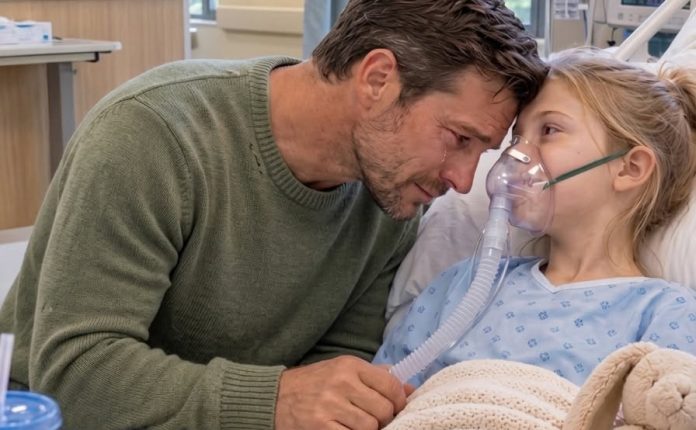
He told me about the child he’d pulled from the fire. A little girl, four years old. Her family was out on the sidewalk when the crew arrived. Caleb and another firefighter found her in a back bedroom. He carried her out.
“She was awake,” he said. “She was mad about her stuffed rabbit.”
I smiled. “Good. That means she was feeling well enough to be mad.”
“Yeah.”
He said the department gave him the medal a few weeks later. He didn’t like the ceremony. He kept looking at his boots. He didn’t know what to do with people clapping for him.
“I thought, if I ever send this to somebody, it should be you,” he said.
“Why me? I gave you lemonade and money.”
“You saw me sitting there.”
I had no answer that didn’t feel like an excuse.
He looked down at his coffee. “I know other people helped me. I’m not saying you made me a firefighter. I just remember that day. I had decided nobody cared what happened to me. Then you sat down.”
I wanted to say I sat down because my feet hurt. That was true, too. I wanted to tell him I’d been worried about my gas money. I wanted him to know I wasn’t the person he had built up in his head.
Instead, I said, “I’m glad you told me.”
He nodded.
Then I told him something I had not planned to say. I told him I’d forgotten him. Not for a week or a year. I’d put him away in my memory like a ticket stub in a box, and I hadn’t looked for him.
“I feel bad about that,” I said.
“You had your life.”
“So did you.”
“Yeah.”
He didn’t rescue me from the feeling. I respected him for that.
I picked up the medal. It was heavier than I expected. I turned it over and read the small words on the back. I had trouble with the last line because the letters were worn.
“Keep it,” he said.
“I don’t know if I deserve it.”
“It’s not a prize for you.”
I put it down.
He was right, and I didn’t like being right there with him. It was easier when kindness meant something I could hand over and be done with. This was not that.
Before he left, he asked if I still had the old fair ticket stub. I had thought he’d sent it back to me. Then I understood that it was his ticket, the little piece he’d handed me that day, and somehow it had stayed in the fair office lost-property box until the office was cleared out.
“I think so,” I said. “The fair sent it with your note.”
He smiled. “I’m glad they found it.”
At the door, he said, “Thank you for letting me come.”
I said, “Thank you for coming.”
He went down the walk toward his rental car. I watched from the doorway, then closed it. I did not feel fixed. I did not feel like I had done something worth a medal.
I put the ticket in the top drawer beside the medal. For a day, I thought I might send the medal back to him. Then I thought about that little girl and her rabbit, and I left it where it was.
The next morning, I made coffee too strong again. I opened the drawer to put away a spoon. The old ticket was next to the medal, its crease still soft from all those years.
I left them there.