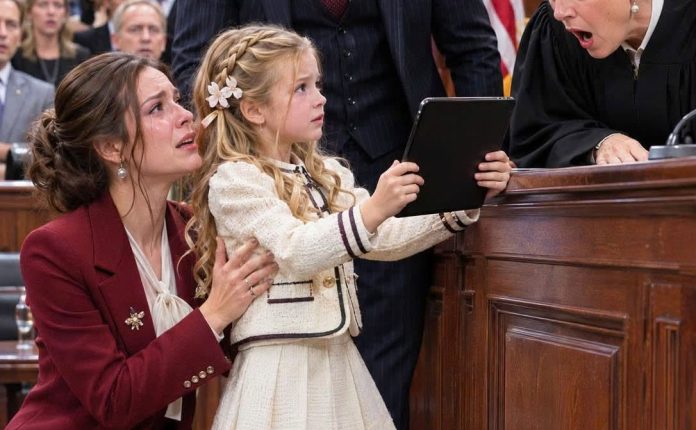
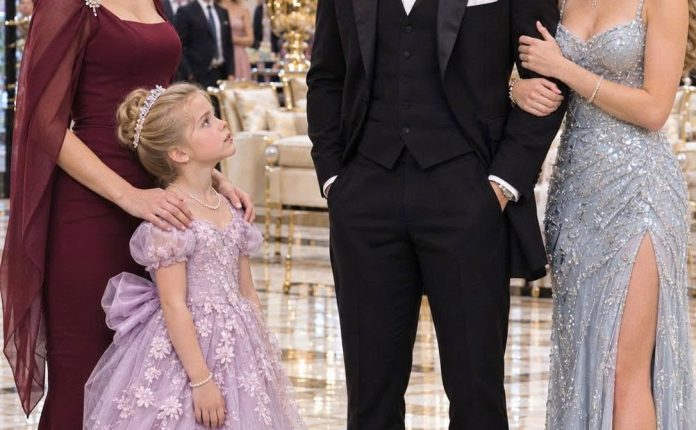
When she hurt us, she insisted she had meant well. “Protect us from what?” I asked. “From knowing our own family medical history?” She looked down. “I was afraid you’d both be terrified. I thought there was no point worrying you over something that might never happen.” Emily’s voice was quiet but firm. “You didn’t get to make that decision for us.” Mom began crying. She told us she had spent years feeling guilty about the diagnosis in our family. She’d watched relatives struggle with uncertainty and had convinced herself that silence was kinder than fear. When Emily became pregnant, she panicked. When I became pregnant, she panicked again. Instead of facing those feelings, she tried to control what everyone knew and when they knew it. “I thought if we all celebrated together, everything would feel normal,” she whispered. I looked at her and realized that her intentions might have been complicated, but the harm was real. “You cannot make something safe by pretending it doesn’t exist,” I told her. “And you cannot protect us by taking away our chance to make informed decisions.” She reached for my hand. I stepped back, not because I wanted to punish her, but because I wasn’t ready to comfort her for the consequences of a choice she had made. “I’m not asking you to stop loving us,” I continued. “I’m asking you to respect us enough to tell us the truth.” We left the hospital before sunrise. In the weeks that followed, Emily and I attended genetic counseling appointments and completed the recommended tests. The waiting was difficult. There were nights when I woke up frightened, and mornings when I tried to reassure myself that a possible risk was not the same as a diagnosis. Mark came to every appointment he could. Emily’s partner did the same. We asked questions, read the information our specialists provided, and refused to let speculation replace medical advice. Eventually, we received results that helped our doctors clarify the risks for our pregnancies. The news was reassuring: neither of us had evidence that our babies would be affected by the particular condition that had prompted the investigation. Our doctors still explained the limits of the testing and what to watch for, but we could finally breathe without feeling that every unknown was a catastrophe waiting to happen. I cried when I heard the news. Not because everything in our family had been repaired, but because I had been carrying fear without understanding it. Emily called me that evening. “I keep thinking about your shower,” she said. “I wish I’d realized what was happening. I wish I’d waited and celebrated with you another day.” “I know,” I answered. “I was hurt. But I’m glad you came to me when you found out the truth.” She was quiet for a moment. “Do you think we can go back to being sisters?” I looked at the tiny crib in the corner of my bedroom. “I think we can build something better than what we had. But we have to stop competing, stop letting Mom decide what we’re allowed to know, and stop pretending hurt doesn’t exist just because we’re family.” Emily agreed. Our relationship didn’t become perfect overnight. We had to learn how to speak honestly without turning every disagreement into a competition. We had to stop comparing our pregnancies, our homes, and the attention our mother gave each of us. Slowly, we began making room for each other again. When my daughter, Grace, was born, Emily was one of the first people to visit. She arrived carrying a small knitted blanket she’d made herself. There was no announcement, no joke about whose baby would be cuter, and no attempt to make the moment about her. She stood beside my hospital bed and looked at Grace with tears in her eyes. “She’s beautiful,” she whispered. “And this moment belongs to you.” I smiled and held my daughter closer. A few weeks later, Emily welcomed her own baby girl. I visited her with flowers and a little gift for the nursery. When I held my niece, I felt something shift inside me. The old jealousy and resentment hadn’t vanished completely, but they no longer controlled the way I saw my sister. We had both been hurt by the same family secret, and we had both learned how easily silence could turn love into mistrust. As for our mother, rebuilding trust took much longer. She apologized, eventually admitting that her desire to keep the family together had become an excuse to control what everyone knew. I accepted her apology, but I made it clear that our medical information and our children’s well-being were not hers to manage. We would share what we chose to share, when we chose to share it. And if she wanted to be part of our children’s lives, honesty had to come first. Months later, at a small gathering for both babies, I watched Emily sit beside me while our daughters slept in their carriers. No one was comparing milestones. No one was competing for attention. Our mother brought out a cake, then paused and asked whether we wanted to cut it together. Emily looked at me, waiting. I smiled and nodded. This time, we cut the cake side by side. I thought about the half-cut cake at my baby shower and the woman I’d been that afternoon, smiling through disappointment because I believed keeping the peace meant swallowing my feelings. I wished I could go back and tell her that grace does not require silence, that family loyalty does not mean accepting every hurt without question, and that forgiveness is not the same as pretending nothing happened. Most of all, I wished I could tell her that the truth, however painful, had given my sister and me something our mother’s carefully managed celebrations never could: the chance to choose our own relationship. Our daughters would grow up knowing each other as cousins, not rivals. They would learn that love is not a limited resource and that one person’s joy does not have to diminish another’s. And if they ever faced a difficult family truth, I hoped they would know they could speak openly, ask questions, and make decisions with the information they deserved. Because the biggest betrayal wasn’t that my sister announced her pregnancy at my baby shower. It wasn’t even that my mother tried to turn the day into a celebration she could control. It was that she believed keeping us uninformed was the same as keeping us safe. The lesson I carried into motherhood was simple: real love doesn’t hide the truth to protect its own comfort. Real love trusts you enough to let you face the truth with your eyes open.
My Sister Apologized for Announcing Her Pregnancy at My Shower, but the Bigger Betrayal Was Something Mom Had Hidden.
Pages: 1 2