Part 1: The $980 Breaking Point
“Pay for it, Mom. It’s the least you can do when you’re living under our roof.”
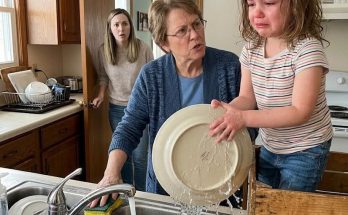
My daughter Stephanie said those words loudly enough for the cashier and everyone waiting behind us to hear. We were standing in a crowded supermarket in Savannah with three shopping carts overflowing with prime beef, imported cheeses, expensive wine, snacks, and elaborate desserts for a dinner party her husband Clinton was hosting for several senior executives from his company. The only thing I had chosen for myself was a modest box of chamomile tea.

My name is Margaret, and I was seventy-two years old. Until that afternoon, I had spent most of my life believing that a good mother should tolerate almost anything for her family without complaining, even when that generosity slowly became an expectation.
When the cashier finished scanning everything, she announced that the total was $980. My entire monthly retirement pension was barely $1,200, and most of what remained in my account was supposed to pay for prescription medication the following day.
“Stephanie, I can’t afford this. I need the money I have left to buy my medication tomorrow.”
She glanced up from her phone with an irritated expression, apparently more embarrassed by my objection than concerned about what she was asking me to sacrifice.
“Are you seriously bringing up your medication again?”
“That’s all the money I have until next month.”
Clinton stepped closer and reminded me that they supposedly provided me with shelter, meals, and a family. His accusation was particularly insulting because the house he described as theirs existed largely because of money I had spent forty years building with my late husband, Donald.
Four years earlier, Donald had died suddenly from a heart attack, leaving me devastated and uncertain about living alone. Stephanie persuaded me to sell the home where Donald and I had spent four decades together, promising that she and Clinton would use the proceeds to expand their ground floor and create a comfortable private living area for me.
“Come live with us, Mom. We’ll make sure you have your own beautiful space, and you’ll never have to be alone.”
I trusted my daughter, so I sold my house and transferred nearly $250,000 directly into their account. During the first few months, they treated me like an honored member of the family, but their kindness gradually turned into a growing list of responsibilities.
I started making breakfast for my grandson Mason, ironing Clinton’s work shirts, doing laundry, preparing meals, walking the dog, and taking care of whatever else needed attention around the house. When they claimed money was temporarily tight, I agreed to cover the electricity bill, followed eventually by the internet, streaming subscriptions, and a substantial portion of their groceries.
Meanwhile, the spacious private room they had promised me never truly materialized. Clinton gradually filled the downstairs area with storage boxes, and my small bed was eventually pushed into a corner beside a damp basement wall, yet I continued telling myself that keeping the family together mattered more than complaining.
That belief finally collapsed at the supermarket register.
“That house was paid for with my money too.”
Stephanie’s face immediately reddened.
“Get over it, Mom! You gave us that money because you wanted to. Stop acting like a helpless victim and take out your credit card!”
The cashier lowered her eyes, clearly uncomfortable, while several customers behind us pretended not to listen. For years, I had been afraid that saying no would make me selfish, ungrateful, or unwanted, but standing there with my daughter publicly demanding the last of my pension finally stripped that fear away.
I closed my old red leather wallet.
“No.”
Stephanie stared at me in disbelief.
“What did you say?”
“I said I’m not paying for any of this.”
I turned and began walking toward the supermarket exit. Stephanie shouted after me that she hadn’t brought her purse or credit cards and reminded me that Clinton’s important guests were arriving in two hours, but I kept moving toward the automatic doors.
“If you walk out that door, don’t ever bother coming back to my house!”
I paused briefly before stepping into the parking lot. As Stephanie’s voice faded behind me, I finally understood that for four years, their comfortable lifestyle had been supported by my money, my time, and my unpaid labor, and I was finished sacrificing all three.
I boarded a city bus without knowing exactly where I would spend the night. Stephanie called fourteen times before I finally answered, furious because she had been forced to abandon all three carts at the register and now had no dinner prepared for Clinton’s executives.
“Then you’ll have to cook something yourself.”
She threatened to change the locks if I didn’t return immediately. Instead of frightening me, the threat made my decision even easier.
“There’s no need to change them, Stephanie. I’m not coming back.”
Clinton eventually took the phone and adopted the calm, persuasive voice he used whenever anger stopped getting him what he wanted. He reminded me that I had supposedly been living in their home rent-free, apparently forgetting the enormous amount of money I had already contributed.
“Clinton, I gave you two hundred and fifty thousand dollars from the sale of my home.”
“That was financial assistance you voluntarily gave your family.”
“Then consider the last four years of rent paid in advance.”
I ended the call and went to the home of Clara, an old friend from my years working at the regional medical clinic. When she opened the door and saw me standing there with my red purse clutched in both hands, she didn’t demand an explanation before inviting me inside.
At her kitchen table, I told Clara what the previous four years had really been like. Then I emptied my purse and confirmed that my identification, bank cards, pension documents, and other essential papers were safely with me before finally pulling out the heavy brass keys to Stephanie’s house.
Attached to them was a tiny yellow dinosaur keychain Mason had given me months earlier. I carefully removed the dinosaur and slipped it into my pocket before dropping the house keys into Clara’s trash can.
“I’m finally thinking clearly, Clara. I don’t need keys to a prison anymore.”
For the first time in four years, I went to bed knowing that nobody would wake me to make breakfast, iron a shirt, or solve another problem they had decided belonged to me. What Stephanie and Clinton didn’t yet understand was that refusing to pay for those groceries had only been the beginning, because several much larger expenses were still being quietly charged to my bank account every month.
Part 2: The Bills I Was Never Paying Again
The next morning, I turned on my phone and found thirty-seven unread messages from Stephanie. Most weren’t asking whether I was safe or apologizing for what had happened at the supermarket. Instead, she wanted to know where Mason’s clean school uniform was, why the dog hadn’t been walked, where Clinton’s navy dress shirt was, and how to operate the coffee maker.
“Just come back home and we can pretend yesterday never happened.”
Even Brenda, the housekeeper who visited twice a week for heavier cleaning, called me later that morning. She told me Stephanie had offered her triple her normal rate if she would cook, wash laundry, drive Mason, and walk the dog in addition to cleaning the house.
“I told her I clean houses for a living. I’m not replacing an unpaid servant.”
For the first time in years, I laughed without immediately feeling guilty about it. Then Clara glanced at the calendar hanging on her kitchen wall and reminded me that it was the fourteenth, and I suddenly remembered what would happen the following morning.
On the fifteenth of every month, several automatic payments were withdrawn from my bank account. The high-speed internet, electricity, and multiple streaming subscriptions at Stephanie and Clinton’s house were still registered under my name because Clinton had once claimed he was too busy to deal with the paperwork.
For four years, Clinton had repeatedly promised to reimburse me, but those repayments rarely appeared. If I did nothing, another large portion of my small pension would disappear the next morning to support a household where I was no longer welcome.
I looked at my debit card sitting on Clara’s kitchen table and understood exactly what needed to happen. I had already stopped providing free labor, and now it was time to stop providing free utilities as well.
“Clara, get your coat and shoes.”
She raised an eyebrow.
“Where are we going?”
“The bank.”
At the local branch, I canceled every automatic payment connected to their household. Clara then accompanied me to the utility offices, where I formally removed myself from the electricity and internet contracts registered in my name, meaning Stephanie and Clinton would have to establish and pay for their own services if they wanted them continued.
As we left the final office, Clara looked delighted.
“Now they’re going to discover exactly how expensive replacing you really is.”
My phone started ringing almost immediately, and Clinton’s name appeared on the screen. I ignored the call, but later that afternoon, a sleek black SUV stopped outside Clara’s property, and Stephanie climbed from the passenger side in tears while Clinton stormed toward the wrought-iron gate.
“Margaret! Get out here right now!”
I walked calmly onto Clara’s porch and approached the fence. Stephanie gripped the bars with panic in her eyes and complained that Clinton had lost his internet connection in the middle of an important video conference with corporate executives.
“Mom, you ruined our entire day! You have to fix this right now!”
Clinton pointed at me through the gate.
“You’re calling those companies this second and putting everything back the way it was.”
For the first time, I looked at Clinton and didn’t see the powerful executive he always pretended to be. I saw a grown man furious because the seventy-two-year-old woman he had depended on for years had finally stopped solving his problems.
“No.”
Stephanie’s expression changed immediately. Her tears disappeared, replaced by something that looked much closer to fear.
“If you don’t come home right now, you’re going to regret it, Mom, because you still don’t know what Clinton actually did with your house money!”
I stared at her, trying to understand what I had just heard. Clinton’s jaw tightened, and he immediately warned Stephanie not to continue, which told me there was something they had deliberately kept from me.
“What did he do with my money, Stephanie?”
She glanced nervously toward her husband.
“Mom, please unlock the gate. We can go inside and talk about this like a family.”
“The gate stays locked. Tell me the truth.”
Clinton insisted that the $250,000 had been voluntarily given to them and accused me of trying to threaten them. I reminded him that I hadn’t threatened anyone at all, because everything I had done involved only my own money and accounts.
“I’m not threatening you, Clinton. I simply stopped paying for your life.”
That angered him more than anything else I had said. Stephanie began crying again and finally admitted that Clinton had told her only a small portion of my money would be needed to create the downstairs living area they had promised me.
“How much did you actually spend on my room?”
Stephanie lowered her eyes.
“About forty thousand dollars.”
I stood silently for a moment, calculating what that meant. I had transferred $250,000 to them, so if only $40,000 had gone toward the supposed renovation, more than $200,000 of Donald’s and my life savings had gone somewhere else.
“And what happened to the remaining two hundred and ten thousand dollars?”
Clinton stepped forward and claimed the money had been invested in their family’s future, including improvements to the house, their lifestyle, and opportunities that supposedly benefited his career. As he spoke, however, the expensive SUV behind them, their designer furniture, luxury vacations, restaurant dinners, and years of reckless spending suddenly made terrible sense.
“So forty years of Donald’s and my work became money for your lifestyle?”
“You chose to help your family!”
“I chose to secure my retirement while living with my daughter. I didn’t agree to finance your luxury.”
Stephanie insisted she had believed Clinton was keeping much of the remaining money in a high-yield savings account. Clinton immediately turned on her and accused her of spending plenty of it herself on shopping, which caused the argument between them to unravel in front of me.
“Because you told me we were going to earn it all back through your investments!”
“What investments, Stephanie?”
Neither of them could give me a real answer. As they continued blaming each other outside Clara’s gate, the truth became impossible to avoid: there was no investment portfolio, no protected retirement account, and no reserve waiting for me somewhere.
They had spent almost all of it.
My house money had funded renovations, Clinton’s old debts, vehicle payments, vacations, shopping, and the appearance of a wealthy lifestyle they could never truly afford. Once that money began disappearing, they had quietly moved on to my pension, allowing me to pay their utilities and groceries while also cooking, cleaning, caring for Mason, and running their household.
For four years, I had believed I was helping my daughter through a difficult period. Standing behind Clara’s locked gate, I finally understood that I had actually become the last financial support keeping Stephanie and Clinton’s entire lifestyle from collapsing.