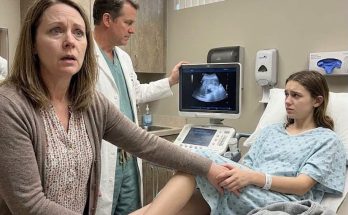
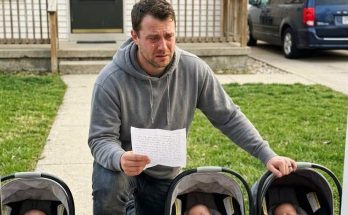
On one side of the screen, Patricia said, “Our family is extremely close.”
On the other appeared her message:
“She lived. Stop making her our problem.”
By noon, reporters had identified Scott’s restaurant, recently reopened using money Daniel had lent him.
Negative reviews flooded its online pages.
A corporate catering client canceled its contract.
News crews waited outside the entrance.
Scott blamed Melissa.
“You destroyed me,” he shouted after they returned home.
Melissa stood in their kitchen with her arms crossed.
“No. I showed people what you did.”
“It was a private message.”
“It was a private message about a child fighting for her life.”
“You embarrassed my mother.”
“Your mother embarrassed herself.”
Scott grabbed his keys and left before Melissa could see his hands trembling.
Patricia refused to leave the hospital.
She remained in the lobby until nearly four in the morning, telling anyone who listened that Daniel was emotional, ungrateful, and easily influenced.
Eventually, security escorted her outside.
She called Daniel from the parking lot.
He answered only because Lily’s surgeon had stepped away, leaving him briefly alone.
“Daniel,” Patricia said, “you need to come downstairs and make a statement.”
“A statement about what?”
“Tell them we are a loving family. Tell them those messages were misunderstood.”
“What did you mean?”
Patricia went silent.
Daniel moved toward the window.
Dawn was beginning to brighten the Seattle sky.
“What did you mean when you said my daughter was not your problem?”
“I was upset.”
“About what?”
“I had plans.”
Daniel closed his eyes.
She continued quickly.
“I didn’t understand how serious it was.”
“I sent you a photograph of her unconscious after emergency brain surgery.”
“You always exaggerate.”
“The surgeon told me she might die.”
“You should have called instead of sending dramatic messages.”
Something inside Daniel became completely still.
For most of his life, every conversation with Patricia had ended this way.
She hurt someone, then rearranged the facts until the injured person appeared unreasonable.
Daniel had spent decades apologizing for reacting to her behavior.
This time, he did not argue.
“You are not seeing Lily,” he said.
Patricia inhaled sharply.
“I am her grandmother.”
“You are a woman who shares some of her DNA.”
“You can’t erase me.”
“I don’t need to erase you. You erased yourself.”
He ended the call.
When Daniel returned to Lily’s room, she was awake.
She studied his face.
“Grandma came, didn’t she?”
Daniel moved his chair closer.
“She came after the news.”
Lily stared at the ceiling.
For a moment, she looked much younger than seventeen.
She looked like the little girl who had once waited beside a window in a purple birthday dress because Patricia promised to visit.
“Did she say sorry?” Lily asked.
“No.”
Lily nodded.
Daniel expected tears, but none came.
“I don’t want to see her,” she said.
“You don’t have to.”
“Not even later.”
“Not even later.”
Lily weakly squeezed his hand.
“What about Uncle Scott?”
“He came too.”
“After the news?”
“Yes.”
She turned toward the window.
“Then I don’t want to see him either.”
Daniel felt his old instinct return.
The instinct to explain Scott’s behavior, soften Patricia’s cruelty, and protect the appearance of a family that had never protected them.
He resisted it.
“All right,” he said.
At eight that morning, doctors confirmed that Lily’s operation had succeeded.
She would require months of rehabilitation, follow-up scans, and strict limits on physical activity, but there was no sign of permanent neurological injury.
Daniel had to sit down when he heard the news.
Senator Chase, who remained at the hospital with Owen, covered her face and cried.
Owen insisted on becoming the first visitor after the medical team left.
He stood beside Lily’s bed and opened his drawing.
“I made you taller than the firefighters,” he explained.
Lily smiled faintly.
“I’m not that tall.”
“You were when you carried me.”
“I dragged you.”
“It felt like carrying.”
Owen pointed toward the red cape.
“My mom says heroes don’t always wear these, but I think you should.”
Lily laughed, then winced and touched her head.
The sound frightened Daniel, but the nurse smiled.
“That is the first good sound we have heard in this room,” she said.
Over the next two days, cards, flowers, and letters filled the hospital floor.
Parents of the children Lily had saved arrived one at a time.
Some embraced Daniel.
Others stood silently beside Lily’s bed, unable to find words.
A single father named Marcus Bell brought his six-year-old twins, Ava and Grace.
Lily had led both girls through a smoke-filled hallway by making them grip the back of her basketball jersey.
A cafeteria employee named Elena Ruiz explained that Lily had helped her shut off a damaged valve before the gas reached open flames in the kitchen.
The principal admitted that Lily’s decision to pull the alarm without permission had probably prevented a mass-casualty disaster.
Lily listened with visible discomfort.
“I only did what anybody would do,” she repeatedly said.
“No,” Daniel told her after the final visitor left. “You did what everyone hopes they would do.”
On the third day, Senator Chase held a press conference outside the hospital.
She praised Lily but refused to discuss Patricia or Scott.
“This should be about a young woman’s courage,” she said, “not about adults trying to borrow attention from it.”
The statement appeared in newspapers nationwide.
That afternoon, Scott finally sent an apology.
It stretched across six paragraphs.
He explained that he had been stressed, that the restaurant was struggling, that Daniel often made situations sound worse than they were, and that he had not expected reporters to become involved.
The final sentence read:
“I am sorry this got out of control.”
Daniel showed it to Lily.
She read it once.
“He’s sorry people saw it,” she said.
“Yes.”
“He’s not sorry he wrote it.”
“No.”
Lily returned the phone.
“Then it isn’t an apology.”
Daniel deleted the message.
Patricia tried another strategy.
She contacted a television network and offered an exclusive interview about “the family behind America’s newest hero.”
The network refused after producers found the screenshots.
She then published a long statement claiming she had been misquoted, despite the evidence being her own written message.
She accused Melissa of betrayal and Daniel of exploiting Lily’s medical crisis.
The statement only made matters worse.
Neighbors who once admired Patricia began avoiding her.
Her church’s volunteer committee quietly removed her from a leadership role after several members complained.
She finally received the attention she wanted, but not the kind she could control.
Scott’s situation deteriorated even faster.
His restaurant lost so much business that he temporarily closed it.
He repeatedly called Daniel, asking him to appear in a video claiming they had reconciled.
Daniel refused.
“You owe me,” Scott said during their final conversation.
Daniel almost admired the audacity.
“I owe you?”
“You invested in my restaurant. If it fails, you lose money too.”
“I already lost that money.”
“You don’t know that.”
“I do now.”
Scott lowered his voice.
“You would let your own brother lose everything over one text?”
Daniel looked through the hospital window at Lily taking her first assisted steps down the corridor.
“No,” he replied. “You lost everything because that text showed people exactly who you are.”
Scott cursed at him.
Daniel ended the call and blocked his number.
Lily left the hospital twelve days after surgery.
Hundreds waited behind barriers outside, but hospital staff arranged a private exit.
She did not want cameras filming her in a wheelchair.
She wanted to return home, eat tomato soup, and sleep in her own bed.
Owen visited one week later.
He brought another drawing, this time showing Lily beside eleven children beneath a clear blue sky.
Senator Chase arrived with groceries and a handwritten letter.
The note offered no money, favor, or publicity.
It simply thanked Lily for giving eleven families the opportunity to continue living ordinary lives.
That affected Lily more deeply than the awards that followed.
Westbridge High renamed its annual courage award after her.
The city presented her with a civilian lifesaving medal.
A university offered her a future scholarship, though Lily had not decided where she wanted to study.
She accepted the medal but refused a national television tour.
“I don’t want to be famous for almost dying,” she told Daniel. “I want to get better.”
Recovery was slow.
Some mornings, Lily woke with headaches so severe that speaking became difficult.
She grew frustrated when her left hand trembled.
She cried when doctors told her she could not return to competitive basketball that year.
Daniel reduced his working hours and attended every appointment.
Her school friends visited regularly.
Owen sent a new drawing each week.
Melissa came alone once, carrying a casserole and an apology.
“I should have spoken up years ago,” she told Daniel.
“You spoke up when it mattered.”
She looked toward Lily, sleeping on the couch.
“Scott says I ruined his life.”
Daniel shook his head.
“Scott has always needed someone else to blame.”
Melissa filed for divorce two months later.
She did not ask Daniel to testify or choose sides.
She simply left after understanding that Scott’s cruelty had not started with one message.
The message had only made it impossible to ignore.
Patricia continued sending letters.